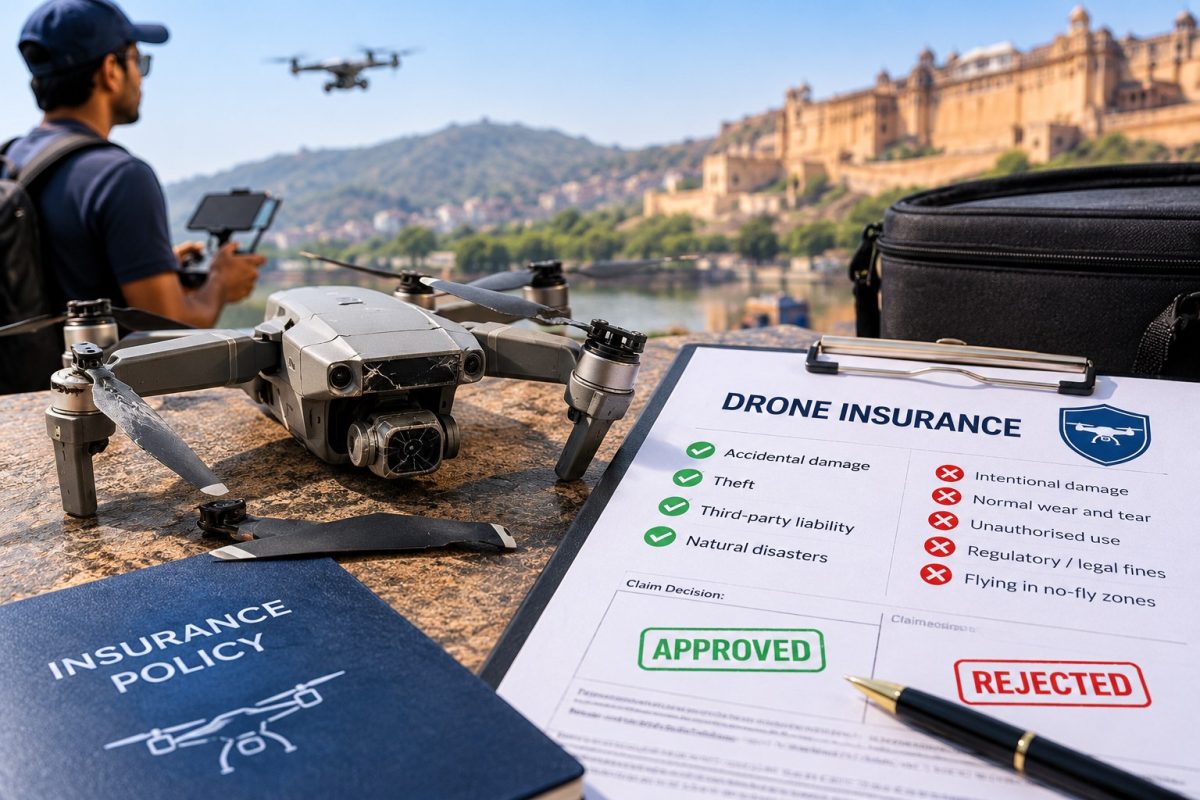
Drones are used for photography, farming, surveying and many other things. But accidents can happen. A small crash can damage the camera, motor or frame, and sometimes a drone can hurt someone or damage another person’s property. Repairing a drone is expensive, so insurance can really help. It protects owners from some financial losses, but not every accident is covered. This article explains the main features using examples from IFFCO-Tokio and Bajaj General Insurance.
Hull insurance
Hull insurance covers physical damage to the drone itself. If your drone hits a tree or falls down, the policy may pay for repair or replacement. The IFFCO-Tokio Drone Rakshak policy covers accidental damage and theft, depending on the conditions and sum insured. Things like normal wear and tear, mechanical breakdown and damage above the insured amount are usually not covered. Before buying, check if the camera, batteries, motors and gimbal are included. Also check the deductible, which is the amount you pay yourself when making a claim.
Third-party liability
A drone accident can affect other people too. Your drone might hit a parked car, break a neighbour’s window or injure someone. Third-party cover protects you when you are legally responsible for that damage. The IFFCO-Tokio policy covers third-party injury, death and property damage within its limits. Remember, hull insurance protects your own drone, while third-party cover is for claims made by other people.
Common exclusions
Every policy has exclusions, so a claim can be rejected in some cases. These include wear and tear, mechanical breakdown, overloading beyond the maker’s weight limit, and unexplained disappearance of the drone. Illegal flying is also excluded. Some policies do not cover night flying and BVLOS unless you take extra cover, and loss of business income may not be covered either. The Bajaj General policy also lists wear and tear, extra payload and unexplained disappearance, so always read this part first.
Documents after an accident
Good records make claims easier. Keep photos of the damaged drone and the accident place, flight logs from the app, the purchase invoice, serial number and UIN details, a written account of what happened, and a repair estimate. If someone else was affected, note their contact details too. Don’t throw away damaged parts or start big repairs before telling the insurer, because the IFFCO-Tokio policy may need approval first.
Making a claim
The process differs between companies, but the basic steps are similar. First, stop the drone and make sure nobody is hurt. Then inform the insurer immediately and send written notice within the time given in the policy. Next, collect evidence and submit the claim form with the documents. The insurer may send a surveyor to check the damage, and if approved, payment depends on the deductible and depreciation. Both IFFCO-Tokio and Bajaj General mention a 15-day written notice rule, but confirm it in your own policy.
Conclusion
Don’t pick a policy for its low premium. Compare benefits, limits and claim conditions.