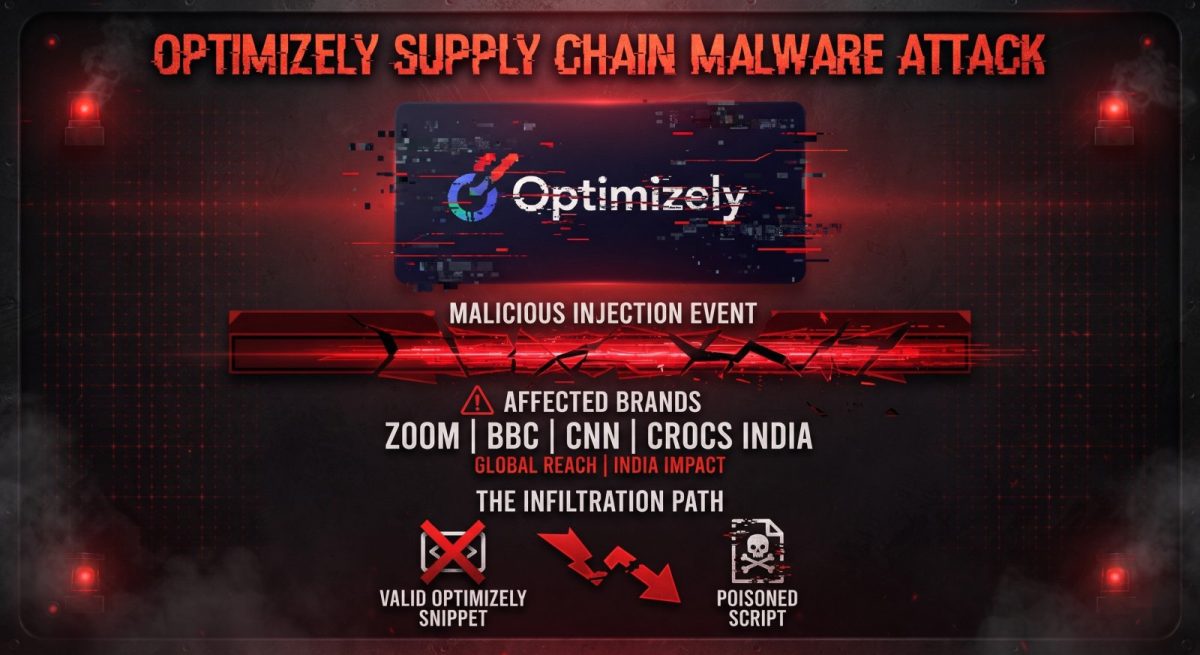
The Optimizely Attack: How a Trusted Tool Delivered Malware to 178 Websites
The Optimizely malware attack put harmful code on the websites of 178 organisations on 16 November 2026, says the security firm Report URI. Optimizely is a tool for testing website designs. It says a hacker used a weak spot in its system. Imagine a trusted delivery van that suddenly carries a stranger’s parcel. Visitors to Zoom, the BBC and CNN received that parcel.
What happened
Report URI’s Scott Helme shared the findings on 16 November. His team checked 1,611 Optimizely code files and found harmful code in 188 of them. Those belonged to 178 organisations. Report URI says the real number is probably higher, because it could only check the files it found in time.
Optimizely’s status page says the hacker used a flaw in the signup process of its Web Experimentation product and pretended to be real users. The company says it closed the flaw within three hours of spotting it and removed the code. It also says fewer than 5 percent of its customers were affected.
How the hidden code worked
Websites that use Optimizely load a small script, called a snippet, from Optimizely’s servers. Report URI says each snippet has a box named Project JavaScript, where customers add their own code. The hacker put harmful code there.
The file still came from Optimizely’s trusted address, so browsers saw nothing strange. It’s like a letter with the right postmark but a fake message inside. Report URI says the code swapped crypto wallet addresses, copied card details, and stole cookies (small files that remember you) and screenshots. On iPhones and iPads, it also delivered tools that attack the phone itself. Report URI told visitors to update to iOS 18.7.3 or later, or iOS 26.3 or later.
How well were sites protected?
A Content Security Policy, or CSP, is a list of outside sources a website trusts. It’s like a guest list at a school gate. Report URI found that only 24 of the sites it checked, about 15 percent, had a list strong enough to block the attack.
Helme says trusting Optimizely’s address didn’t help, because the harmful code came from that same address. Report URI also reports an earlier wave through scripts from Kissmetrics, StorifyMe and Minute Media.
What comes next
No source gives a forecast, so I’m only sharing what people involved say. Optimizely told Krebs on Security that it is working with outside experts on a full investigation. Helme says he hopes more sites will use strong CSPs. Zach Edwards of Infoblox told Krebs on Security that CSPs are largely the answer, though they’re not always easy to set up. No source says how this will change jobs, safety or business.