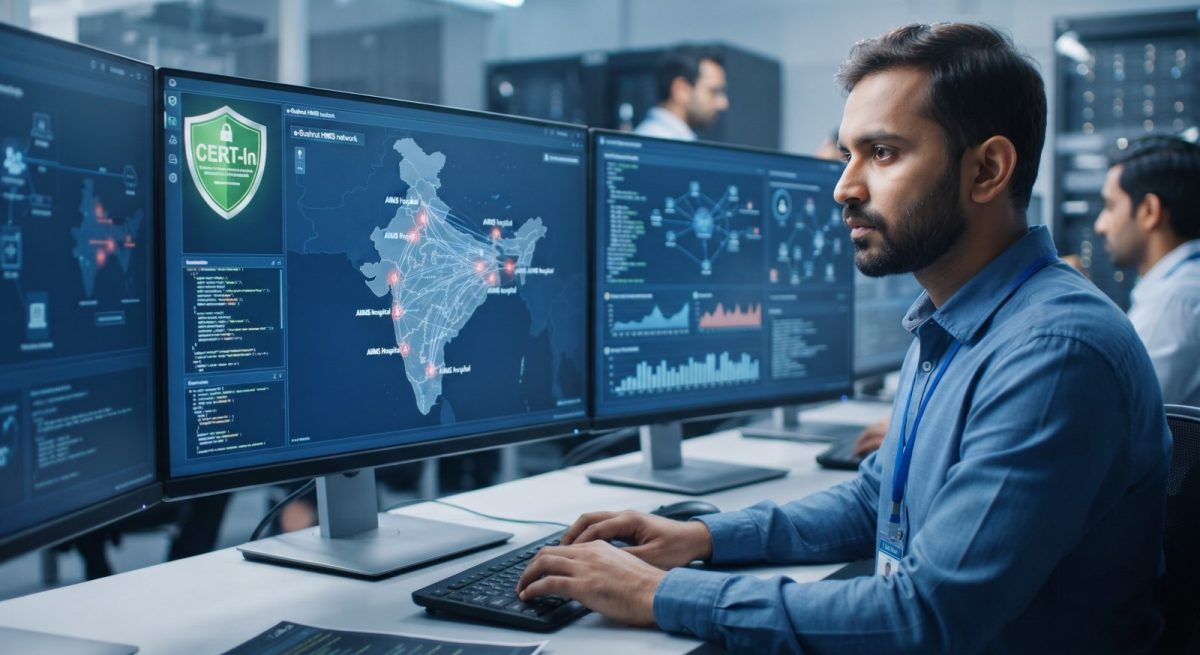
CERT-In Warns About Four Weak Spots in e-Sushrut
Some computer programs in hospitals have weak spots called vulnerabilities. CERT-In is India’s computer safety team, and on 17 November 2026 it warned about four of these weak spots in e-Sushrut. C-DAC made e-Sushrut, and hospitals use it. Think of a school with a gate that anyone can open. CERT-In says a stranger could see hospital information in a similar way. It rates the problem High, which means serious.
What happened
CERT-In put out a note about e-Sushrut called CIVN-2026-0557. It says e-Sushrut is a program that C-DAC made and set up for hospitals. They use it to keep patient details and plan their daily work. The note lists four weak spots. CERT-In says a stranger could use them from far away without even logging in. It tells hospitals to ask C-DAC for the newest version.
How it works
Imagine a house with weak locks. The first weak spot is in the login check, because the program doesn’t check properly who is coming in. The second is on the login page, where some hospital numbers are supposed to be hidden but a stranger can still read them. The third is a secret code that never changes, so a stranger could copy it. The fourth is like a locker ticket. If you change the number, you open a different locker. In the same way, a stranger could open another patient’s file.
Latest news
MediaNama wrote about this on 19 November 2026 and said it’s not the first warning. CERT-In gave an earlier note on 28 April 2026, called CIVN-2026-0207. That one called the problem Critical and listed six weak spots. It says a person named Harsh Verma found them. On 29 June 2026, the Press Information Bureau (PIB) said C-DAC is putting e-Sushrut in more than 15 AIIMS hospitals. MediaNama says it’s not clear if C-DAC has said anything about this, and it’s also not clear if any hospital was hacked.
What could happen next
There aren’t many predictions about this. CERT-In’s April note says a stranger could take over an account, and that patient details could be shown to people who shouldn’t see them. The fix is to upgrade the program to the newest version. PIB said on 29 June 2026 that e-Sushrut is going into AIIMS and state hospitals. It also said a smaller product, eSushrut@Clinic, costs about ₹499 a month for five users. None of the sources we opened talk about jobs, market size or repair costs, so we don’t know those yet.
Our take
This part is our own thinking, not something the sources said. Both notes point to the same problem, which is that the program doesn’t check well who is allowed to see what. Fixing it will take C-DAC and every hospital working together. Students who make apps can learn from this too, like testing their login pages early. No source says any hospital in India was actually harmed.
You can’t fix hospital software yourself, but you can ask how your records are kept safe. Hospitals can ask for the new versions. Asking good questions is a good first step.