SPIINE Robot Helps Inspect Narrow Nuclear Waste Pipes Without Digging
Have you ever tried pushing something through a narrow pipe with lots of turns? It can easily get stuck. Engineers face a similar problem at the Hanford nuclear cleanup site in Washington, USA, where old underground pipes need to be checked for damage.
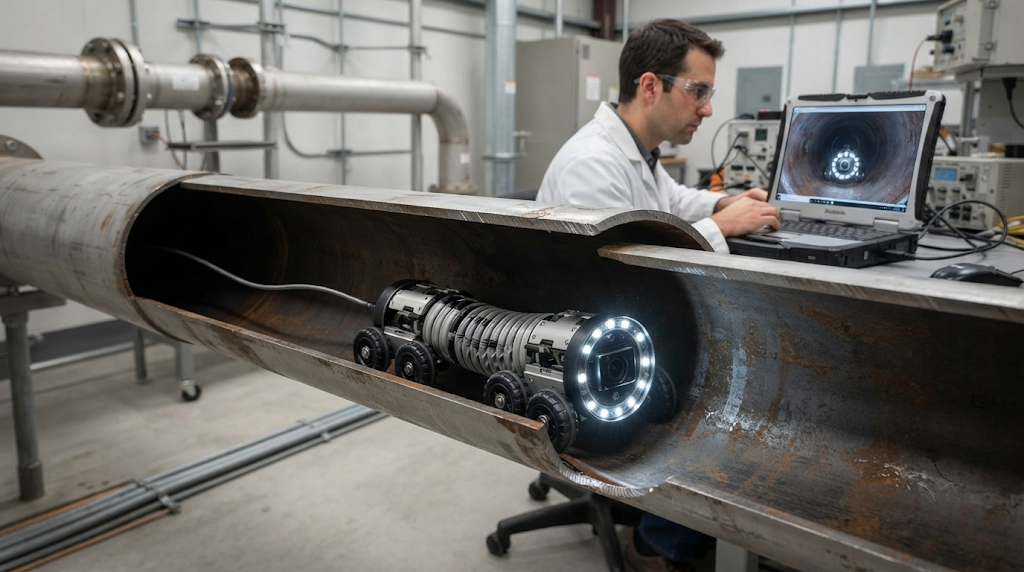
To solve this, researchers at Sandia National Laboratories have built a small robot called SPIINE. It can move through pipes just two inches wide and send live video to the people controlling it.
Why Is It Difficult to Check Hanford's Pipes?
The Hanford site was built in 1943 during the Manhattan Project. Today, it has underground tanks that store radioactive waste.
The pipes connected to these tanks are very old. Some are hundreds of feet long and have sharp turns. Checking them is hard because digging them up would cost a lot of money and take a huge amount of work.
Sandia says older inspection cameras can travel only about 10 feet and can't easily get through 90-degree bends. Most pipe-inspection robots are also made for bigger pipes, so they can't fit into these narrow spaces.
How Does the SPIINE Robot Work?
SPIINE has a flexible body that helps it move around sharp corners. Six soft wheels press against the pipe walls and push it forward.
It also has a camera and LED lights, so engineers can see inside dark pipes. A cable provides power and sends video back to the operators. The robot can be controlled with a regular video game controller. It can also pull extra tools that may help engineers check the condition of the pipes.
What Happened During Testing?
The researchers tested SPIINE in a laboratory. Their study, published in the journal Robotics on October 22, 2026, showed that the robot could pass through a sharp 90-degree turn from eight different starting positions. It also travelled more than 60 metres through horizontal and vertical pipes, and it sent video through a cable that was 110 metres long.
These tests showed that SPIINE could reach places where normal inspection cameras struggle.
What Problems Does SPIINE Still Have?
SPIINE has done well in the laboratory, but it hasn't been tested inside the actual Hanford pipes yet. Real pipes may have mud, dirt or other material that could stop the robot.
The researchers are trying to add a camera-cleaning system and a way to recover the robot if it gets stuck. They are also working on smaller sensors to check pipe thickness.
What Happens Next?
The next step is to test SPIINE inside Hanford's real underground pipes. If it works well, engineers could use it to find cracks, rust and other damage without digging up the pipes. This could save time, cut costs and keep workers away from dangerous areas.
SPIINE is still being developed, but it could become a useful tool for inspecting old nuclear waste pipes in the future.