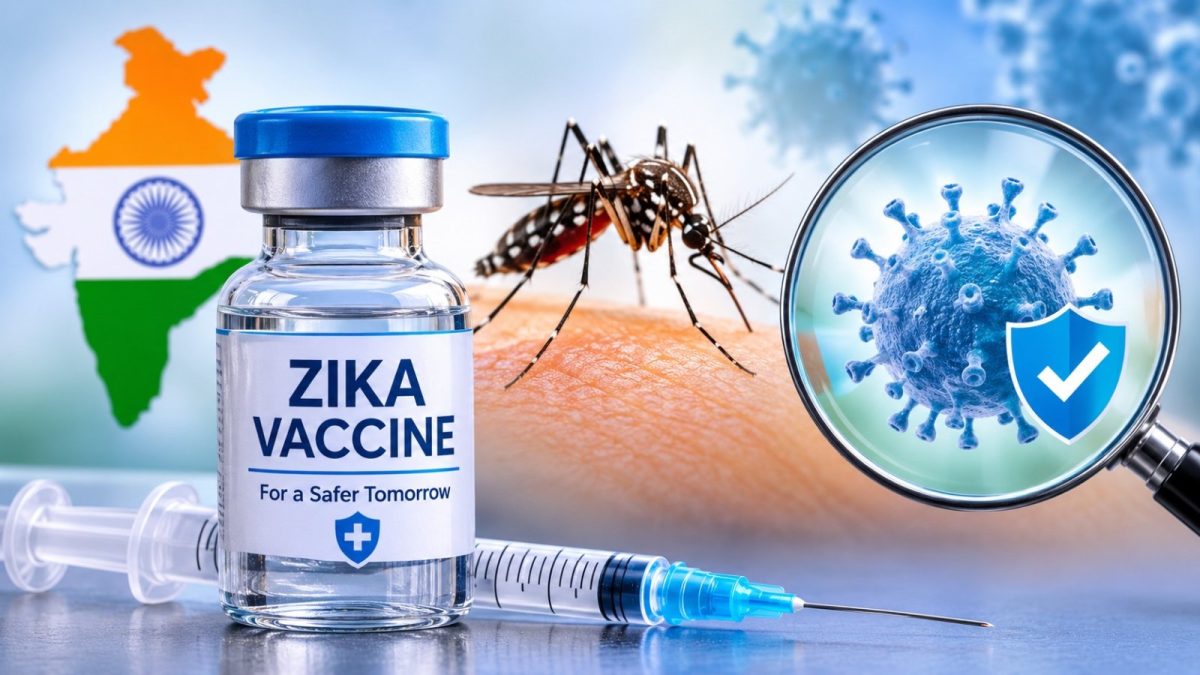
India’s first Zika vaccine has moved one step closer to people. A panel of experts at India’s drug regulator has said Indian Immunologicals Limited (IIL) can go ahead with a first trial in humans. The vaccine was made with Australia’s Griffith University. But the trial has not started yet.
What Happened
IIL sent its trial plan to the CDSCO panel in September. The panel did not approve it immediately. On 23 September, it asked the company for more information. It wanted to know why the company had selected that dose. It also asked for proof that the trial size and the 3:1 split between vaccine and placebo were suitable.
The panel also wanted the full animal study reports instead of just a summary. The company submitted the requested information, and the panel recommended the trial in November.
This is only a recommendation. The trial can start after the regulator gives the remaining permissions and the necessary arrangements are ready.
What the Vaccine Is
The vaccine is a live attenuated vaccine. This means it uses a weakened form of the Zika virus. Earlier reports describe it as codon de-optimised. In simple terms, scientists change the virus's genetic code so that it grows poorly. It can still help the body's immune system learn how to fight the virus.
The available reports do not provide the vaccine dose.
What Phase I Will Test
Phase I is the first stage of testing a vaccine in humans. In this trial, healthy adults aged 18 to 50 will receive either the vaccine or a placebo. Neither the participants nor the researchers will know who receives which one.
The study will mainly check three things: safety, possible side effects and the immune response produced by the body.
It will not prove whether the vaccine can prevent Zika infection. The Indian Council of Medical Research (ICMR) will fund the trial, which will take place at its network sites.
What Is Still Left
Phase I is only the beginning. After this stage, the vaccine will need larger clinical trials to check whether it works and remains safe in more people.
As of the information in the supplied reports, there is no confirmed trial start date, volunteer count or complete timeline.
Why It Matters
Zika infection is usually mild. However, infection during pregnancy can cause serious problems for the developing baby, including microcephaly, a condition in which the baby's head is smaller than expected, and other birth defects.
In some people, Zika infection can also be linked to Guillain-Barré syndrome, a disorder that affects the nerves.
UNICEF says there is currently no approved Zika vaccine. India has reported small Zika outbreaks since 2016. The supplied report says there have been no confirmed cases of Zika-linked microcephaly or Guillain-Barré syndrome in India.