What Is Happening?
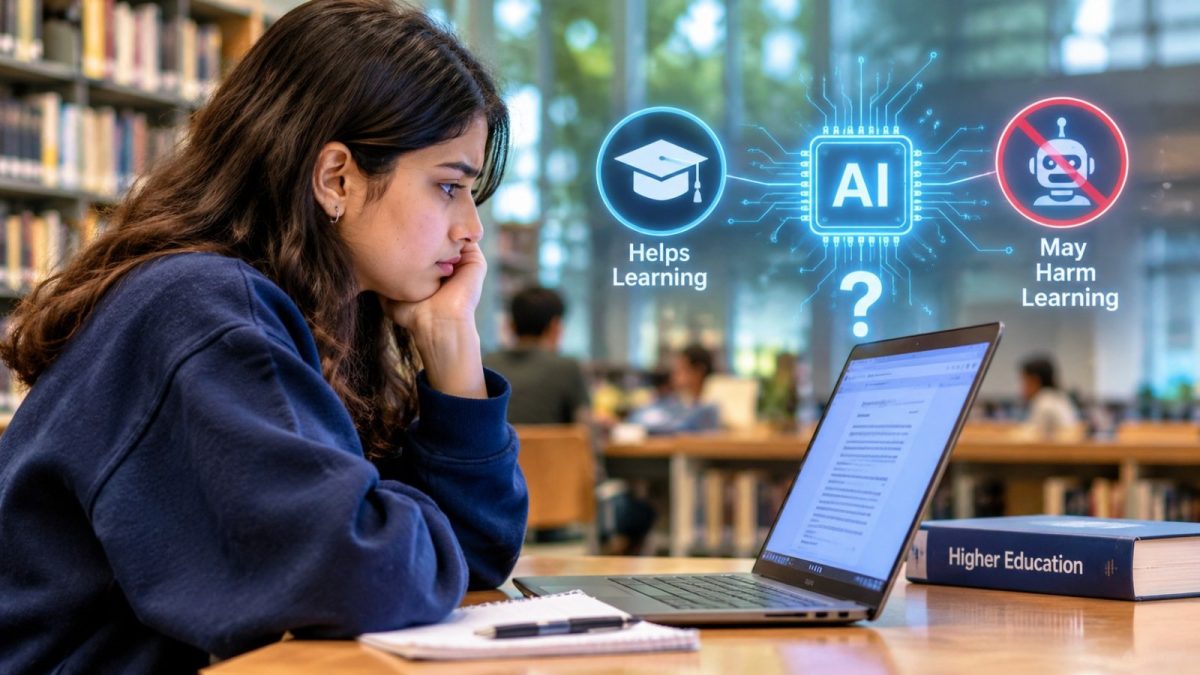
A big survey published on November 17, 2026, by Inside Higher Ed shows that 25 percent of college students in the U.S. have changed their writing habits. To dodge false alarms, students are purposely changing words, mixing up sentence lengths, or avoiding certain phrases.
At the same time, fights between students and schools have gone to court. Legal trackers show a rising wave of lawsuits filed by students over unfair cheating punishments. While schools win most cases, a major New York court win in January 2026 (Newby v. Adelphi University) ruled for a student after a broken checking process.
How Does It Work?
AI detectors look for patterns in how predictable words are. Human writing usually has natural ups and downs in rhythm. Software scanners try to measure this rhythm to guess if a computer helped write the text.
The problem is that these tools struggle with students who speak English as a second language or have learning differences. Their normal writing style might look too simple or stiff to a computer program. When a scanner claims a paper was written by an AI, some teachers hand out failing grades right away without checking the facts.
Why Is It Important?
This trend hurts trust between teachers and students. Instead of focusing on learning new things, students worry about how a cold computer program will grade their grammar.
When honest kids feel forced to hide their true writing voice, school feels more like software testing than real learning. Schools need better ways to test knowledge instead of trusting broken computer scanners.
What Are the Challenges?
The biggest issue is that AI detectors simply do not work well. Software makers even admit that no detector is completely accurate.
Even so, many schools keep using them because teachers have too many papers to grade and need quick help. Courts have been slow to ban these tools, usually only checking if the school followed its own rules. This leaves students with almost no protection when computer systems fail.
What Happens Next?
More universities are starting to ban AI detectors and use better teaching methods instead. Teachers are trying oral presentations, in-class writing, and custom projects where AI shortcuts do not work.
As more legal battles wind through courts, colleges will likely face tougher rules before they can punish anyone based only on a software score.
Students should never have to write worse on purpose just to prove they did their own work. Bringing human judgment back to the classroom is the only real fix.


