What Is Happening?
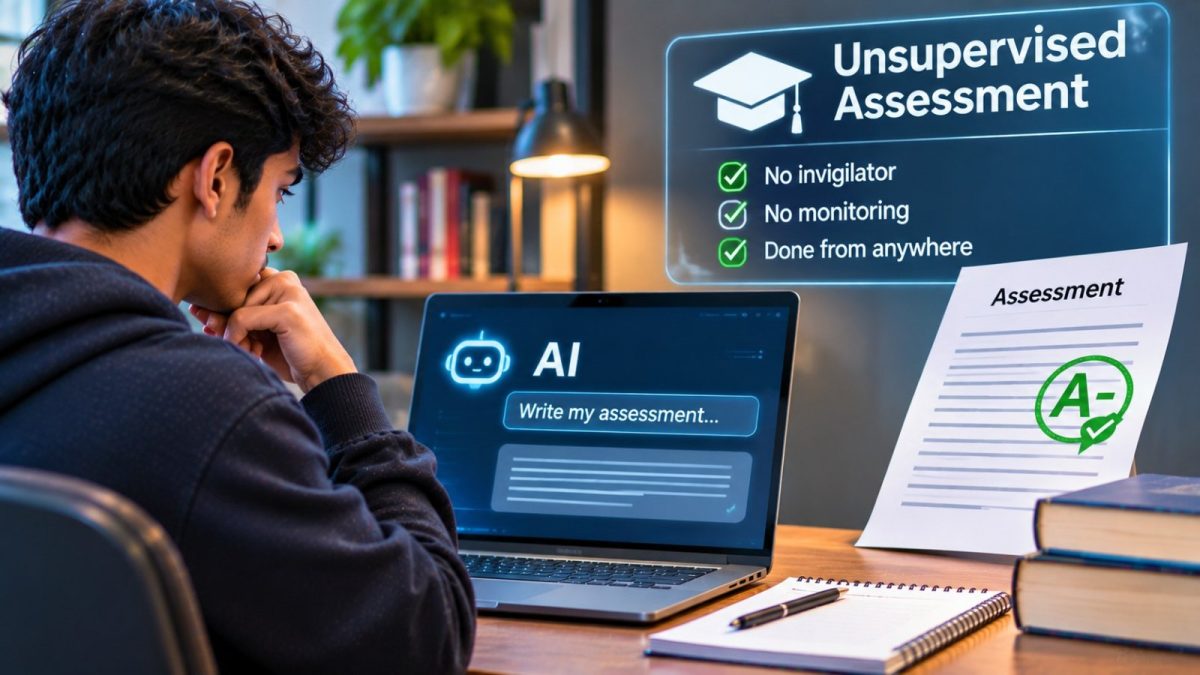
Unsupervised assessments are take-home essays, online quizzes, and coursework done away from a classroom monitor. To see how AI affects these tasks, researchers gathered feedback from 244 university staff and 91 students across at least 127 institutions.
Based on those shared experiences, the Office for Students called the trend a big risk to the trust placed in college degrees. The regulator said universities must make sure tests are fair and reliable, pointing toward secure, AI-free formats like closed-book exams, talks, and hands-on lab work. If colleges fall short, the regulator warned it could use penalties like pausing funding, while BBC reporting on early plans noted possible limits on student numbers.
How Does It Work?
Modern AI tools write smooth essays, summaries, and code in seconds by guessing the next likely word from huge cloud models. Because students work on their own laptops at home without anyone watching, teachers cannot tell whether a student typed an answer or copied it from a chatbot.
Many colleges try to catch AI writing with checker apps that score how predictable words look. However, those tools only guess odds rather than proving who wrote the paper. A student can fool them with small edits, and running them across thousands of papers costs real money.
Why Is It Important?
This announcement marks a clear shift: a national regulator is saying openly that take-home work is now hard to trust, and checker software alone cannot fix it.
The study also shows what students themselves want. Many students said campus AI rules are hard to follow, and some felt teachers using AI had lowered the quality of class notes. At the same time, students still want clear training in AI skills to prepare for future jobs.
What Are the Challenges?
Moving away from take-home essays brings tough trade-offs for colleges. Running closed-book exam halls, live oral tests, and hands-on practicals takes extra staff hours, exam rooms, and planning costs.
Universities UK replied that many colleges have already moved toward in-person exams, presentations, oral checks, and grading that tracks how a project is built step by step. Still, researchers note the study reflects shared experiences rather than a lab test of AI detectors.
What Happens Next?
Over the coming months, England's universities must balance two goals: locking down key exams so degrees stay trusted, while teaching students how to use AI wisely at work. How colleges redesign grading without losing fairness will shape higher education far beyond England.