Imagine buying a sports car engine only to put it inside a golf cart. That is what happens when you spend money on mismatched computer parts. Building a gaming PC in 2026 requires smart planning because memory prices have jumped sharply. Balancing your budget across the right parts gives you smooth gameplay without paying for speed your screen cannot show.
What Is Happening in the PC Hardware Market?
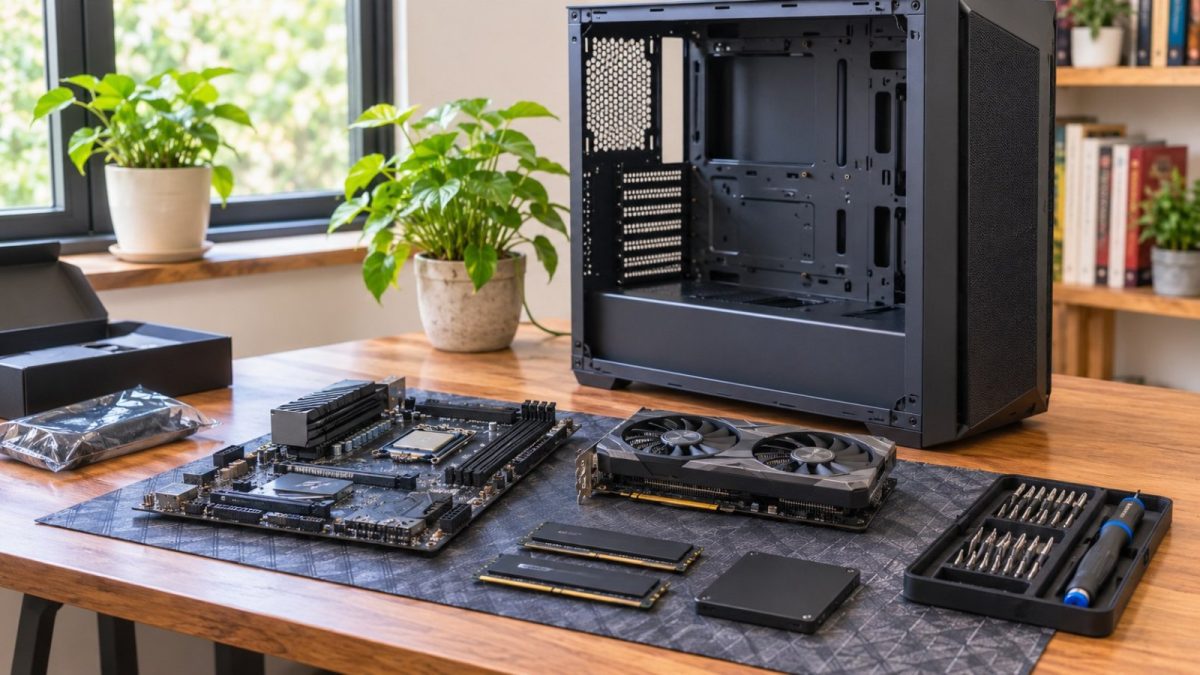
In November 2026, hardware guides from Tom's Hardware and PC Gamer point to a major shift in build costs. A global chip shortage has pushed 16GB DDR5 memory kits—the fast temporary workspace a computer uses while running games—to roughly $250. Meanwhile, newer graphics cards like the Nvidia RTX 50 series and AMD Radeon RX 9000 series offer strong visual performance. Because memory and storage cost more now, builders must divide their budget carefully instead of spending everything on a graphics card.
How Do Component Picks Change by Budget?
Think of a gaming computer like a busy restaurant kitchen. The graphics card is the chef painting every frame on your screen, the processor is the manager giving fast instructions, and the memory is the counter space holding active ingredients.
For a $950 entry-level budget, Tom's Hardware recommends pairing an Intel Core Ultra 250K Plus processor with an AMD Radeon RX 7600 graphics card and 16GB of memory. This setup runs modern games smoothly at 1080p, which is standard high-definition clarity.
For a $1,250 to $1,700 mid-range budget, stepping up to an AMD Ryzen 7 7800X3D processor and an Nvidia RTX 5060 Ti 16GB graphics card unlocks 1440p gaming, offering sharper detail without high costs. Above $2,500, combining an AMD Ryzen 7 9800X3D with an Nvidia RTX 5080 and 32GB of memory powers ultra-sharp 4K screens.
Why Smart Part Matching Matters
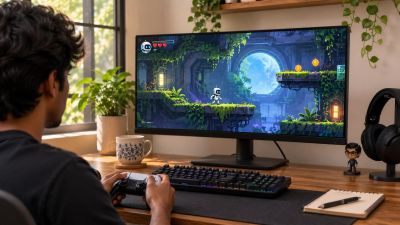
Matching your parts prevents bottlenecks, which occur when one slow part forces a faster part to wait. Pairing an expensive graphics card with a basic monitor wastes money because the screen lacks enough pixels—the tiny dots that form an image—to display the extra detail. Builders should also choose an ATX 3.1 power supply, which acts like a sturdy power bridge built to handle sudden energy spikes from modern graphics cards safely.
What Are the Current Challenges for Builders?
High memory and storage prices remain the biggest hurdle in late 2026. Budget builders often settle for 16GB of memory and a 512GB solid-state drive, which fills up quickly because new games often take over 100GB of space. For owners of older desktops, simply dropping in a new graphics card often delivers better value than buying every part new.
What Happens Next for PC Builders?
Most gamers will rely more on artificial intelligence upscaling tools like Nvidia DLSS 4 and AMD FSR. These tools render a game at a lower size and use smart software to sharpen the picture, boosting speed without expensive hardware. As factory memory supplies recover in 2027, 32GB kits should become affordable again.
Building a gaming PC in 2026 works best when your monitor, graphics card, and budget match each other. Smart part choices today give you great frame rates now and easy upgrades later.