What Is Happening?
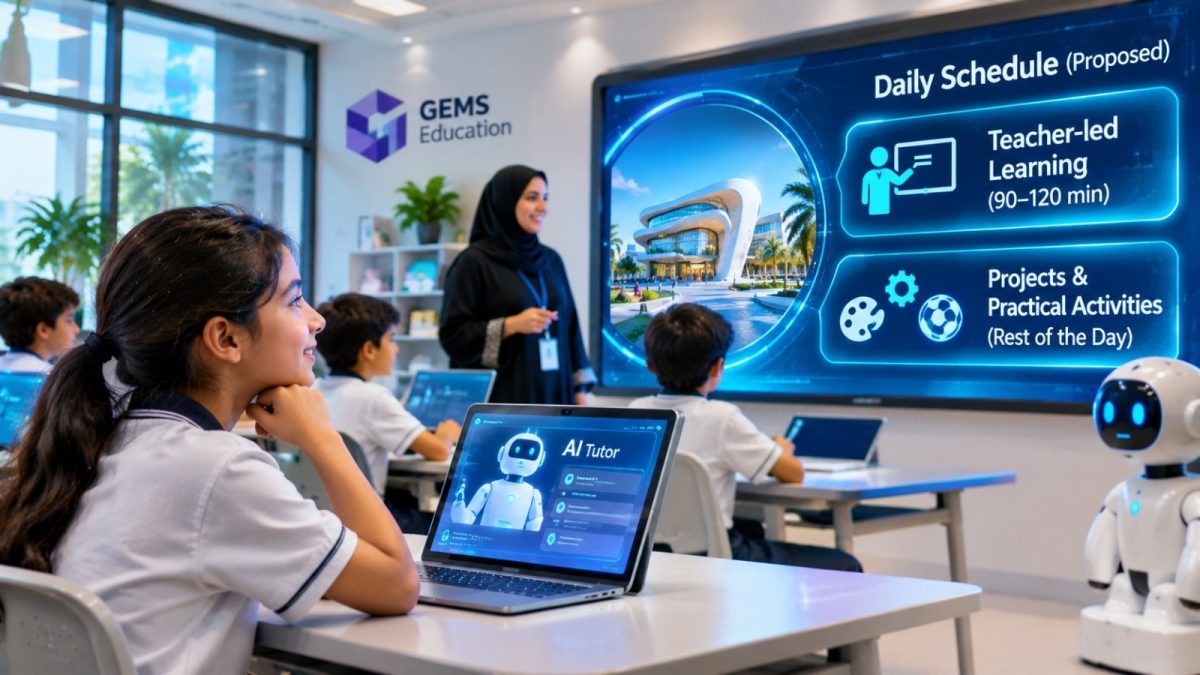
Instead of making thirty kids sit through the exact same talk at the same speed, GR8 School wants students to learn core subjects at their own pace. Under this plan, students spend about 90 minutes to two hours each day in teacher-led academic classes.
The rest of the day goes to hands-on projects, real-world skills, and personal interests. GEMS founder Sunny Varkey said this setup is not for everyone and fits only a select group of students.
How Does It Work?
In a regular class, one teacher explains a math or science topic to everyone at once. Fast learners can get bored, while kids who need extra help can fall behind. An AI-led model flips that setup by mixing self-paced digital lessons with short, focused teacher time.
Behind the scenes, smart learning apps use cloud AI models and student progress trackers. As a student answers questions, the app checks speed, mistakes, and weak spots right away, then picks the next task or hint. Teachers use their two hours of class time to lead small groups, clear up hard ideas, and guide project work. Even so, the report does not share the exact AI models, size settings, or grading rules used in the system.
Why Is It Important?
Many schools talk about letting kids use AI for homework, yet few spell out how it changes the daily school clock and the teacher's job. This plan comes as the UAE grows its AI lessons, after starting AI classes from kindergarten to Grade 12 in public schools during the 2025-26 school year.
At the same time, Dubai's school regulator is working on AI rules for private schools, due next year. GEMS says its plan helps teachers instead of replacing them, moving teachers away from repeating the same lecture and toward one-on-one coaching.
What Are the Challenges?
Since the school has not opened yet, there is no proof that a two-hour class block works better than a normal day. Experts quoted in the report also warn that young kids who use AI too early might just take the first answer on the screen instead of thinking things through.
Running this kind of setup brings real tech and cost trade-offs too. Sending live AI responses to many students at once needs steady cloud servers, strong school internet, and tight privacy rules to keep student records safe.
What Happens Next?
GR8 School plans a soft launch in January 2027 at one Dubai school for a chosen group of students, with no rollout announced for India or other places. Parents, teachers, and school leaders will watch closely to see if shorter AI-guided study time helps students learn or leaves gaps in core skills.