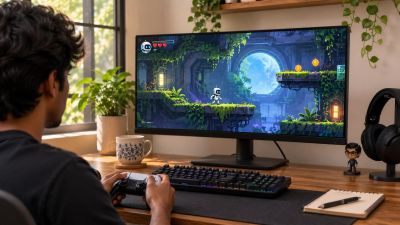
Imagine waiting ten minutes for a bus or taking a short lunch break at work. Many people take out their phones or handheld consoles to play a quick round of a favorite game. Today, pick up and play games are growing fast because they fit easily into busy daily routines without needing hours of time.
Why Short Gaming Sessions Are Rising
Modern life leaves most adults and students with very little free time that isn't interrupted. According to industry reports from Newzoo and the Entertainment Software Association, mobile and handheld gaming still attract billions of players around the world.
Large story-driven games often need complex button combinations, heavy menus, and at least one or two hours per sitting. Short-session games, on the other hand, let players jump into the action within seconds and finish a full round in under ten minutes.
How Pick Up and Play Games Work Behind the Scenes
Developers build these games around light software design and instant state saving. Think of a digital bookmark that automatically records your exact spot the moment you close a book.
Instead of loading huge three-dimensional worlds into the device's memory, these games use small files and levels built from separate pieces. Games like Vampire Survivors, Marvel Snap, and daily puzzles like Wordle keep the demands on the processor and battery very low. Modern handhelds like the Steam Deck and Nintendo Switch also use system-level suspend states, which freeze the game's memory in RAM so players can pause and resume right away.
Real Benefits for Everyday Players and Studios
Short-session games remove the stress and time pressure that are often found in large online multiplayer games. Players can feel a clear sense of progress during a five-minute coffee break.
These games also run smoothly on affordable smartphones without needing expensive graphics chips or fast home internet. For smaller studios, building focused, bite-sized games needs smaller teams, lower server costs, and faster development than huge open-world projects.
Technical and Business Trade-Offs for Developers
Designing an engaging short game involves hard trade-offs in both design and business. Because levels are brief, game engines have to create fresh challenges quickly using smart randomization rules instead of hand-made maps. If levels feel repetitive, players lose interest within days.
Making money is another tough problem. Many free mobile games depend on frequent ads or small in-app purchases. When video ads interrupt a three-minute game too often, players quickly delete the app.