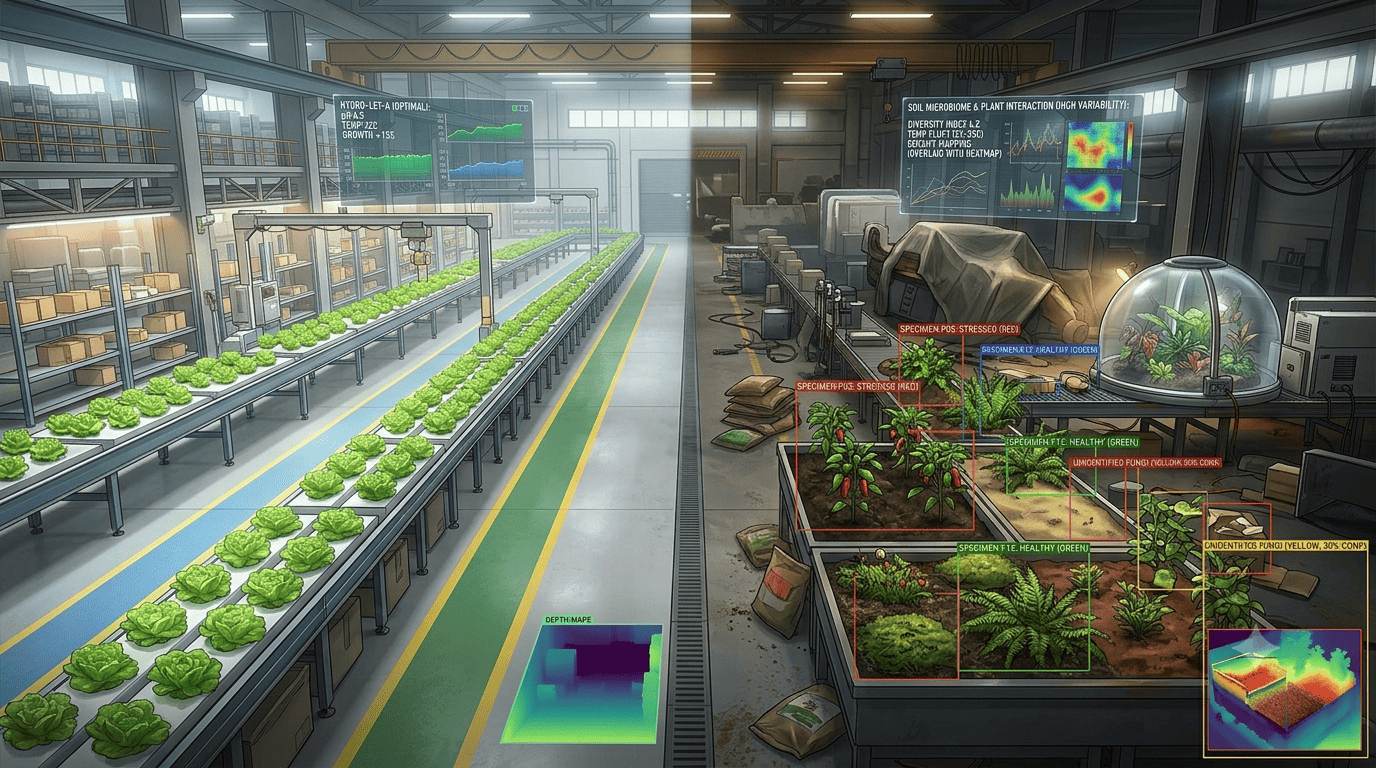
A factory robot may perform the same welding, assembly or pick-and-place movement thousands of times without getting tired. Give that same robot an unfamiliar object in a cluttered environment, however, and the problem becomes much harder. The difference is not simply that one task is “easy” and the other is “hard.” It is that factories can control many of the conditions around the robot.
Predictable Work Is Where Robots Excel
Industrial robots are particularly effective when the location, shape and sequence of a task are known in advance. A robot can be programmed to move to precise coordinates, apply a consistent force and repeat the same cycle with high accuracy.
Manufacturing lines are often designed around this strength. Parts arrive in known positions, tools are fixed, lighting can be controlled and the robot operates inside a defined workspace. If something changes, the system can often be stopped or adjusted rather than forcing the robot to guess.
This predictability makes repetitive automation valuable for welding, painting, assembly, packaging and material handling.
Surprises Create a Perception Problem
The physical world is less cooperative. An object may be partly hidden, moved from its expected position, damaged, flexible or a different shape from anything the robot has previously encountered. Outdoor robots face additional changes such as terrain, weather, lighting and moving obstacles.
A 2026 review of foundation models for autonomous robots notes that unpredictable events and environmental variation remain major barriers to robot adoption in unstructured environments.
The problem starts with perception. A camera may identify an object but still struggle to determine its weight, friction, exact grasp point or what is hidden behind another object. A robot therefore needs more than vision: it may require depth sensing, force or tactile feedback, motion planning and continuous feedback from its environment.
Robots Are Learning to Adapt
Research in 2026 is increasingly focused on giving robots this ability to respond to conditions they did not see during training.
A September 2026 study in npj Robotics demonstrated a physics-based method designed to improve robot learning under changing conditions. The researchers tested robots across unseen terrains, payload changes, speeds and wind disturbances. This was a research result, not evidence that general-purpose robots can now handle every unexpected situation.
Other research is targeting industrial tasks directly. A 2026 paper from the German Research Center for Artificial Intelligence explored adaptive reproduction of contact-rich assembly tasks using force/torque and internal robot sensing. The goal is to reduce the need to completely reprogram a robot when task conditions change.
These approaches show the direction of robotics: instead of executing one fixed sequence, robots are being developed to sense what is happening and adjust their actions.
The Factory Still Has an Advantage
The important point is that robots are not simply “bad” at surprises. They are improving at handling them, but unpredictable environments remain technically demanding.
NIST's 2026 smart-manufacturing roadmap identifies advanced sensing and perception, autonomous systems and robotics as important areas while also highlighting challenges involving heterogeneous sensors and control systems, data and trustworthy, reliable AI.
This explains why factories remain attractive environments for automation. Engineers can reduce uncertainty before the robot even starts working.
The future of robotics will depend partly on closing the gap between these controlled environments and the messy physical world. Better sensors, faster feedback, improved AI and safer adaptation can make robots more flexible. But for many applications, designing the environment to be predictable is still easier than teaching a machine to handle every possible surprise.