Sending a Robot In First
Imagine walking into a pitch-black tunnel with no phone signal and no map. Now imagine sending a robot in first. Robots that explore underground can now walk, fly, and map dark places on their own. The best proof came in 2021, in a big contest run by the US research agency DARPA. Real mines are harder, though, and the work isn’t finished.
Robots Raced Through a Giant Cave in 2021
DARPA ran the Subterranean Challenge for three years, and the winning team says it was an $82 million program. The final took place from September 21 to 24, 2021, in the Louisville Mega Cavern in Kentucky. Eight teams took part.
Each team had 60 minutes to find hidden objects like backpacks, phones, and dummy people. Team CERBERUS won $2 million. Australia’s CSIRO Data61 team tied on 23 points but lost on a tiebreaker, and it took home $1 million.
How the Robots Find Their Way
GPS doesn’t work underground, so the robots build their own map as they move. They use laser sensors that measure how long light takes to bounce back, along with cameras.
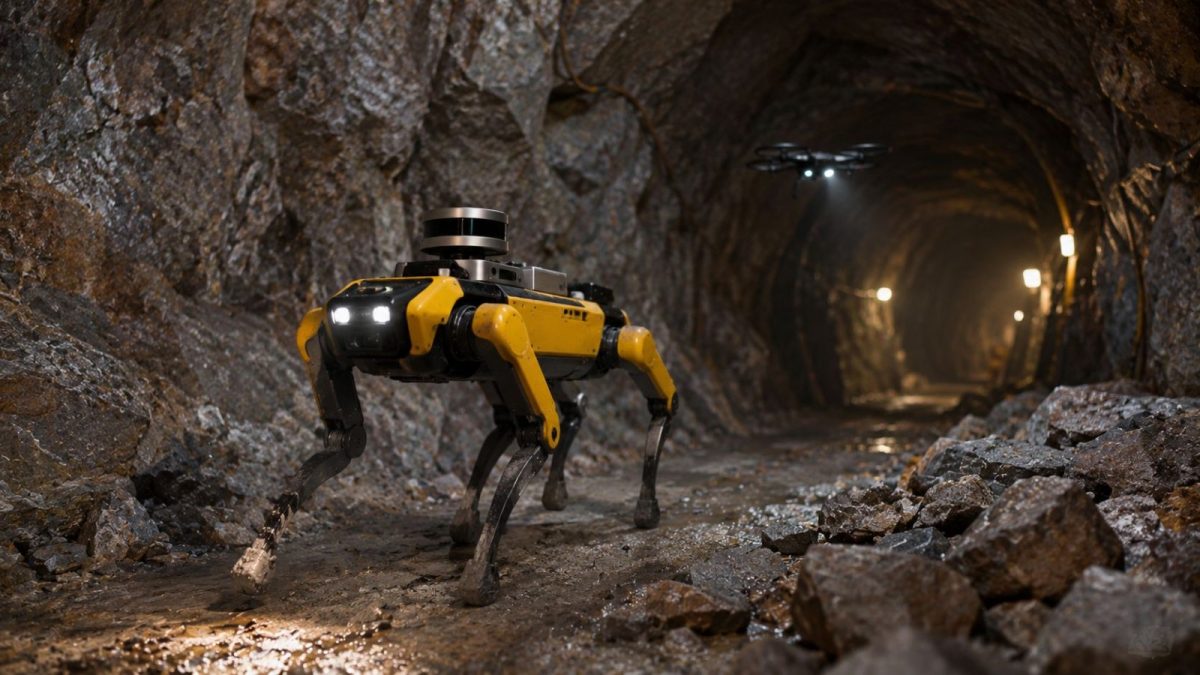
Radio signals are weak under rock, and the robots can’t wait for orders, so they choose where to go next on their own. CERBERUS used four-legged ANYmal robots and small drones. Some robots dropped little devices to boost the wireless signal, and one human only gave high-level commands.
Each type of robot has its own job. Drones can fit into tight spaces, and walking robots can climb over rocks and stairs. If one falls, it can stand back up and keep going.
Why It Matters
Mines, tunnels, and wrecked buildings can hide gas, smoke, and falling rock. A robot can go in first so people stay safe. DARPA said the contest was meant to help soldiers and first responders.
Mining is another use. A 2026 review in Frontiers in Robotics and AI looked at robots for mine rescue. In 2020, a NASA team lead also said NASA wants robots to explore caves on the Moon and Mars, where contact with Earth is often lost.
The Problems That Are Left
The contest course was planned and tested, but real mines are messier. The 2026 review found that most mine robots mainly explore and map, and only a few can do the whole job alone.
A CERBERUS researcher said drones run out of battery sooner than walking robots. Smoke, dust, and dripping water can also confuse the sensors. A 2026 drone test in a UK mine couldn’t finish a full flight on its own, because the project ran out of time.
What Happens Next
Researchers are moving from contests to real sites. The Prometheus drone was tested in Holman’s test mine in Cornwall, UK. Another research group is designing a team of robots that would map a mine and then drill together, but that plan is still only on paper.
CSIRO says technology from the contest has also been used in farming, mining, and defence work in Australia.
Conclusion
Robots that explore underground are moving from contests toward real jobs. They still need human help and more testing. But every trial makes dark places a little safer to enter, and that’s a good reason to keep watching this field.