What Ring Announced
Ring Robotics is Amazon’s new line of security devices that move by themselves. Ring announced it on November 10, 2026, with two products: a small flying camera for homes and a wheeled patrol robot for businesses. A normal camera is like a guard who has to stand in one spot. These machines can go to the problem instead. But moving on its own doesn’t always mean it guards well.
Two Robots, Two Jobs: The Products
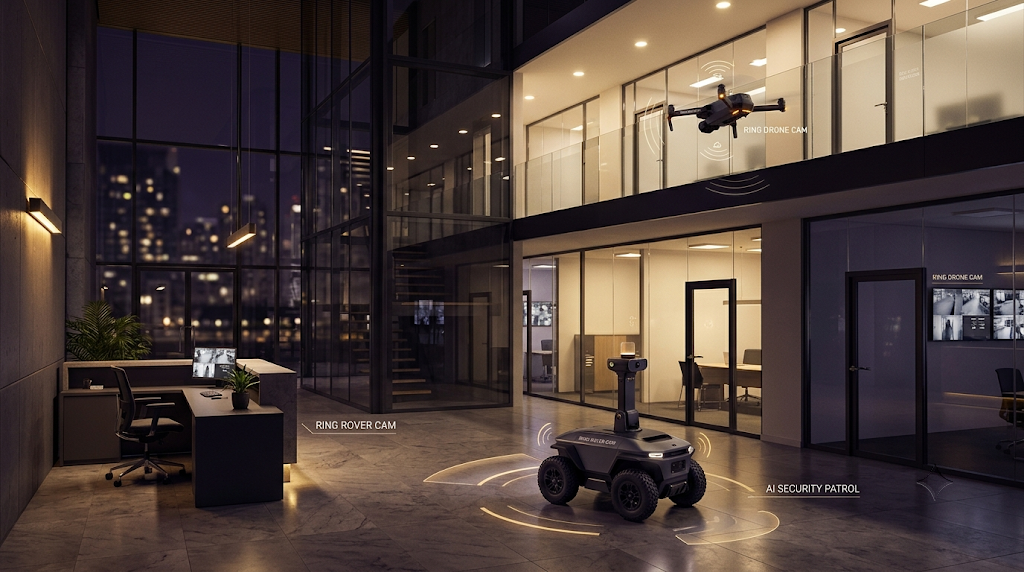
The Ring Drone Cam is an indoor flying camera. It costs $249.99 and records 2K video. The Ring Rover Cam is a wheeled robot for places like shops and offices. It costs $999.99 and records up to 4K video.
Two Robots, Two Jobs: Release Dates
You can preorder the Rover in the US now, and it’s supposed to ship on December 16, 2026. The Drone Cam is planned for January 27, 2027. But it still needs approval from the US Federal Communications Commission (FCC), and Ring can’t sell it until it gets that.
How the Robots Find Their Way: AI Pilot
Both robots use a system Ring calls AI Pilot. It mixes cameras, computer vision, sensors, and cloud processing. Cloud processing just means some of the thinking happens on faraway computers.
How the Robots Find Their Way: Setup and Patrols
Setup comes first. With the Drone Cam, you carry it around your home. The Rover explores on its own. Both turn what they see into a floor plan and suggest patrol spots, like a side door or a long hallway.
After that, the robot plans a route to the spot you pick. If a chair or shelf is in the way, it goes around it. Ring says a trip can also start when a Ring camera, sensor, or alarm goes off.
Why Moving Cameras Matter
A fixed camera only sees one spot. To cover a whole building, you might need lots of cameras and a ton of wiring. One robot can visit many places. The Drone Cam is supposed to check a window or respond to a sensor alert while you’re away. The Rover can do sweeps after a place closes. It also has a siren and two-way audio.
Moving Is Not the Same as Monitoring: The Drone Cam
The Drone Cam has some clear limits. Ring says it can fly for up to eight minutes at a time, and that was tested under controlled conditions. The Verge reports that without Wi-Fi, it can’t really do much except land.
The demos have been kind of rough too. In a CBS News segment, a Ring prototype crashed twice while a reporter flew it by hand. Ring says the final Drone Cam won’t have manual controls. Those were demo problems, so it doesn’t prove every finished one will fail.
Moving Is Not the Same as Monitoring: The Rover
The Rover has open questions as well, like battery life, building layout, and how much it’ll cost to run. Some features need a Ring Protect plan. Privacy matters too, since the Drone Cam records inside people’s homes.
What Happens Next
The Rover comes first, on December 16, 2026. The Drone Cam still has to get FCC approval before it can be sold. Ring hasn’t said if it’ll come out outside the US. Tests from independent reviewers will matter the most.
Ring’s robots show that security cameras are starting to move, and that’s a real step forward. But a roaming robot only helps if it stays connected, doesn’t crash, and lasts long enough. Real-life use will show how well it protects.