Why Gaming Hardware Is Getting So Expensive
The Price Problem
Buying a new graphics card, handheld PC, or game console costs a lot more now. There’s been a memory and storage shortage that started in 2025 and kept going through 2026, and it’s making parts more expensive for the whole industry. For regular gamers, that means higher prices in stores and fewer cheap upgrades.
Why Memory and Storage Got Expensive: The Two Parts
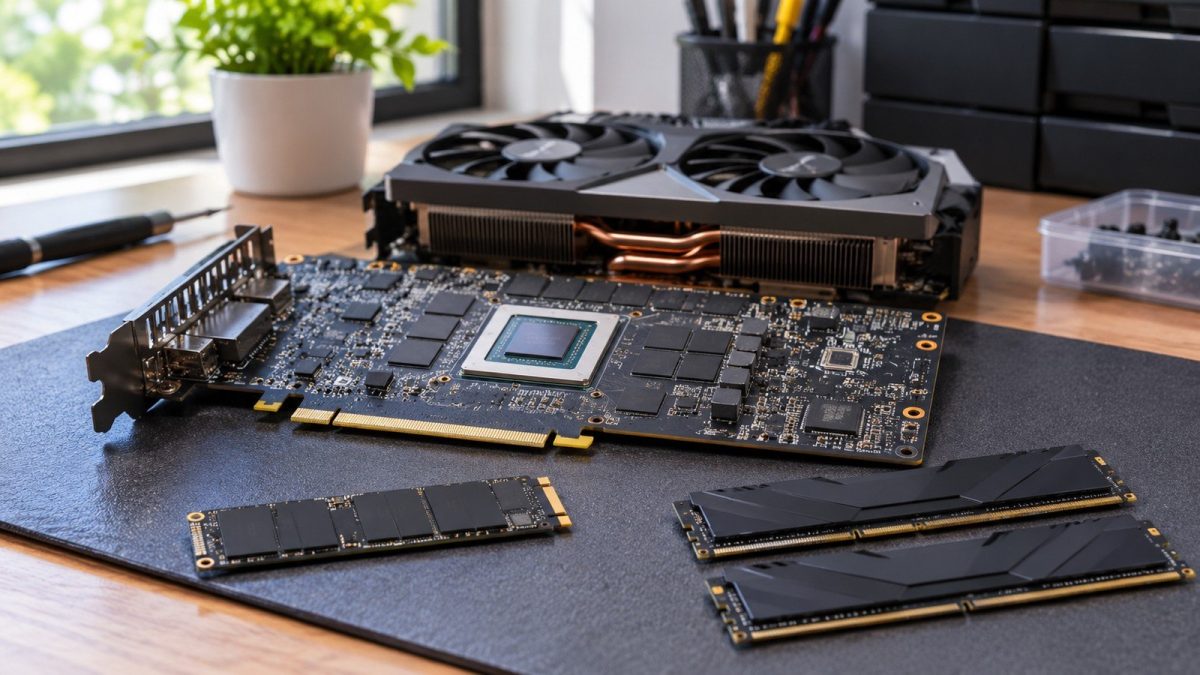
Every gaming device needs two main parts. The first is DRAM, which is like a short-term workbench for the game data you’re using right now. The second is NAND flash, which stores your installed games for good, kind of like a digital filing cabinet.
Why Memory and Storage Got Expensive: AI Is the Reason
During 2025 and 2026, big chipmakers like Samsung, SK Hynix, and Micron moved a lot of their factory production to high-bandwidth memory for AI data centers. Those AI chips make more money, so fewer factory lines were left for normal memory and storage chips. When supply got tight, the prices for DRAM and SSD parts kept going up for several quarters in a row.
How Gaming Devices Get Hit: Graphics Cards
Companies can’t easily pay for higher part costs themselves, so they pass them on to buyers. Graphics cards get hit first because they need a lot of fast video memory to handle detailed textures and high resolutions.
How Gaming Devices Get Hit: Handhelds and Consoles
Handheld gaming PCs and consoles have the same problem. Handhelds squeeze both memory and fast storage into a tiny space, so the companies don’t make much profit on them. Console makers like Sony, Microsoft, and Nintendo count on stable part prices for years to keep prices the same or do holiday sales. When memory and storage costs go up instead of down, those price drops don’t happen.
Why Gamers Should Care
Normally, older consoles and graphics cards get cheaper over time because making chips gets more efficient. This shortage flipped that around.
If you’re building a gaming PC, you now spend a bigger chunk of your money on RAM and a fast NVMe drive. For mid-range graphics cards, there are fewer choices with a lot of video memory at prices people can afford. Even some console bundles now cost more or come with less starting storage so the companies can protect their profits.
Why It’s Hard to Fix
Building a new chip factory costs billions of dollars and takes years, so chipmakers can’t just flip a switch and flood the market with cheap memory. Cloud computing companies are also still demanding a lot, which keeps the factories busy. Big PC and console makers can sign long-term deals, but smaller brands buy memory on the open market, so their prices jump around even faster.
What Happens Next
Analysts at companies like TrendForce check memory prices every quarter to look for signs that things are getting better. Prices will probably stay high until new factories open or AI demand slows down enough to free up supply.
Until then, gamers should expect small upgrades, fewer big sales, and having to manage their storage carefully on the devices they already have.