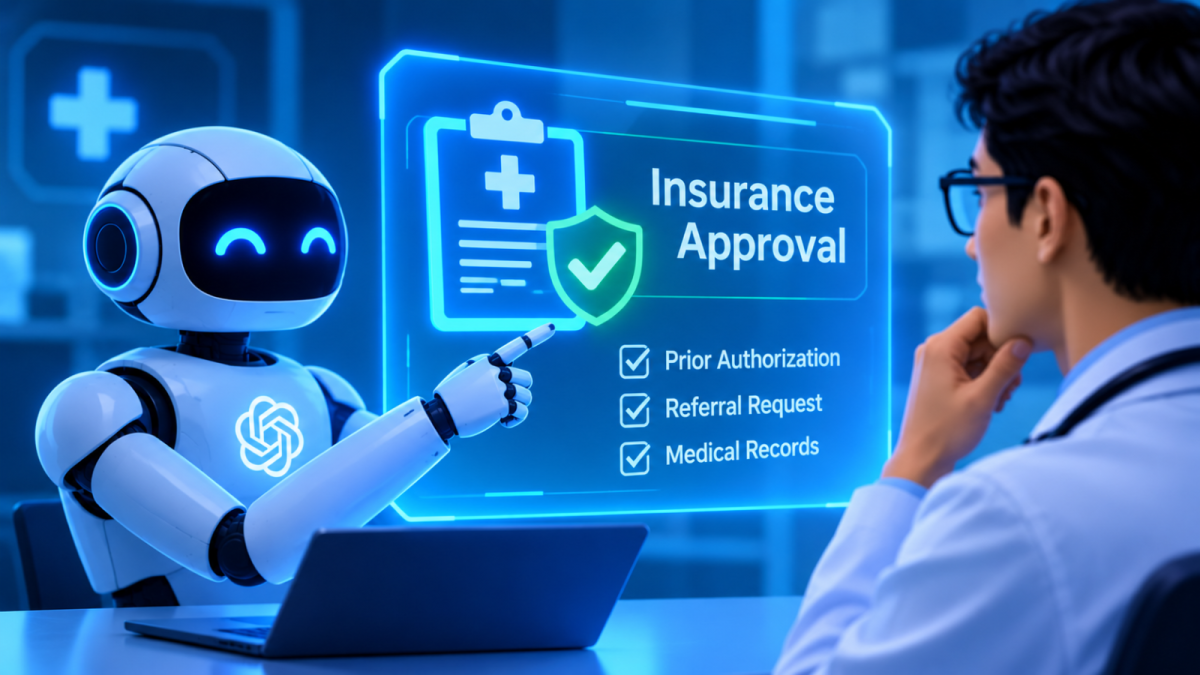
Imagine your doctor says you need an MRI. Before you can get it, someone has to collect your records, fill in forms on the insurer’s website and keep checking on the request. That takes time.
Now AI is starting to help with that work.
On 16 November 2026, OpenAI announced “computer-use agents” for healthcare teams. These are AI tools that use software the way a person does. They look at the screen, click buttons and type information.
What can they do?
In a demo with made-up patient data, the AI read medical records, drafted an MRI order and prepared an insurance approval request. A human then reviewed the work. The AI prepared the paperwork, but people stayed in charge of approving it.
Who is using it?
Not every company is at the same stage.
- CVS Health is already using it in real work, like sending documents and processing referrals. In one case, an agent cleared a months-old backlog of documents in a single weekend.
- Cigna Healthcare is using OpenAI models to pull information from more than 10 systems for its care managers.
- Abridge is still building its tools.
- Ambience has only shown a demo. In it, the AI stops and asks a doctor if the records are unclear.
How good is it?
OpenAI shared some strong scores. Its GPT-6 Astra model scored 94.3% on a Stanford-linked test of office tasks. Doctors rated 93% of its work as very or extremely helpful.
But these numbers come from the company itself. They are test scores, not proof that patients will get faster or better care in real hospitals.
Five questions to ask your hospital
- Does a person check the request before it goes to my insurer?
- Where is my medical data stored, and who can see it?
- How do I fix a mistake if wrong information is sent?
- Who is responsible if something goes wrong: the hospital, the insurer or the tech company?
- Can I talk to a real person if my request is delayed or rejected?
What about India?
I could not confirm that any Indian hospital or insurer uses these specific tools. Still, it is smart to ask your hospital or insurer if AI is involved in handling your claims or pre-approvals. Also ask whether a staff member checks the work.
The bottom line
AI could save staff from boring, repetitive paperwork and speed things up. But insurance decisions affect when you get treatment, so mistakes matter.
The technology is moving from demos into real hospitals. Before you trust it, know who checks the work, where your data goes and who you can call when something goes wrong.


