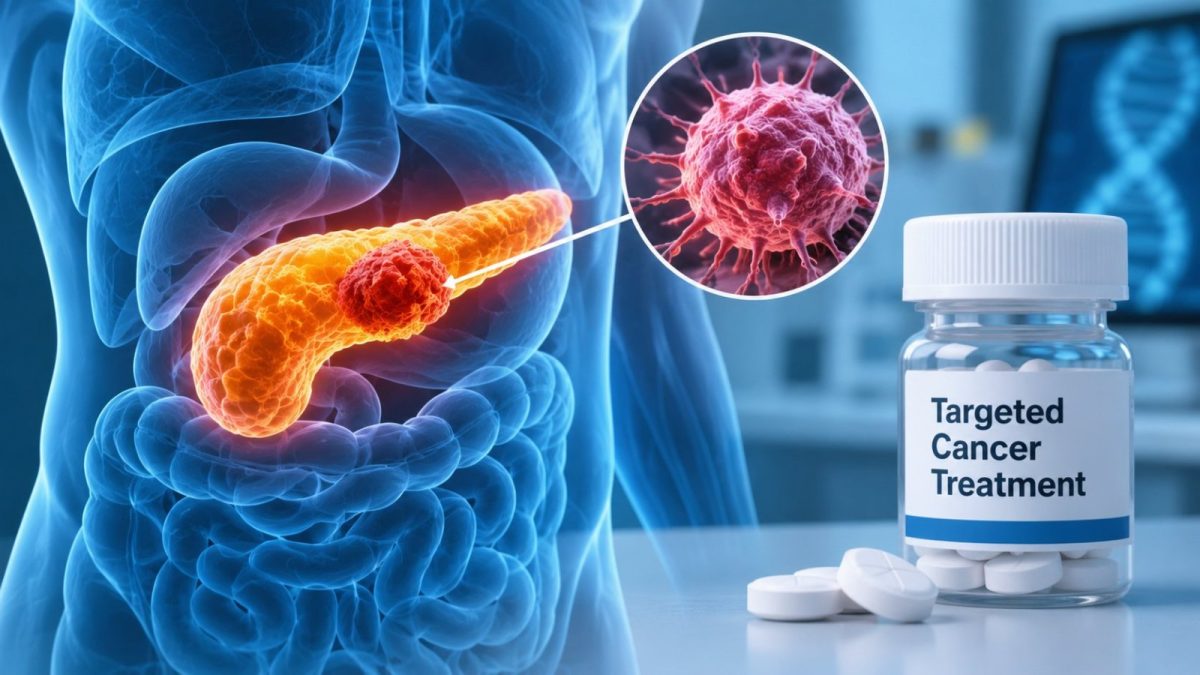
A targeted pill for advanced pancreatic cancer has reportedly been used at a hospital in Abu Dhabi, which raises the question of whether similar treatments could eventually reach India. The medicine, called daraxonrasib, is designed to interfere with signals that help cancer cells grow. But its reported approval and clinical results still need independent checking.
What Is Daraxonrasib?
Daraxonrasib is described as an investigational targeted medicine made by Revolution Medicines. Chemotherapy affects many fast-dividing cells, but targeted medicines focus on specific proteins or pathways that drive cancer growth. Daraxonrasib is designed to interfere with RAS proteins, which control important signals inside cells.
How Does the Drug Work?
RAS proteins act like molecular switches that control cell growth. Normally, they turn on when needed and switch off afterward. But mutations in the KRAS gene can keep these proteins turned on, so cells get nonstop growth signals. These signals travel through pathways like RAF-MEK-ERK, which help control cell division.
Daraxonrasib is designed to interfere with abnormal RAS signalling, which could slow the growth of cancer cells. However, cancer cells may become resistant by switching on other pathways or picking up more mutations. This is why researchers have to look at both short-term responses and long-term treatment results.
What Happened in Abu Dhabi?
According to the draft report, Burjeel Cancer Institute announced on November 27, 2026, that a woman with advanced pancreatic cancer had received daraxonrasib. The hospital reportedly saw early improvement, but this claim hasn't been verified. One patient's response can't show whether a medicine works for other patients.
How Is Treatment Effectiveness Measured?
Researchers judge cancer medicines through clinical trials that compare treatment results. They measure overall survival, progression-free survival, tumour response, and side effects. Overall survival is how long patients live after treatment starts, while progression-free survival is the time before the cancer gets worse or the patient dies. The draft mentions a trial called RASolute 302, but its reported results still need to be verified.
Why Is Genetic Testing Important?
Pancreatic tumours can have different genetic mutations, which may change how they respond to treatment. Doctors use next-generation sequencing to look at DNA from tumour samples and find the relevant genetic changes. This process involves taking out the DNA, reading many DNA fragments, and using computer software to compare the sequences with reference genetic information. It takes special equipment, computing systems, and trained professionals to read these results correctly.
Could This Treatment Reach India?
Before a new medicine can be sold routinely in India, it generally needs a regulatory review by the Central Drugs Standard Control Organisation. Treatment costs may also include genetic testing, imaging scans, consultations, and regular monitoring. The medicine's price and availability in India haven't been verified.
What Should Patients Do?
Patients should talk to their oncologist about available treatments, genetic testing, and suitable clinical trials. They should avoid buying unverified medicines or changing their prescribed treatment without medical advice.
Why Does This Matter?
Research on RAS-targeted drugs may eventually give pancreatic cancer patients more options. But reliable clinical evidence, regulatory approval, affordability, and access to genetic testing will decide its future role in India.