People living with multiple sclerosis (MS) often need MRI scans to check whether their disease is active. These scans help doctors watch for changes in the brain and spinal cord, but going back again and again can be inconvenient and expensive. A newly approved blood test could give another way to monitor nerve damage. But it isn't made to replace MRI scans.
What Did the FDA Authorize?
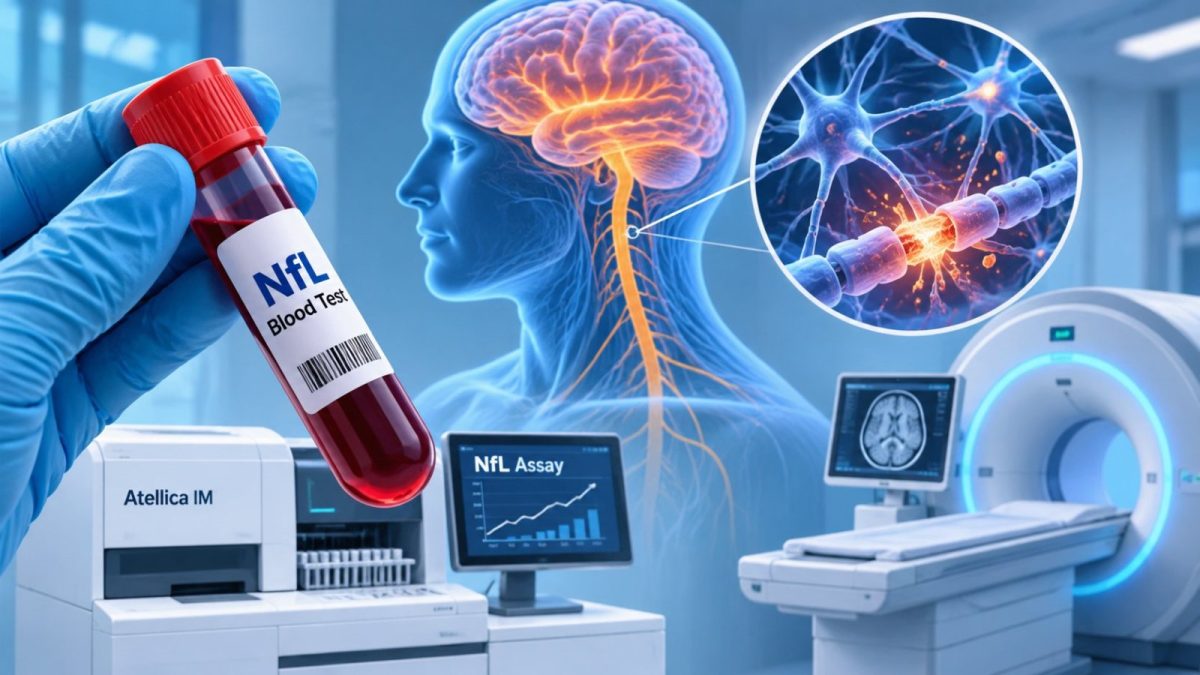
On November 23, 2026, Siemens Healthineers announced that the US Food and Drug Administration (FDA) had given De Novo marketing authorization to its Atellica IM Neurofilament Light Chain (NfL) assay. The test helps doctors check ongoing disease activity in patients aged 18 to 55 who have relapsing-remitting multiple sclerosis (RRMS). It isn't approved to diagnose MS or to monitor progressive forms of the disease.
How Does the Blood Test Work?
Neurofilament light chain, or NfL, is a structural protein found inside nerve cells. When nerve cells are damaged, NfL leaks into the fluid around them and eventually reaches the blood. Higher NfL levels in the blood can mean more nerve injury.
The Siemens test uses an automated immunoassay, which is a lab method that finds specific proteins using antibodies. It runs on the Atellica IM Analyzer and needs about 100 microlitres of serum or EDTA plasma. Because the process is automated, labs with the right equipment may be able to repeat measurements without special scanning procedures.
What Can the Results Tell Doctors?
According to Siemens' technical information, the test uses a cutoff of 12.9 picograms per millilitre. Patients whose starting levels were at or above this cutoff had about 75% more new or growing MRI lesions each year. But this doesn't mean every patient above the cutoff will get new lesions. Doctors can also compare NfL readings over time to spot changes in nerve injury.
Can the Test Replace MRI Scans?
Not yet. MRI scans show where changes happen in the brain and spinal cord, while NfL only measures a general sign of nerve injury. NfL can also go up because of other brain and nerve conditions, so it can't be used alone to diagnose MS. Research suggests that changes in NfL over time may give useful information, but a single reading doesn't always make predictions better than MRI findings. So the two methods work better together than as replacements for each other.
What Are the Limitations?
NfL levels may take several weeks to rise after nerve injury, so the test may not catch an active relapse right away. The results also need careful reading, because age and other health conditions can change NfL levels. Doctors still need neurological exams, medical history, and imaging when they decide on treatment.
Why Does This Matter for India?
For patients who live outside big cities, repeated MRI visits can mean long trips and extra costs. A blood-based way to monitor the disease could make some follow-up visits easier. But the test needs compatible lab equipment, checked reference values, and specialist interpretation. The document doesn't say whether this test has received Indian regulatory approval or is available for sale in India.