Working Together with the Main Photographer
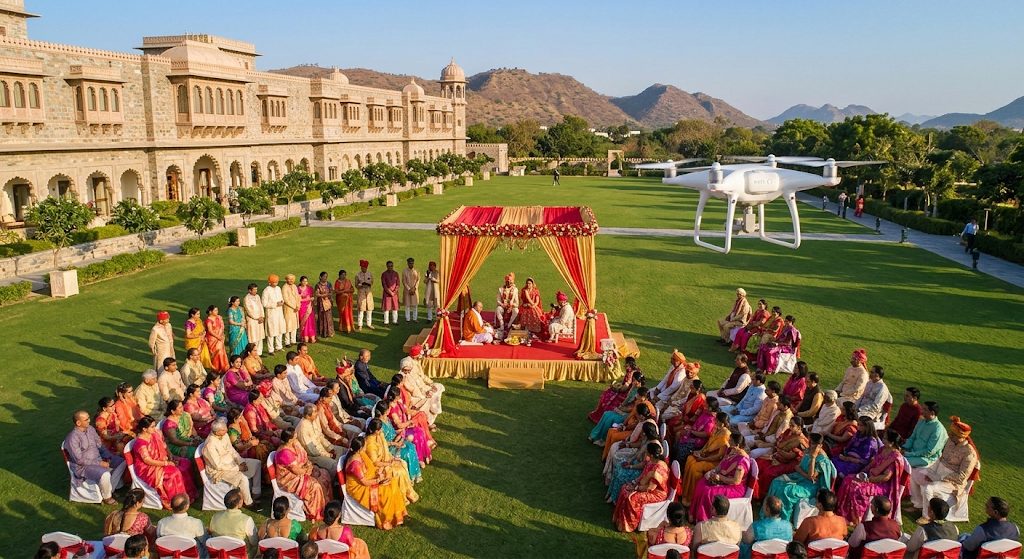
Getting aerial footage makes a wedding video look like a movie, but a drone can ruin special moments if you aren't careful. Drones have small electric motors that spin plastic propeller blades really fast. This makes a loud, high-pitched buzzing sound that easily drowns out quiet vows, speeches, or soft music. Working closely with the main camera crew ensures you capture great shots without annoying the couple or their guests.
Before the wedding starts, the drone pilot and the main photographer should sit down and review the event timeline together. They need to plan exact flight times, set radio channels, and agree on camera angles for the day. The drone should focus on wide shots of the building and the surrounding yard, leaving the close-up emotional shots to the regular ground cameras.
Getting Venue Permission and Checking Tech Setup
You should never just show up and launch a drone at a venue without asking first. Most wedding places have strict rules about guest safety, noise limits, and privacy.
The pilot needs to contact the venue manager a few weeks before the big day to hand in safety plans, pilot licenses, and insurance papers. Doing a quick walk-around at the location before the wedding helps you spot potential problems, like tall trees, power lines, overhead lights, and thick stone walls that might block the 2.4 GHz or 5.8 GHz radio signals between your controller and the drone.
Flying Only in Open Spaces Outdoors
Drone noise gets much worse inside because sound waves bounce off walls and ceilings. Flying inside a hall or under a covered patio makes the buzz sound way louder, making it hard for people to talk to each other.
Keep all flight paths outside in open areas. Drones are great for capturing wide landscape views, people arriving, and big group photos on the lawn. While most regular drones use fixed wide-angle lenses, some expensive professional models have optical zoom so you can get closer shots while staying higher up. During quiet moments like vows or speeches, land the drone or fly up high so no one hears it.
Keeping Guests Safe with Standard Rules
Safety is the most important part of flying near a group of people. Strong winds, sudden battery power drops, or losing your control signal can cause a drone to drop altitude quickly or fly home on its own.
Under official FAA safety rules, commercial pilots aren't allowed to fly directly over people unless they have special certified drones or an official waiver. Pilots should always fly over empty grass or perimeter areas instead. You can tilt the camera down to make it look like an overhead shot while keeping the actual drone off to the side over clear ground.
Planning Short Flights and Battery Swaps
Drone batteries don't last long—usually around twenty to thirty minutes per charge. Swapping out a dead battery right in the middle of the vows looks amateurish and might cause you to miss an important shot completely.
Plan short, quick flights that last about five to ten minutes each. Take off, grab your wide establishing shots, and land right away. Short flights cut down on noise, save battery power for key parts of the ceremony, and give you time to check your video clips on your screen before the next event.