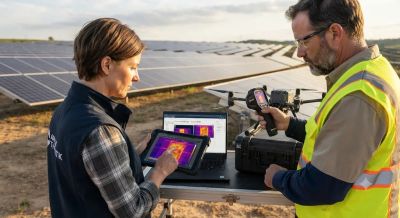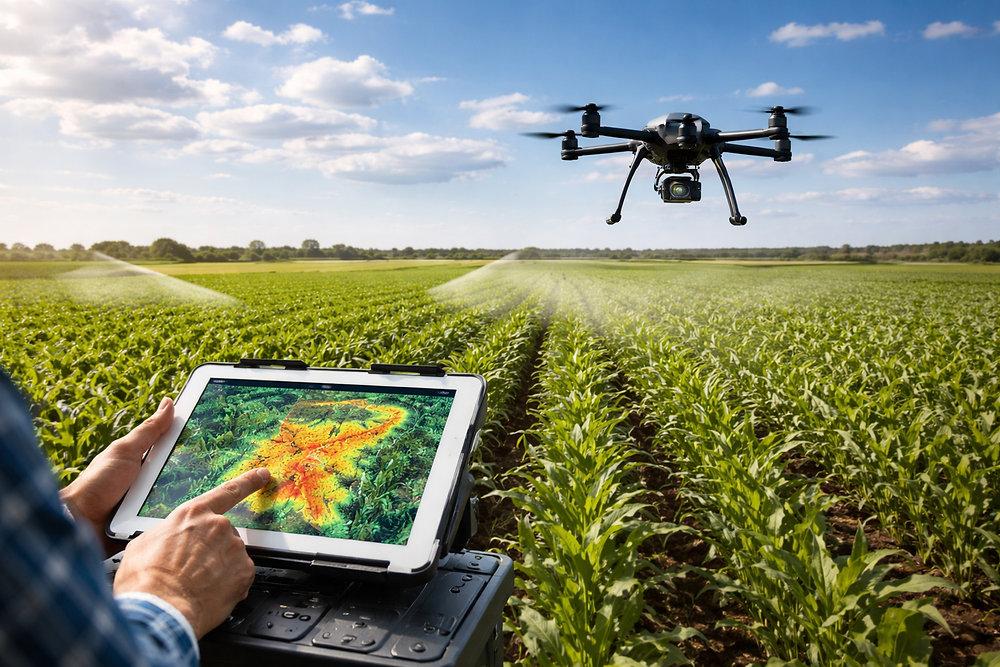
In 2024, Iowa State University Extension tested a way to spray soybean weeds without cameras on the sprayer boom. A drone first scanned the field, software produced a herbicide prescription within 24 hours, and a sprayer turned its nozzles on and off according to that map. On just under nine acres, the extension specialist reported, herbicide use fell by just under 50 per cent, saving $13.42 an acre. That trial, reported in Farm Progress in March 2025, is the practical version of an idea that sounds simple: spray only where the weeds are.
How a drone decides where to spray
The first step is a survey flight. A drone with a multispectral camera records light in bands the eye cannot see. Healthy plants reflect near-infrared strongly, so software can turn the images into an NDVI map, short for Normalized Difference Vegetation Index, which highlights vegetation. A case study by DJI's partner PlantaDrone in Hungary used this on an 18-hectare cereal field with creeping thistle. It made a prescription map, skipped zones where NDVI was zero or below, and sent the plan to a spraying drone. The case study is vendor-sponsored and reports that the drone used 83 litres of solution containing 29 litres of glyphosate.
Newer tools identify weeds directly. Sentera, a US company, says its Aerial WeedScout spots weeds as small as a quarter-inch, and that in beta tests on about 10,000 Corn Belt acres over three seasons it showed 70 per cent savings in herbicide cost compared with broadcast spraying. That is a company claim.
What field trials show
Independent evidence points to real savings with wide variation. In the Iowa trial, weed counts 17 days after spraying showed 99 per cent of weeds injured and 94 per cent killed. A separate Iowa State study of targeted spraying found savings between 42 and 91 per cent, and the extension specialist said lower weed pressure gives higher savings.
A peer-reviewed comparison on four silage maize fields in central Italy tested blanket spraying, patch spraying from drone-based application maps and an untreated control. Patch spraying saved 14 to 39.2 per cent of the herbicide, measured by untreated area, with no loss of crop yield compared with spraying everything.
A May 2026 farm-press feature summarised a wider range: 25 to 77 per cent savings on herbicide, and 15 to 40 per cent for fungicides and insecticides, which tend to be more evenly distributed. It cautions that fields with fairly uniform pest pressure may gain little over blanket spraying, and gives rough costs: $10,000 to $25,000 for commercial multispectral drones, $1,500 to $3,000 a year for software, or $5 to $15 per acre per flight for service providers.
What limits it
Savings depend on the field, not the drone. A farm with weeds everywhere has little to skip. Mapping must also be accurate: a missed patch means an unprotected weed, and an overcautious map saves little. Timing matters, because weeds grow while data is processed. The Iowa team's 24-hour turnaround is fast, but a delayed map can be out of date.
What is in use, and what is not
In practice: drone mapping with variable-rate or targeted spraying on large mechanised farms, and drone spraying as a service.
Experimental or developing: fully automatic weed identification across crops and growth stages, and closed loops where the same drone maps and sprays in one flight.
India: the Namo Drone Didi scheme, approved with an outlay of ₹1,261 crore for 2023–24 to 2025–26, aims to give 15,000 drones to women's self-help groups, with 80 per cent of the cost subsidised up to ₹8 lakh. The groups rent out spraying of liquid fertilisers and pesticides. In a Lok Sabha reply reported in December 2024, the government said 500 drones had been distributed under the scheme itself, out of 1,094 provided by fertiliser companies in 2023–24. The government material describes spraying, not prescription-based spot spraying, so whether Indian drone spraying reduces chemical use depends on how farmers and operators apply it.
The practical advice from the evidence is simple: map first, estimate how patchy the problem is, and model the savings before buying. Whether it uses fewer chemicals depends on the targeting.