What a drone parachute does
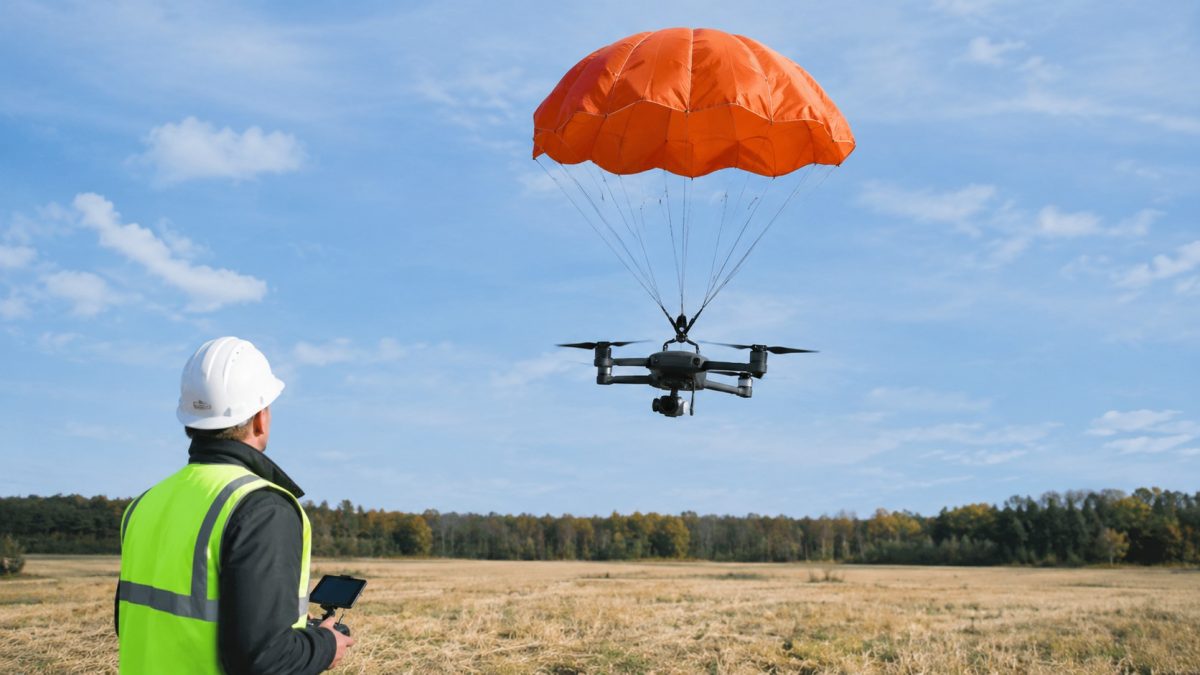
A drone parachute is an emergency safety system designed to slow an aircraft if something goes wrong. Depending on the model, it may deploy after a pilot command, an automatic trigger or a flight-termination system. Once released, the canopy opens and creates drag. This can reduce the aircraft’s descent speed before it reaches the ground.
The purpose is risk reduction, not a promise that the drone will land without damage. The aircraft may still hit the ground, a wall, a tree or another object. The parachute may also swing under wind or drift away from the point where the problem began. It is one layer in a wider safety plan.
Deployment needs time and height
A parachute does not open instantly and stop the aircraft. The system needs time to detect or receive the deployment command, release the canopy, inflate it and settle into a stable descent. During that time, the drone continues moving downward and may also travel sideways.
That is why minimum deployment altitude matters. If the drone is too close to the ground, there may not be enough height for the canopy to open and slow the fall. A parachute designed for one aircraft may have a different minimum height from another system. Pilots should use the exact figure in the manufacturer’s manual and operating limitations, not a general rule found online.
For example, DJI lists an effective deployment altitude of at least 30 metres for its AP100 Parachute. DJI explains that this is the minimum vertical altitude needed for the system to stabilise the aircraft’s descent below 5 metres per second. Those figures apply to the AP100 under its stated conditions; they should not be copied to another parachute or drone.
Weight changes the aircraft
The parachute, release unit, mounting bracket, wiring and other hardware add weight. This can reduce available payload capacity and flight time. It may also change the aircraft’s centre of gravity, handling or performance. The drone must be approved or configured for the parachute system, and the complete take-off weight must remain within the aircraft’s limits.
DJI lists the AP100 Parachute at approximately 935 grams with its bracket and gives a maximum supported take-off weight of 15.8 kilograms. This is a useful example of why operators should check the full installed weight rather than looking only at the canopy. A different system will have different figures.
The extra equipment also needs inspection. A parachute packed incorrectly, fitted with an incompatible mount or connected to an uncharged power source may not work as intended. Follow the manufacturer’s checks for installation, packing, battery status, firmware and replacement intervals.
Weather and operating limits matter
Wind is a major factor. A parachute slows the descent, but the drone can drift while it is falling. Strong wind or gusts may carry it beyond the planned landing area. Rain, dust, cold or heat can also affect the system, depending on its design and rating.
Check the approved temperature range, wind limits, maximum take-off weight and deployment conditions. DJI states an operating temperature range of minus 20 to 50 degrees Celsius for the AP100. Its published descent-speed result was measured in a windless environment at 25 degrees Celsius and under specified test conditions. Real results can differ with the environment, aircraft load, firmware and use.
A parachute may also be less useful during certain failures. If the aircraft is already very low, tangled in a structure, travelling rapidly sideways or over water, deployment may not prevent damage. A canopy can reduce impact energy, but it cannot choose a clear landing spot.
What it cannot guarantee
A parachute cannot guarantee that people or property will be safe. A falling drone still has mass, and even a slower descent can cause injury or damage. The canopy, lines or aircraft may strike something on the way down. The drone may also land in traffic, on power lines or in a crowded area.
DJI’s AP100 FAQ says the device is a supplementary safety measure that reduces descent rate, but does not completely eliminate the risk of aircraft damage, property loss or injury. The operator must still follow safe flight practices.
Plan the flight as if the parachute might not deploy. Keep people away from the operating area, choose a suitable emergency landing zone, respect local rules and maintain a safe distance from hazards. Train the crew on the actual deployment method and emergency actions. A parachute is useful only when it is correctly selected, installed, maintained and used within its limits.