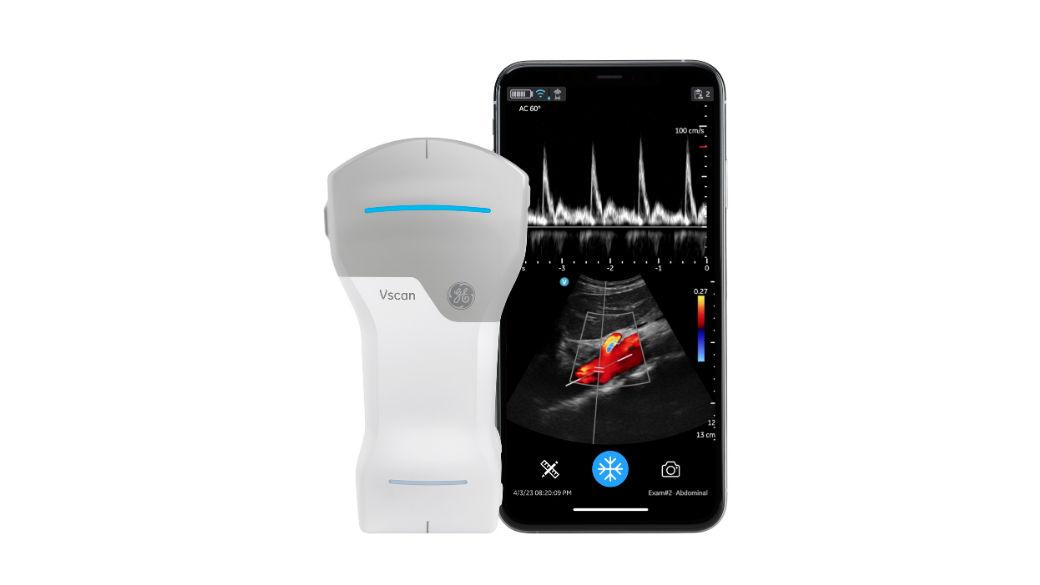
Imagine visiting a small village clinic because you're having trouble breathing. The problem could be in your heart, your lungs, or both. But the nearest hospital with an ultrasound machine and a trained specialist might be hours away. GE HealthCare's Vscan Air aims to make basic heart and lung scans easier to do outside big hospitals.
What Is New in GE HealthCare's Vscan Air?
On November 3, 2026, GE HealthCare announced two AI-assisted features for its handheld ultrasound device: Lung Guidance and AutoAS. Vscan Air is a portable ultrasound scanner that doctors can carry easily. The new features use artificial intelligence to help healthcare workers capture and check ultrasound images.
How Does AI Lung Guidance Work?
Lung Guidance helps doctors place the ultrasound probe in the right spot during a lung exam. The system gives live instructions for scanning eight standard lung zones, which makes it easier for people with little ultrasound experience to capture useful images. It can also find and score B-lines, which are patterns on ultrasound images that may point to fluid in the lungs.
In company tests, users without expert training captured good-quality scans 95.2% of the time, compared with 96.8% for experts. But these findings came from a descriptive company assessment, so independent studies are needed to confirm how it performs in everyday clinics.
How Does AutoAS Detect Heart Valve Problems?
AutoAS helps doctors spot possible aortic stenosis, a condition where the aortic heart valve becomes narrow. The software looks at at least two standard heart views and searches for signs of moderate-to-severe narrowing. It then gives an assessment with a confidence score to help doctors decide if more testing is needed. AutoAS is only available on the Vscan Air SL model, and it doesn't replace a full medical diagnosis.
What Makes This Technology Useful?
Traditional ultrasound exams depend a lot on the operator's training and experience. AI-assisted guidance could help less-experienced healthcare workers capture better images and notice possible warning signs. But accurate results still depend on placing the probe properly, image quality, and medical interpretation.
Has the Technology Received Approval?
According to the article, both Lung Guidance and AutoAS have received US FDA 510(k) clearance and the CE Mark. GE HealthCare says these features are available in the United States and selected countries. However, an official Indian launch hasn't been confirmed.
Why Could This Matter for Rural India?
Many villages and small towns have limited access to specialist doctors and advanced diagnostic equipment. A portable ultrasound device with AI guidance could help general doctors find possible heart or lung problems earlier. Patients who need more tests could then be sent to larger hospitals. But affordability, device availability, training, and ongoing support would decide whether this technology becomes practical for rural clinics.
The Bottom Line
AI-powered pocket ultrasound could make basic heart and lung exams easier to get. For now, its potential in rural India is promising but not proven, especially until local availability, costs, and real-world performance are known.