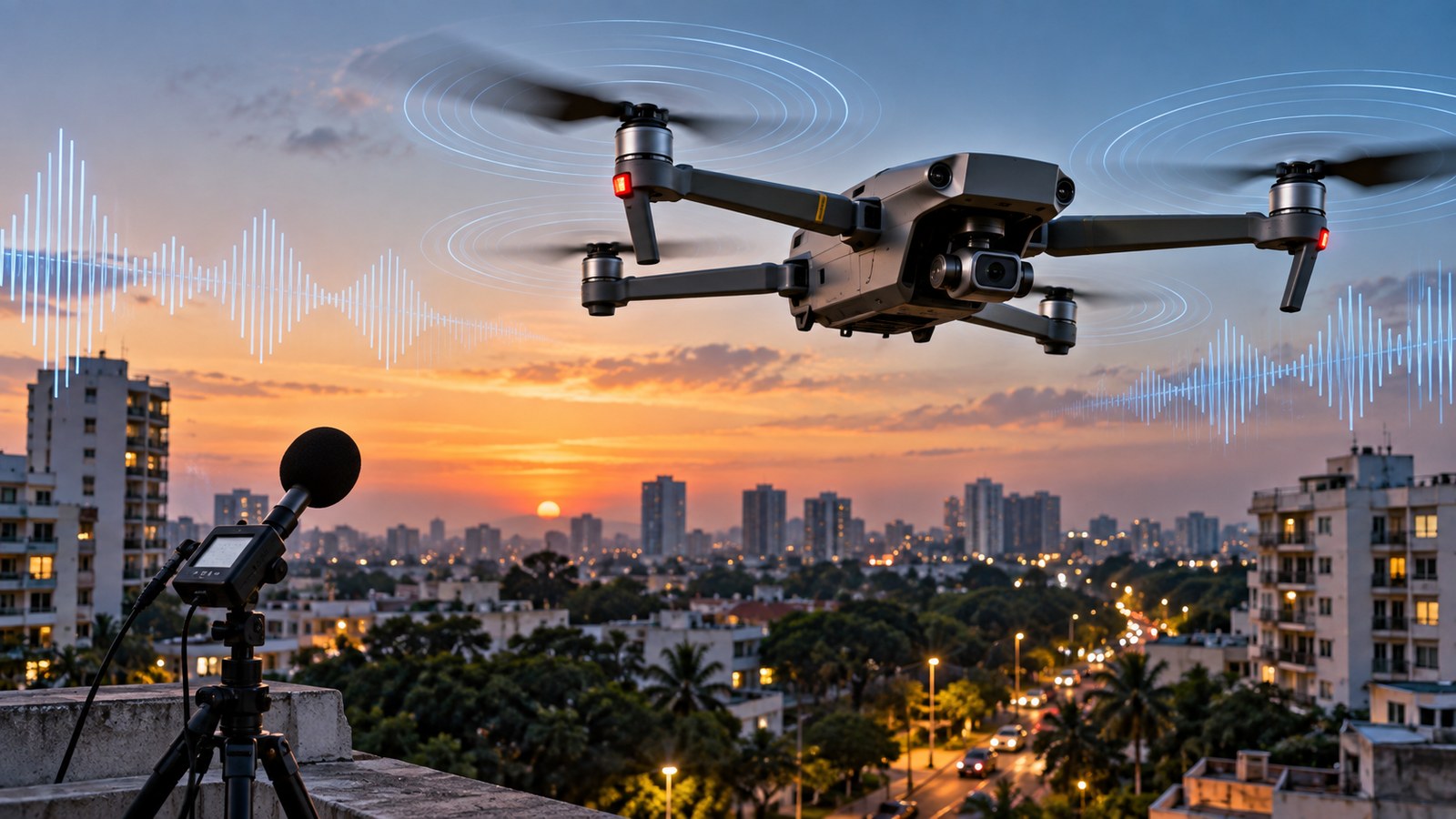
The sound starts with the propeller
A drone's noise is not simply the sound of an electric motor. For multirotor aircraft, propellers and the airflow around them are major contributors. As blades pass through the air they create pressure fluctuations, producing the tonal components associated with the familiar high-pitched drone sound. Motors, airframes and interactions between rotors add further noise.
A 2026 review describes multirotor sound as a combination of tonal blade-passing components and broadband content, with the acoustic signature changing between takeoff, hover and flyover.
Why quieter is not as simple as slower
Reducing noise can involve changing propeller diameter, blade shape, rotational speed, motor operating point or rotor configuration. But every change affects performance. A drone has to generate enough thrust to support its weight and payload. If a quieter configuration produces less thrust, it may need larger propellers, different motors or more rotors.
Research into low-noise propeller designs has tested modified blade geometries and psychoacoustic measures rather than relying only on sound-pressure level. Two designs with similar measured loudness can still be perceived differently if one has stronger tonal or high-frequency components.
Urban operations make the problem more visible
Drone noise becomes more noticeable when aircraft operate repeatedly close to people. A single flyover may be tolerable, but repeated flights along the same route create a different experience for residents. Research on urban soundscapes has found that drone noise can increase perceived loudness and annoyance, particularly where background sound is relatively low.
A 2024 laboratory study found that, at the same sound exposure level, participants rated drone noise as more annoying than several conventional transportation sounds. The study linked annoyance to characteristics including tonality, sharpness and loudness.
Noise and privacy often arrive together
Noise is only one part of public acceptance. A drone hovering near a home can be noticeable because it can be heard and because its camera may appear to be observing private spaces. Research on urban drone acceptance identifies noise, privacy, safety and the purpose of the operation as factors shaping public attitudes.
Medical or emergency uses may be perceived differently from routine commercial activity, while repeated flights over residential areas can raise stronger concerns. Route design, operating hours, transparency and clear rules around data collection can therefore matter alongside technical safety.
The design trade-off is unavoidable
A drone designer has to balance lift, efficiency, endurance, payload capacity, stability and acoustic performance. Making an aircraft quieter can involve larger or differently shaped propellers, lower rotational speeds or changes to rotor configuration. But a larger propeller may not fit a compact airframe, and lower RPM can reduce available thrust unless the rest of the system is redesigned.
For India, the issue will become more relevant if drone deliveries, inspections and urban services increase in frequency. A drone that works technically but is too intrusive acoustically may face resistance from communities over which it operates. Quiet operation is therefore becoming part of the engineering problem of making drones usable in populated areas.