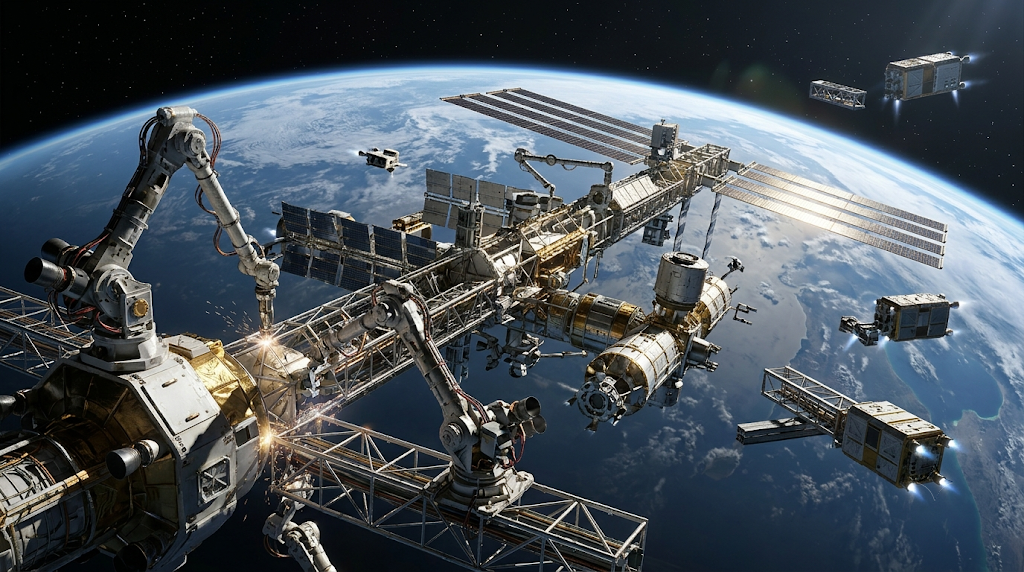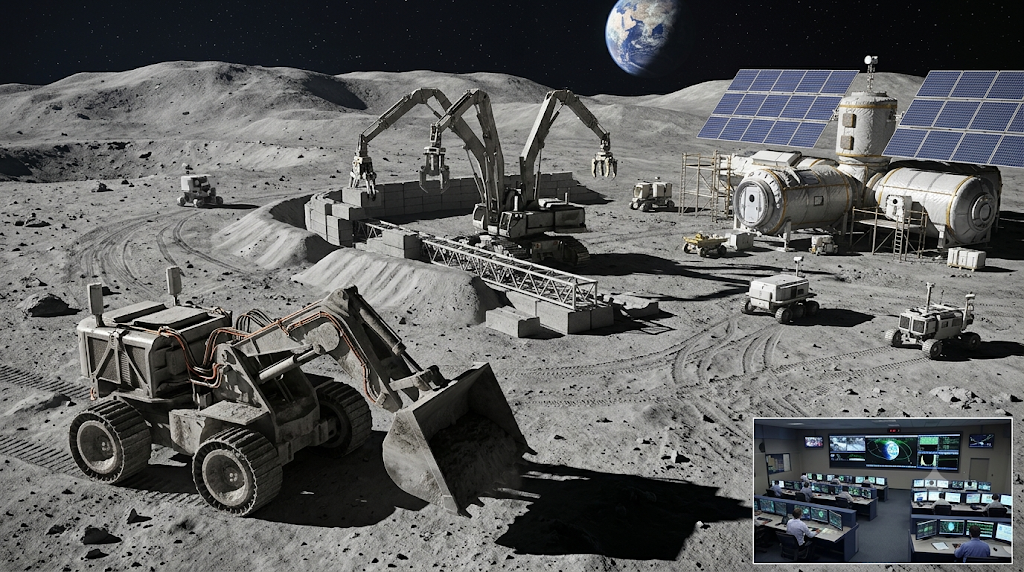
Building roads, landing pads and shelters on the Moon will be difficult for humans. Carrying every construction material from Earth would be expensive and limit the size of future missions. Space agencies are therefore exploring another option: using robots to prepare the ground and turn lunar soil into useful building materials.
In 2026, research teams are continuing to develop robotic excavators, autonomous construction machines and systems that can process lunar materials. These technologies are not yet building permanent Moon bases, but they offer a possible way to prepare infrastructure before astronauts arrive.
Digging and Moving Lunar Soil
The Moon's surface is covered with loose material called regolith. Robots could collect this soil, remove obstacles and transport it to construction areas.
NASA's Infrastructure Pilot Excavator (IPEx) is designed to support this type of work. It uses rotating bucket drums to collect and move lunar soil. Its lightweight design aims to make excavation more practical in the Moon's lower-gravity environment.
NASA is developing and testing the technology on Earth before any future lunar demonstration. It is not yet operating on the Moon.
Turning Moon Dust into Building Materials
Instead of transporting bricks and concrete from Earth, researchers want to use regolith to create construction materials.
One approach involves heating or melting lunar soil to form solid blocks. Other methods explore compacting the material or using robotic 3D printing to create walls and protective structures.
NASA's Moon-to-Mars Planetary Autonomous Construction Technology (MMPACT) project has investigated ways to use local materials for landing pads, roads, habitats and protective barriers. These methods are still being developed and tested. They do not mean that permanent structures have already been built on the Moon.
Robots Learning to Build Together
Lunar construction may require several robots working as a team. One machine could collect soil, another could transport it, and a third could shape the material into a structure.
NASA's 2026 Lunabotics Challenge gave university teams an opportunity to test parts of this approach. Students designed and built robots to collect simulated lunar soil, move across difficult terrain and create protective soil barriers. The final competition took place in May 2026, with 27 autonomous robots competing.
These were Earth-based tests using lunar soil simulant, not actual lunar construction missions. However, they help researchers understand how machines might coordinate tasks in a challenging environment.
The Challenges of Working on the Moon
Building on the Moon is not as simple as sending a robot with a shovel. Lunar dust is fine and abrasive. It can enter moving parts, affect joints and cover cameras and solar panels. Protective covers, suitable materials and dust-removal systems will be important for keeping machines operational.
Power is another major challenge. Solar panels could supply electricity during periods of sunlight, but long lunar nights and permanently shadowed regions make continuous operation difficult. Robots may need rechargeable energy storage, carefully planned working schedules or other power systems to support longer missions.
Low gravity also changes how machines dig, lift and move materials. Communication delays mean robots must perform some tasks independently instead of waiting for instructions from Earth. These challenges make reliability and repairability just as important as digging speed.
What Comes Next?
Robotic construction could reduce the amount of material future missions need to carry from Earth. However, a machine that works during a short test on Earth may not perform equally well in lunar conditions.
Researchers will need to demonstrate that these systems can operate for long periods, manage dust, use power efficiently and produce materials strong enough for real construction. Successful demonstrations on the Moon will also be essential.
The goal is not simply to build faster, but to create machines that can prepare a safe and dependable working environment before humans arrive. If these challenges can be solved, robotic construction could become an important part of future lunar exploration.