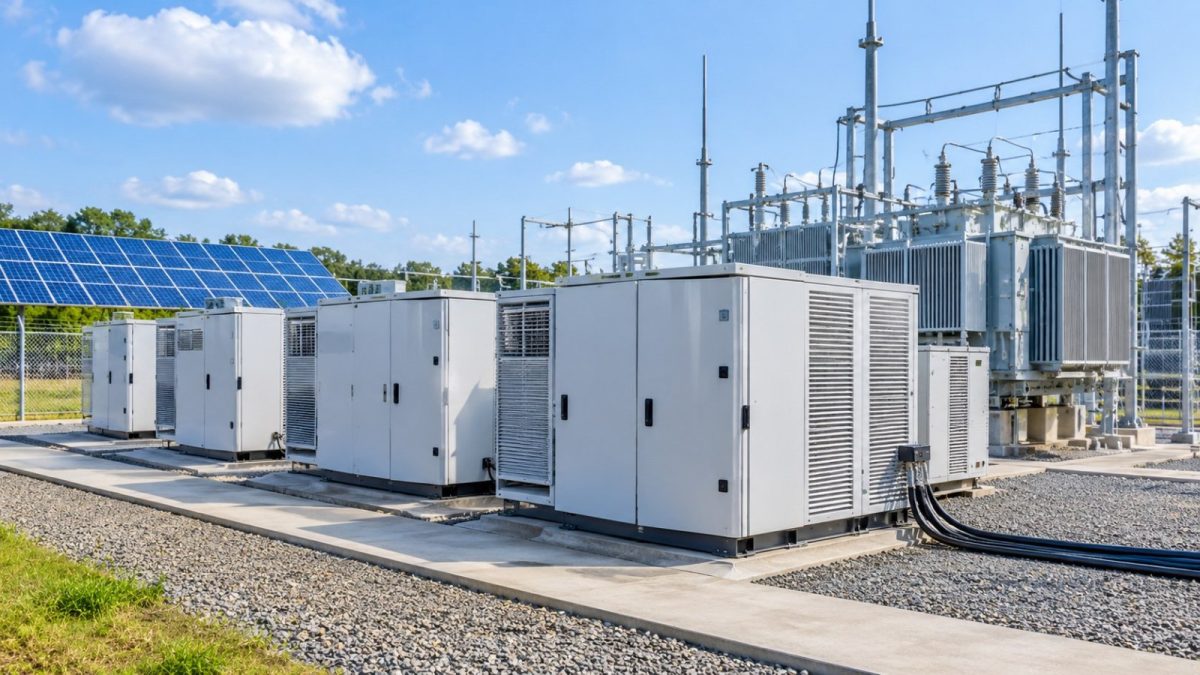
Peak Energy has expanded its Series B funding to $157 million to grow its sodium-ion grid battery business. The California-based company announced the bigger round on November 24, 2026. It includes $132 million in equity and a $25 million debt facility from HSBC. Commercial deployments are planned for 2027.
The real test is whether Peak can turn its design and customer agreements into projects at a competitive cost. Sodium-ion is getting attention as an alternative to lithium iron phosphate (LFP), a common chemistry for grid storage. But it isn't automatically cheaper, and its supply chain is still developing.
How the $157 Million Round Is Structured
Peak first announced a $108 million Series B in October, led by General Motors Ventures. Other investors included Maverick Silicon, Infinite Capital, Eclipse, Xora Innovation, and LG Technology Ventures. The November update raised the total by $49 million.
The bigger round includes a $25 million HSBC debt facility. Based on the split that was shared, about 84% is equity and 16% is debt. Debt can pay for deliveries without selling more shares, but it has to be paid back. Peak hasn't shared the valuation of the round.
What Peak Is Building
Peak's Grid Storage 1 system uses sodium-ion cells based on sodium iron phosphate chemistry, known as NFPP. The batteries are made for stationary storage. They store electricity when supply is high and release it when demand goes up, like after sunset.
Peak lists 3.1 megawatt-hours of usable energy for one system, with a discharge time of four to eight hours. Its design uses passive thermal management instead of active cooling equipment like fans, pumps, and chillers. Fewer moving parts could mean less maintenance, but field results have to confirm that.
What the $2.5 Billion Figure Does and Doesn't Show
Peak says it has more than $2.5 billion in customer agreements. This number comes from the company and isn't independently verified revenue. The announcement doesn't explain how it was figured out, how much of it is binding, when projects are due, or what conditions apply.
Agreements can show that customers are interested, but they don't prove that products have shipped, customers have paid, or systems are running. Better measures will be factory output, finished installations, and customer payments.
Sodium-Ion's Advantage Comes With Trade-Offs
The International Energy Agency says sodium-ion batteries store less energy for their size than the best lithium-ion options, and their supply chain is less developed. It sees potential for stationary storage, where weight matters less than in vehicles. Having a lot of sodium available doesn't guarantee low costs or a secure supply chain.
IEEE Spectrum's reporting on Peak and General Motors points to another business challenge. Peak's cells don't yet match LFP on cell price. The company's case depends on lower costs over the whole life of a storage system. Passive cooling could help, but that advantage needs to be proven in working projects.
The 2027 Test
Peak says commercial deployments are planned to start in 2027. Its Sacramento factory is designed for a yearly capacity of up to 4 gigawatt-hours. That is a target, not proof that the plant is already producing at that rate.
The next year will test how well the factory ramps up, whether deliveries are on time, and how reliable the systems are. The $157 million gives Peak more room to try. What matters next will be shipped systems, operating results, and open project economics.