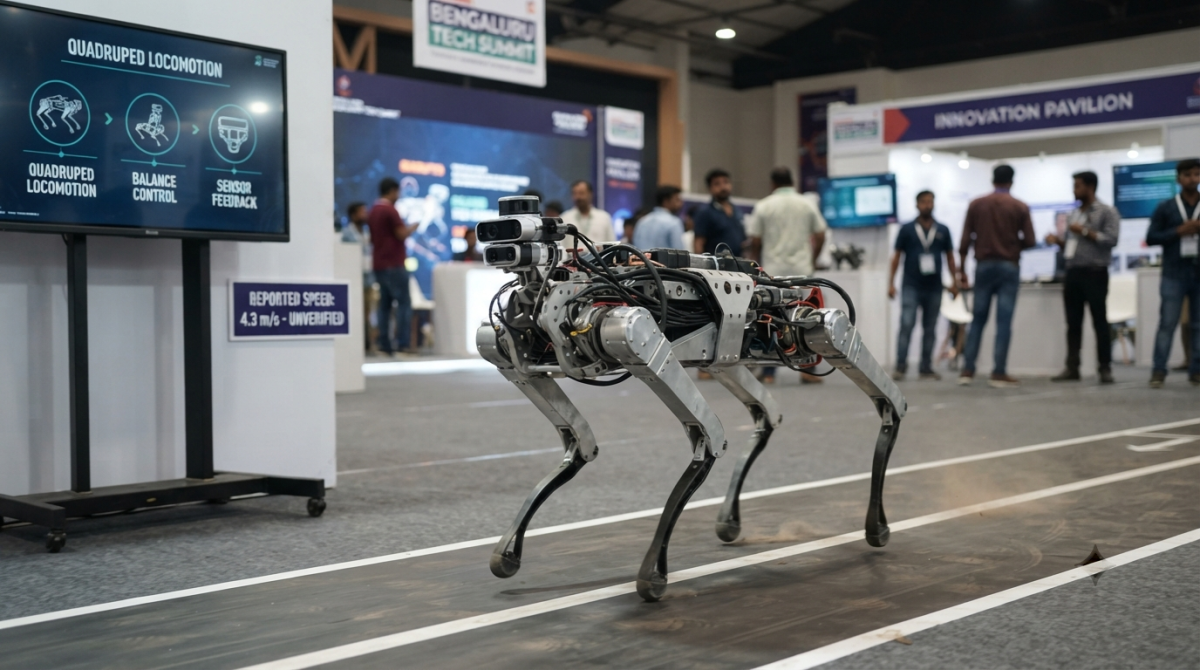
On November 17, 2026, a four-legged robot called Param won a robot race at the Bengaluru Tech Summit. The robot was built by General Autonomy, a robotics startup based in Bengaluru. Reports say Param reached a top speed of 4.3 metres per second, which is about 15.5 kilometres per hour. But running fast in a race is different from working inside a factory every day.
What Happened at the Bengaluru Tech Summit?
Three Indian four-legged robots took part in the race at the AI and Robotics Pavilion. Param from General Autonomy finished first, followed by DHAV from xTerra Robotics and M3 from Strider Robotics.
Some reports called the race a 100-metre sprint, while Deccan Herald described it as one lap. The exact distance and how the speed was measured haven't been officially confirmed.
General Autonomy was started in May 2023 and reportedly raised $3 million in seed funding in November that year. The company mainly focuses on defence uses.
How Does Param Keep Its Balance?
Walking on four legs may look simple, but robots have to make constant adjustments to avoid falling. Sensors help the robot know its body position, and software controls its leg movements to keep it balanced.
According to the company's website, Param is 0.6 metres tall and weighs 50 kilograms. It has 12 degrees of freedom, which means it can control 12 separate joint movements. The company also says Param can carry up to 25 kilograms. But these specifications haven't been independently verified.
Can Param Work Inside Factories?
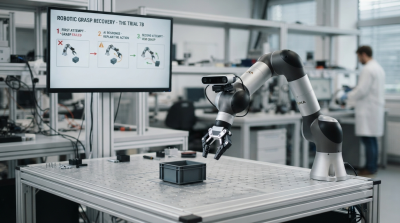
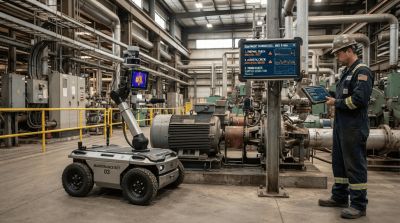
Winning a race shows that Param can move fast. But factories need robots that can work reliably for long hours. Industrial robots may need to climb stairs, carry equipment, avoid workers, and repeat inspection tasks without breaking down often.
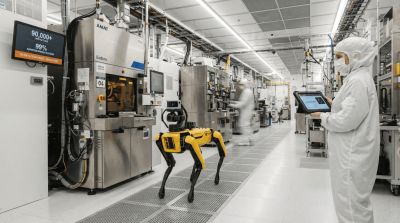
For example, Boston Dynamics' Spot robots reportedly completed more than 90,000 inspections at a GlobalFoundries factory in Singapore. There's no similar verified record of Param completing industrial inspections on that scale.
What Challenges Do Indian Robotics Companies Face?
Building a robot takes more than good software. It also needs strong motors, batteries, sensors, and tough body parts. Robots have to be tested in hard conditions, including dust, heat, and uneven ground. Reports also suggest that Indian robotics startups face funding problems and depend on imported parts.
What Happens Next?
General Autonomy says Param could be used for defence, surveillance, industrial inspections, and carrying equipment. But these uses still need more testing. Public tests of battery life, load-carrying ability, and long working hours would help people understand how useful Param really is.
Param's win is an encouraging achievement for India's robotics industry. But its biggest challenge isn't winning another race. It's proving that it can work safely and reliably in the real world.