What Is Happening?
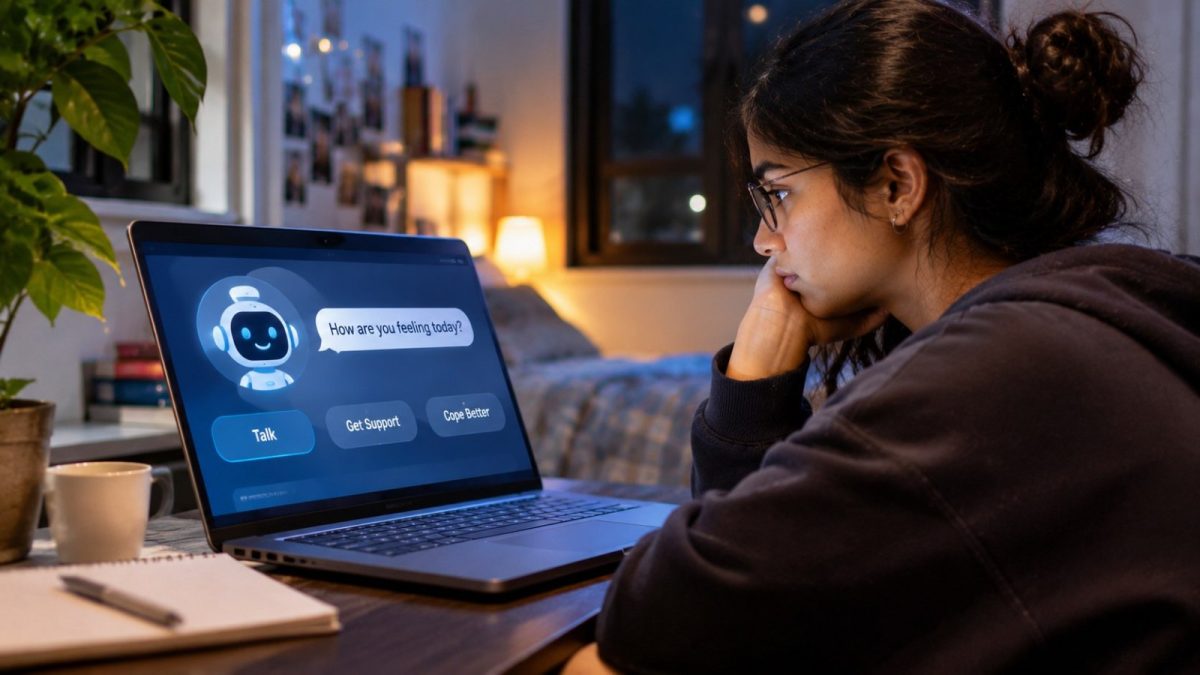
A new study from the University of Bath finds that many college students turn to AI chatbots when they feel low or stressed. Published on November 23, 2026, in the journal JMIR Mental Health, the survey asked 2,020 students about the past six months. Lead researcher Dr. Jeffrey Lambert and his team found that one in four students used generative AI for mental health support.
Numbers were even higher among students who were having a tough time. More than one in three students with very low wellbeing used AI this way. Students with a declared disability were also more likely to turn to it. After publishing the study, the University of Bath shared advice for students and planned a bigger study across more UK colleges.
How Does It Work?
For lots of students, a chatbot acts like a "2 a.m. therapist" that stays awake all night and costs nothing to text. Instead of only asking for help with schoolwork, they go to AI for advice when upset, to make sense of their feelings, or as a personal coach.
Under the hood, these tools use large language models trained on huge amounts of text to guess helpful, polite replies. Because an app answers fast and never judges, typing worries into a chat box feels easy and private. Still, the software has no real feelings, no care, and no medical training.
Why Is It Important?
This peer-reviewed study shows that students use AI for much more than essays or coding. Knowing how often students chat with AI about their feelings helps colleges plan better support and teach safer habits online.
At the same time, the researchers point out what this survey does not prove. It shows what students reported doing, not whether chatting with AI actually helped or harmed their mental health over time.
What Are the Challenges?
The researchers warn that using general chatbots for emotional help carries real risks. A bot can give bad advice, save private chats on outside servers, or react poorly when someone is in a serious crisis. Running heavy safety checks on every chat takes lots of computing power, so basic filters can still miss signs of deep distress.
The study also has limits. It looked at just one UK university, and only 9.1 percent of invited students took part, so the results may not fit every student everywhere.
What Happens Next?
Next, the team plans a wider study across several UK universities to get a clearer national picture. As schools share clearer safety tips, experts remind students that AI cannot replace trained counselors, and real human support is there when people need it.