What Is Happening?
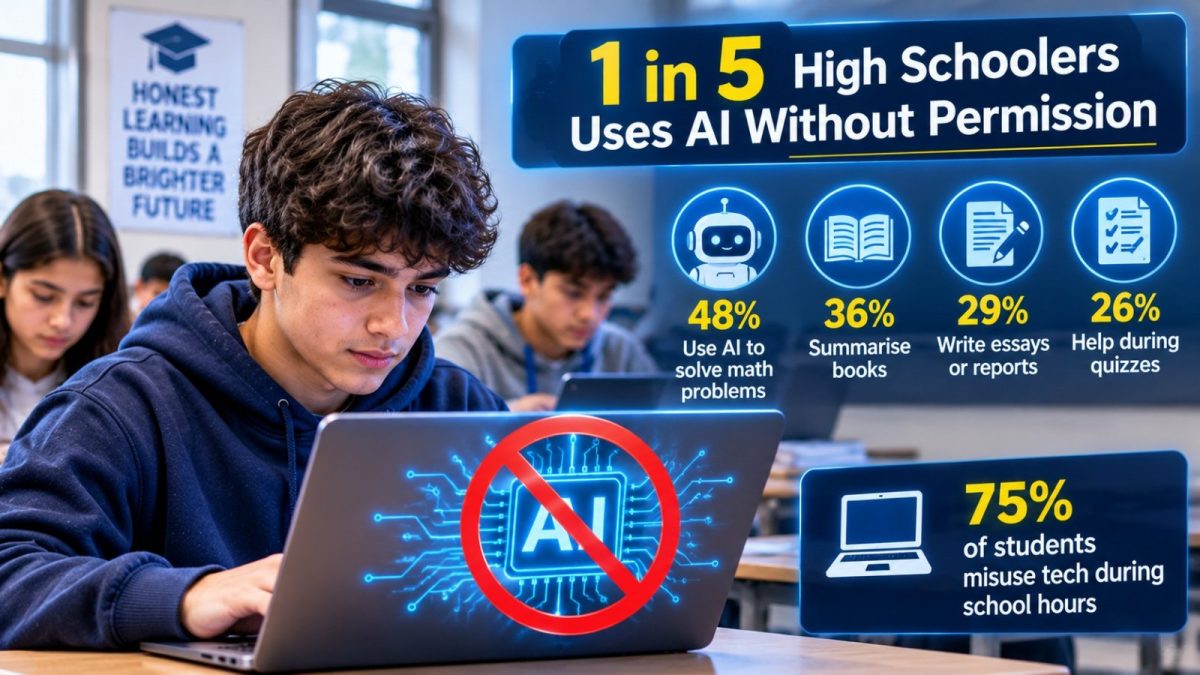
In fall 2026, the Thomas B. Fordham Institute shared a national survey of over 2,000 U.S. high school students and recent graduates, with news reports out on November 11. The study found that about three out of four teens admit misusing tech during school hours, including roughly one in five who use AI tools without teacher permission.
Among students who broke AI rules, 48 percent used the software to solve math problems, while 36 percent summarized books so they did not have to read them. Another 29 percent wrote first drafts of essays or reports with AI, and 26 percent used it to cheat during quizzes or tests. These habits happen alongside heavy screen time: 62 percent of students spend more than half of class time—around 900 minutes every week—on school-issued devices.
How Does It Work?
School laptops and tablets use basic web browsers to connect straight to big AI models running on distant cloud servers. Because powerful data centers do all the heavy computing using models built with billions of settings, even a cheap classroom Chromebook can write a full essay or solve tough math steps in seconds.
When school web filters are weak, students easily jump between class work and outside sites; in fact, two-thirds of surveyed teens said YouTube still works on their school laptops. Because AI chat sites use normal locked web traffic, simple school filters have a hard time telling a safe study page apart from a banned chat box.
Why Is It Important?
These numbers give rare, honest facts from teens instead of guesses from adults. The report also comes as huge school districts crack down on classroom tech. In September 2026, Los Angeles Unified moved to block all student access to AI sites for the 2026–27 school year, while New York City paused AI tools for younger students. The survey shows that secret AI use is closely tied to too much unguarded screen time on school laptops.
What Are the Challenges?
Fixing the school laptop problem brings tough tech and rule trade-offs. Running deep web checks across thousands of student laptops slows down school Wi-Fi, raises tech repair costs, and still fails when teens use phone hotspots or new copycat websites. The Fordham Institute, a group that backs stricter school rules, suggests cutting screen time, adding stronger web blocks, bringing back paper-and-pencil and spoken exams, and locking away cell phones all day. While the data shows teens rarely open social media when phones are locked up, some parents oppose full phone bans because they want to reach their kids during emergencies.
What Happens Next?
Schools across the country are rethinking how much learning belongs on a screen. Expect more districts to upgrade web blocks and move key tests back to paper or live spoken checks, balancing helpful tech with real teacher oversight.