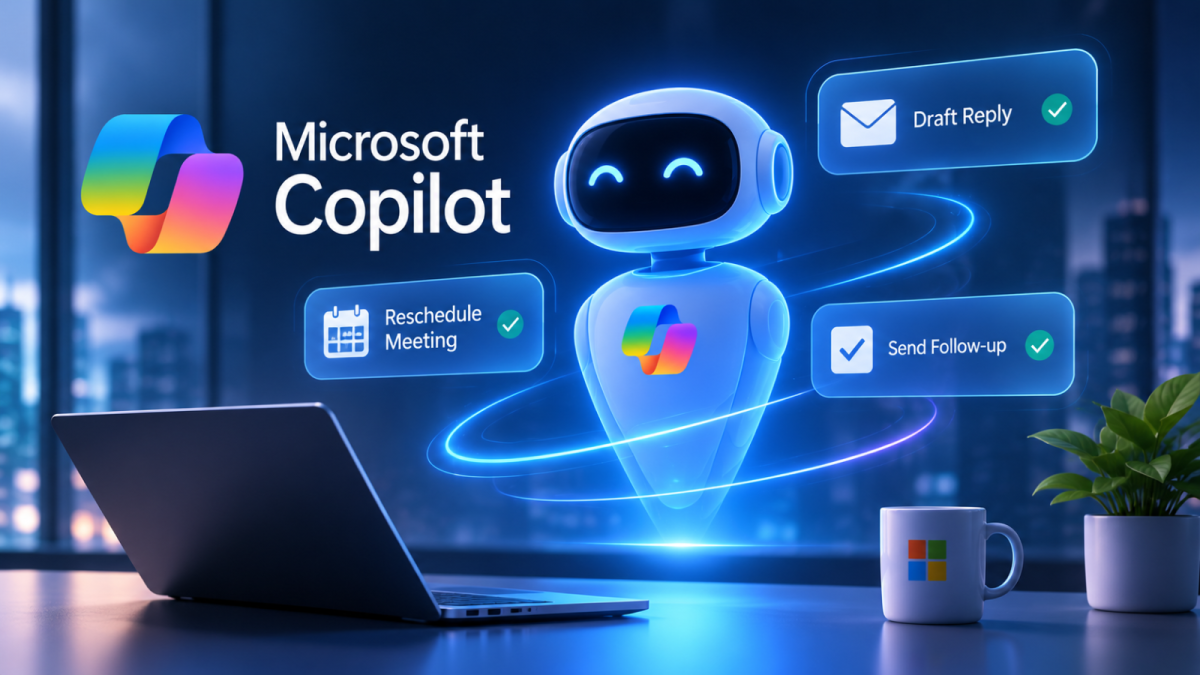
Imagine you come back from a long meeting and find a reply already drafted, a schedule clash already spotted, and a forgotten follow-up ready to send. That is the idea behind Copilot Autopilot, which Microsoft announced at its Ignite event on 17 November 2026.
What Autopilot is
Microsoft describes Autopilot as a trusted, autonomous agent that is personal to you. It is always on and keeps working for you in the background. Unlike a chatbot that waits for your question, it is a long-running agent with its own identity and its own memory.
What it does all day
Microsoft’s own examples are simple and familiar:
-
A draft that is written and ready for you to edit
-
A schedule change that is already proposed
-
A forgotten follow-up waiting to be sent
Think of recurring tasks, draft replies and nudges you would otherwise forget. In short, it handles the small chores that eat up your day.
Why the safety model matters
Autopilot is not a free-roaming open-source agent. Its actions are tied to its own agent ID, and company admins can see what it does. That means there is a clear record of what the agent did, and it is separate from what you did yourself. For a workplace, that is a big difference.
What you should still approve yourself
Even with this tracking, treat Autopilot like a new assistant on its first month. Let it draft, suggest and prepare. But you should personally approve:
-
Emails sent to clients, bosses or outside people
-
Anything that involves money, contracts or private data
-
Changes to meetings with many people
A draft is a suggestion. Once you send it, it is your name on it.
Who can use it, and when
This is not a feature you can switch on tonight. It is not a consumer product. Rollout began on 17 November for customers in Microsoft’s Frontier program. A personal Autopilot inside shared Workspaces is listed as coming soon.
Microsoft is also not done building. One report says only 76 of the 215 features shown at Ignite are ready today.
We could not find an India launch date or price. Licence requirements for Frontier have also not been confirmed here, so check Microsoft’s Frontier program page, or ask your company’s IT team, before planning anything.
The bigger picture
Microsoft is now competing with Meta’s Muse and OpenAI’s dots in the race for always-on personal agents. The difference is its focus: Microsoft is aiming at work, not home.