How Robots Can Help People During Building Fires
Imagine a fire starting on the 20th floor of a tall building. Smoke spreads everywhere, and people rush to find a way out. Firefighters enter the building to help, but thick smoke and heat make their job dangerous.
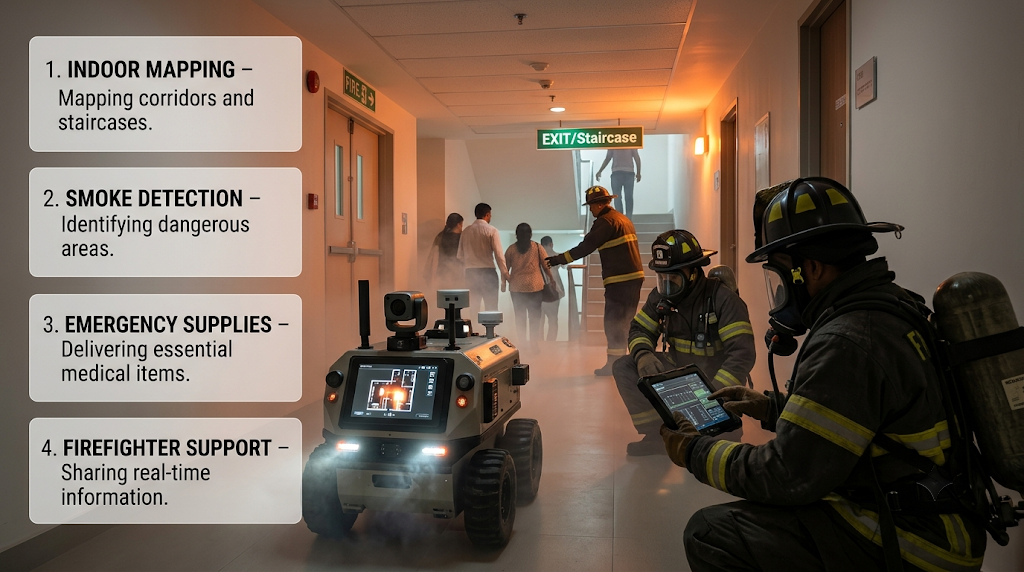
Robots could help in these situations. They could enter dangerous areas, check what is happening, and send information to firefighters. They cannot replace firefighters, but they could make rescue work easier.
How Do Robots Find Their Way?
Robots need to know where they are before they can move safely. They use cameras and sensors to understand what is around them. Some robots use a method called SLAM, which helps them create a map while moving.
For example, if a hallway is blocked, a robot could look for another path and tell firefighters about it. This could help rescue teams find safer ways to move inside the building.
How Do Robots Move Through Smoke?
During a fire, thick smoke makes it hard to see. Even robot cameras may not work well. Some robots use special cameras to detect heat and sensors to check for harmful gases.
In January 2026, researchers studied how cameras already inside buildings could help guide robots. This may help when smoke blocks a robot's view. However, too much heat or damaged equipment can still stop robots from working.
Can Robots Help People Find Safe Exits?
During a fire, people may get scared and confused. They may not know which way to go. Robots could use lights, screens, or voice messages to guide people towards safe exits.
If a hallway is blocked, a robot might suggest another route. Researchers are also studying how several robots could work together to guide people. However, robots must give correct directions because a wrong route could put lives at risk.
Can Robots Carry Emergency Supplies?
Robots could carry useful things like first-aid kits, water, and breathing equipment. This could help firefighters get supplies without entering dangerous areas again and again.
Small flying robots could also check places that are difficult to reach. But these ideas still need more testing before they can be used during real fires.
What Problems Do Robots Face?
Robots can help, but they also face problems. Heat, smoke, and water can damage them. Their batteries may run out, or they may lose contact with firefighters.
Tall buildings have stairs, small doors, and crowded hallways. Some robots cannot climb stairs, while flying robots have limited battery life. Robots must also avoid blocking people trying to escape.
That is why fire alarms, safe exits, and regular fire drills are still important.
What Can We Expect in the Future?
In the future, robots could help firefighters find people, check dangerous areas, and guide people towards safe exits. Researchers are working to improve these robots, but more testing is needed.
The main goal is to help firefighters save lives and make rescue work safer.