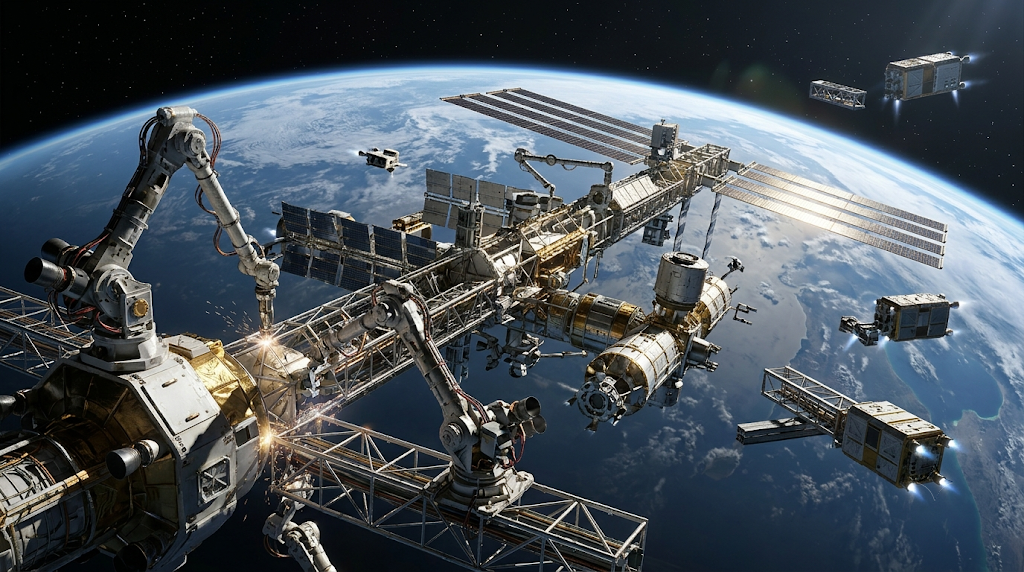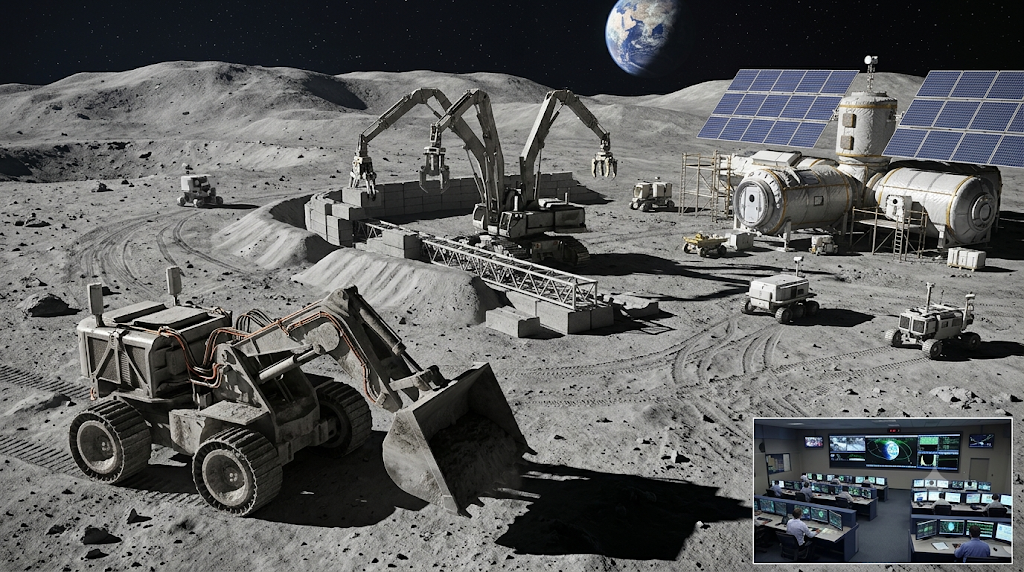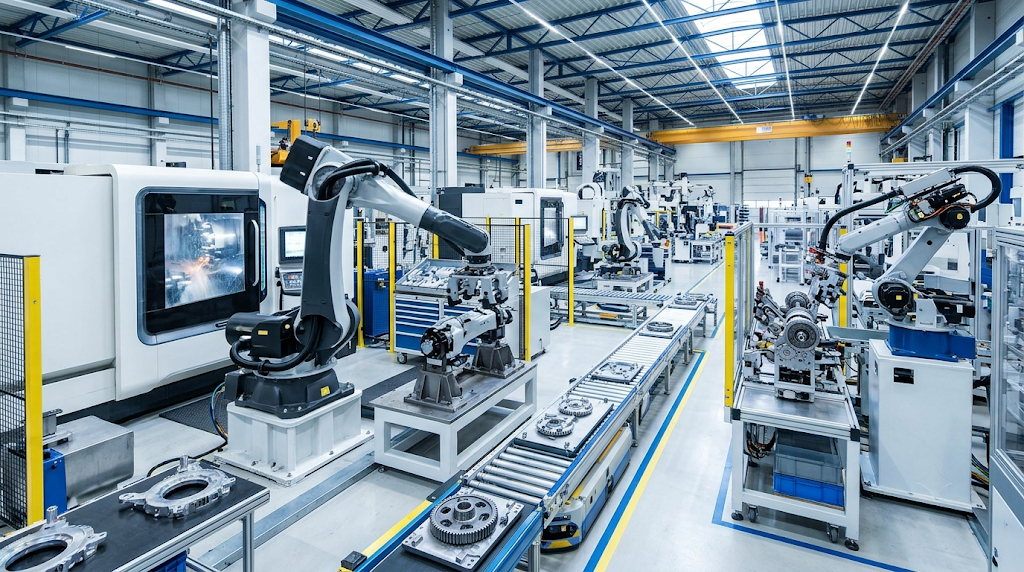
Robots already help build other robots. But a robot that finds its own materials, makes its own parts and builds a copy of itself does not exist yet. The real story sits between those two ideas, and it is more interesting than the science fiction version.
Robots already work in robot factories
FANUC, the Japanese robot maker, says that at its Mibu factories every step is done by robots, from machining parts to final assembly and testing. An automatic transport system connects the steps. Its main campus has separate factories for robots, motors and amplifiers, and the company points to long hours of unmanned machining there.
A big part of this work is called machine tending. A robot puts raw metal into a machine, takes the finished part out and carries it to the next step. That keeps the machine running without a person standing next to it. People still plan the work, fix problems and check quality.
Humanoid factories are the 2026 story
This year, makers of humanoid robots are building production lines for their own machines. A July 2026 article says Figure AI now builds one humanoid robot every hour at its BotQ factory. Foxconn is also moving in. According to TechNode Global, which reported on a license application filed in April 2026, Foxconn’s Vietnam subsidiary planned to start trial production of humanoid robots in September and official production in November 2026. The filing did not name any robot models, and I could not confirm that those dates were met.
Don’t read too much into it, though. The July article also says most of these robots are still learning on the job under close watch. A HouseBots article on the “self-building era” of humanoids says no humanoid robot is independently designing, assembling and shipping another humanoid from scratch. What actually happens is simpler. Robots help with repeat jobs, such as feeding the right parts to the line. In February 2025, Apptronik and the manufacturer Jabil announced a pilot to build Apollo humanoid robots and use Apollo robots in Jabil’s factories, including on the lines that build Apollo. The companies say this paves the way for Apollo to build Apollo. It is a pilot plan, not a finished result.
Robots made of parts that join and change shape
Some researchers use identical blocks instead of one fixed design. These are called modular self-reconfigurable robots. They are made of many modules that connect and work together as one larger robot. A Nature Communications paper from July 2026 describes small robotic boats that can latch onto each other. In a tank, a group of eight boats joined up, changed their shape and moved together.
A study published in August 2026 shows a robot made of modules that can reconfigure itself to move in different ways, such as crawling or slithering. The changes were planned ahead by a computer. The robot did not decide them on the spot.
Partly self-made or truly self-copying?
Here is the main difference. Partial self-production means robots help make robots inside a factory. People design the parts, buy the chips and motors, and keep the supply running. Full self-replication means a machine builds a working copy of itself without that help.
In a 2022 MIT paper, researchers showed a system of small robots and building blocks that could assemble more robots, and also larger ones. That is a real step. But the pieces were ready-made blocks, not materials the robot found or processed. A review of the field describes self-reproduction as a robot building a copy from a supply of parts. Real life does not give you an endless supply. None of the sources I read show a robot making its own motors, batteries or computer chips.