Big-budget games fill most store banners, but some of the best design in 2026 came from tiny teams. While the big publishers chase huge open worlds, smaller studios focused on tight mechanics and unique art styles. Here are four indie games that deserve more attention this year.
Small Studios With Focused Ideas
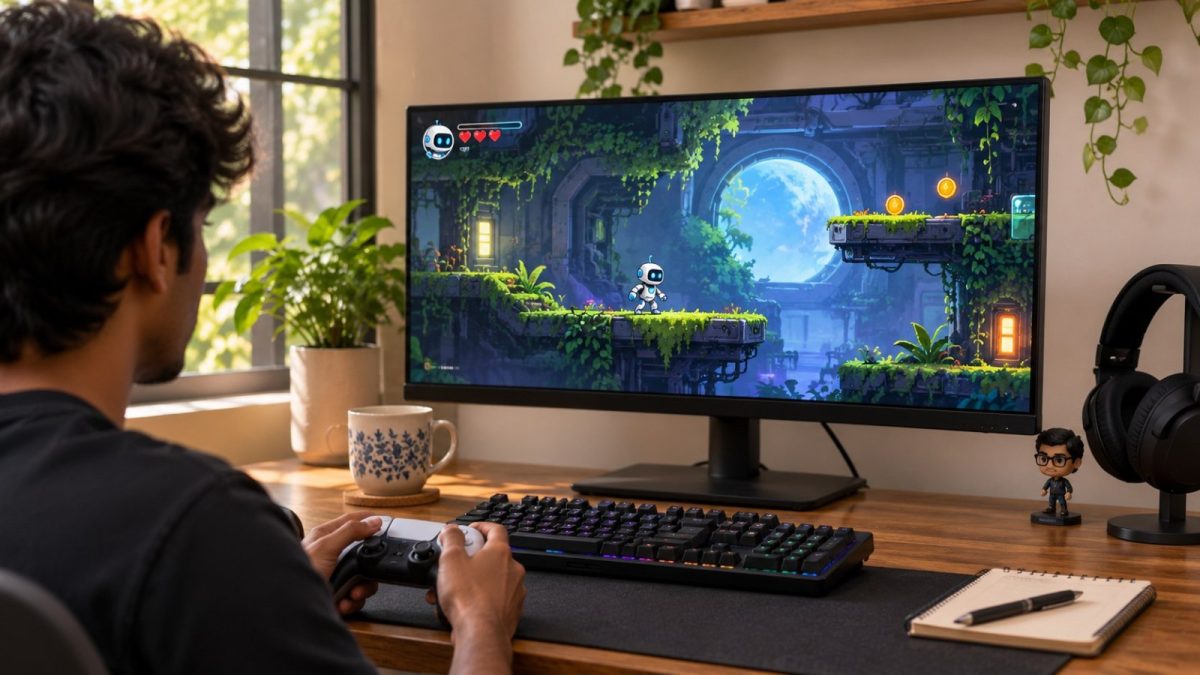
In January 2026, the French studio Douze Dixièmes and publisher Focus Entertainment released MIO: Memories in Orbit. Players control a fast android inside a decaying spaceship that is overgrown with plants and full of rogue machines.
Two months later, solo developer Christoffer Bodegård and publisher Raw Fury launched Esoteric Ebb on PC. It's a role-playing adventure where players try to solve a political mystery in a strange fantasy city.
Summer brought two odd ideas. The Spanish studio Undercoders released Denshattack! in July, which turns a speeding train into a giant stunt skateboard. Then in August, developer Mandragora and publisher tinyBuild launched ReStory: Chill Electronics Repairs.
How These Games Work Behind the Scenes
Instead of depending on heavy 3D graphics engines, each of these games uses smart technical shortcuts. MIO: Memories in Orbit mixes hand-drawn watercolor art with real-time lighting, which gives it depth without needing an expensive graphics card.
Esoteric Ebb works like a digital tabletop board game. Its branching dialogue system keeps track of the player's choices and virtual dice rolls, so failed checks send the story in funny directions instead of stopping progress.
Denshattack! uses tuned physics so that fast jumps and flips on the train stay responsive. ReStory, on the other hand, uses detailed interactive 3D models of electronic parts. Players run a repair shop in early-2000s Tokyo, where they unscrew broken gadgets, test circuit boards, and swap out damaged parts.
Why These Designs Stand Out
Many mainstream games stretch thin ideas across maps that take a hundred hours to finish, but these four respect the player's time. Each one picks a single core system, like hands-on electronics repair or rhythm-based train stunts, and builds every level around it.
According to publisher and store listings, all four games also have fairly low hardware needs compared to the big 2026 blockbusters. That means players can get smooth frame rates on regular laptops and handheld PCs without paying for upgrades.
Technical and Money Trade-Offs
Making focused games has clear trade-offs for small teams. Custom art and stylized visuals can lower production costs, but they need months of careful hand-tuning that bigger studios often automate.
Getting noticed is the biggest problem on crowded digital stores. With thousands of PC games coming out each year, titles without huge marketing budgets depend a lot on word of mouth and free demos to reach players.
What Players Can Expect Next
As 2026 ends, winter sales on digital stores give overlooked games a second chance to find players. Official demos are still listed on Steam for several of these games, so curious players can test the performance and controls before spending money.
Trying smaller games helps keep game design creative and varied. Giving these four 2026 titles a chance means getting fresh ideas that big studios rarely take the risk of building.