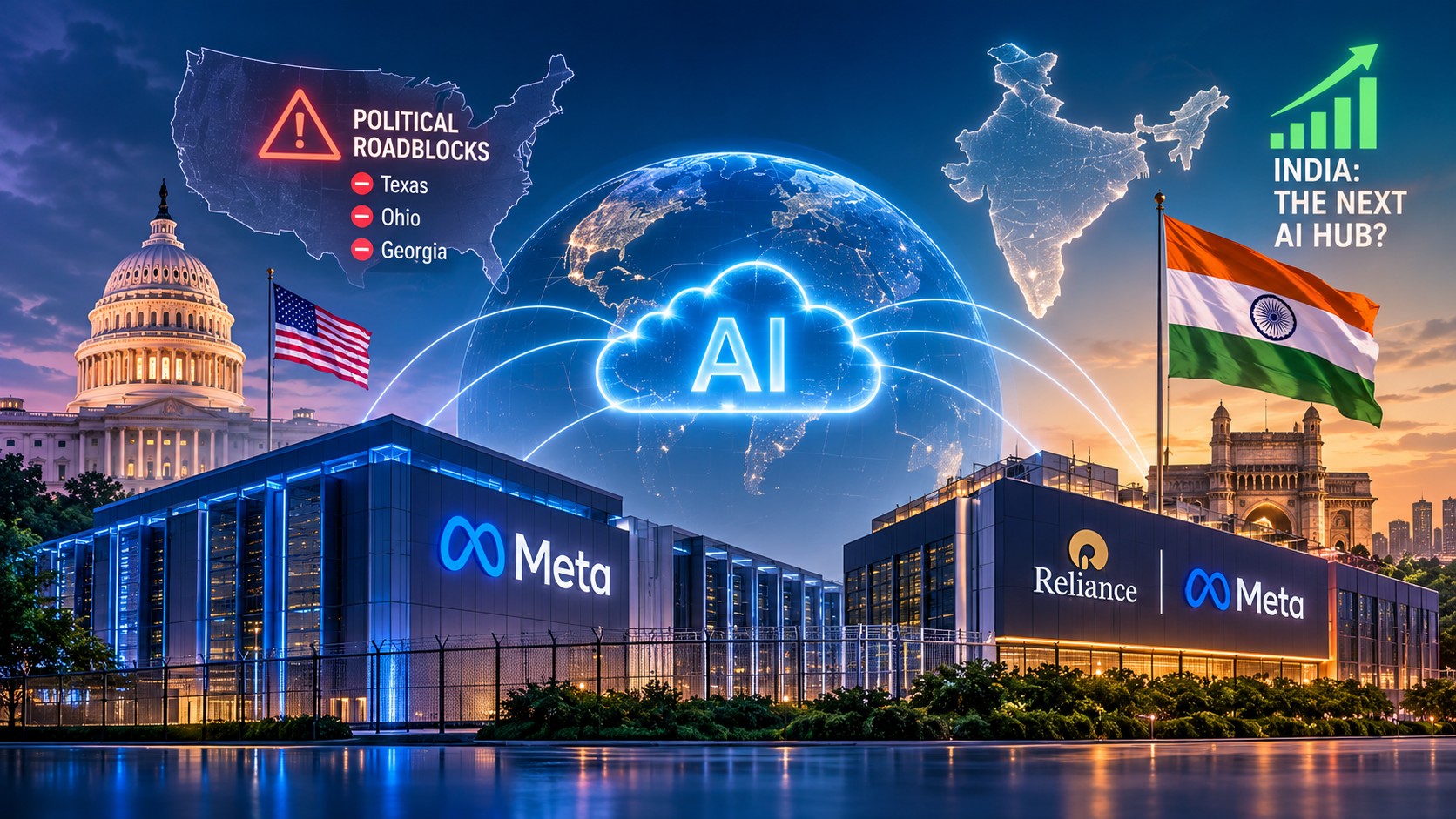
AI companies are running into a new problem in America: local politics. On November 4, 2026, Meta President Dina Powell McCormick spoke at the WSJ Tech conference in Napa. She said starting new data centers in the US will be “very challenging” after the midterm elections. She also said every big tech company is now asking whether to build outside the US.
Which US sites are at risk
Meta is building Hyperion in Louisiana and Prometheus in Ohio. It is also building a 1-gigawatt campus in El Paso, Texas, with BlackRock, which owns 80% of the venture. The risk looks bigger in Texas and Ohio.
Texas governor-elect Gina Hinojosa promised a moratorium on new data center approvals until the legislature passes protections. Outgoing governor Greg Abbott has already paused new grid connections and permits for review. Ohio governor-elect Amy Acton backs a conditional moratorium. Georgia governor-elect Keisha Lance Bottoms promised a temporary suspension.
The stakes are big. The Wall Street Journal reported that Evercore ISI puts more than 40% of planned US data center capacity in Texas, Georgia and Ohio.
Campaign promises aren’t laws yet. Hinojosa takes office on January 19. McCormick said one governor-elect asked to meet Meta after the inauguration, because the state doesn’t want to lose the investment. She also said expanding existing sites should be easier, because people can already see the benefits. She did not say Meta had moved or cancelled any project.
Why India?
Meta expects to spend $135 billion to $145 billion on capital spending in 2026. If US projects slow down, some of that money could go to other countries. Training AI models can usually handle more delay than serving users, so it can happen far away if there is enough power and cooling. US chip export rules and data laws still apply.
In June, Meta signed its first AI data center deal in India with Reliance Industries. The 168-megawatt site is in Jamnagar, Gujarat. Reliance expects to deliver it within two years, and Meta can expand it later.
India has been getting ready. Its data center capacity grew from about 375 megawatts in 2020 to about 1.5 gigawatts in 2025. Forecasts say it could reach about 8 gigawatts by 2030. The government also offers a tax holiday until 2047 to qualifying foreign cloud companies that serve global customers from Indian data centers.
Who really owns the compute?
Reliance will build and run the site, and Meta will lease it for its global AI needs. Meta won’t own the infrastructure. India gets the buildings and the investment.
You could say India is the landlord here, not the AI owner. That could change if Indian companies train their own models on this capacity, but this deal doesn’t show that.
AI’s bottleneck isn’t just chips and power anymore. It’s also finding places that will say yes.