Zendesk Wants to Fix How Companies Handle Employee Requests
You know how it goes when you need something simple at work, like software access, onboarding stuff, or just a question about a company policy? You’d think it would take five minutes, but with normal IT ticketing it can turn into a multi-day wait. Zendesk is trying to fix that.
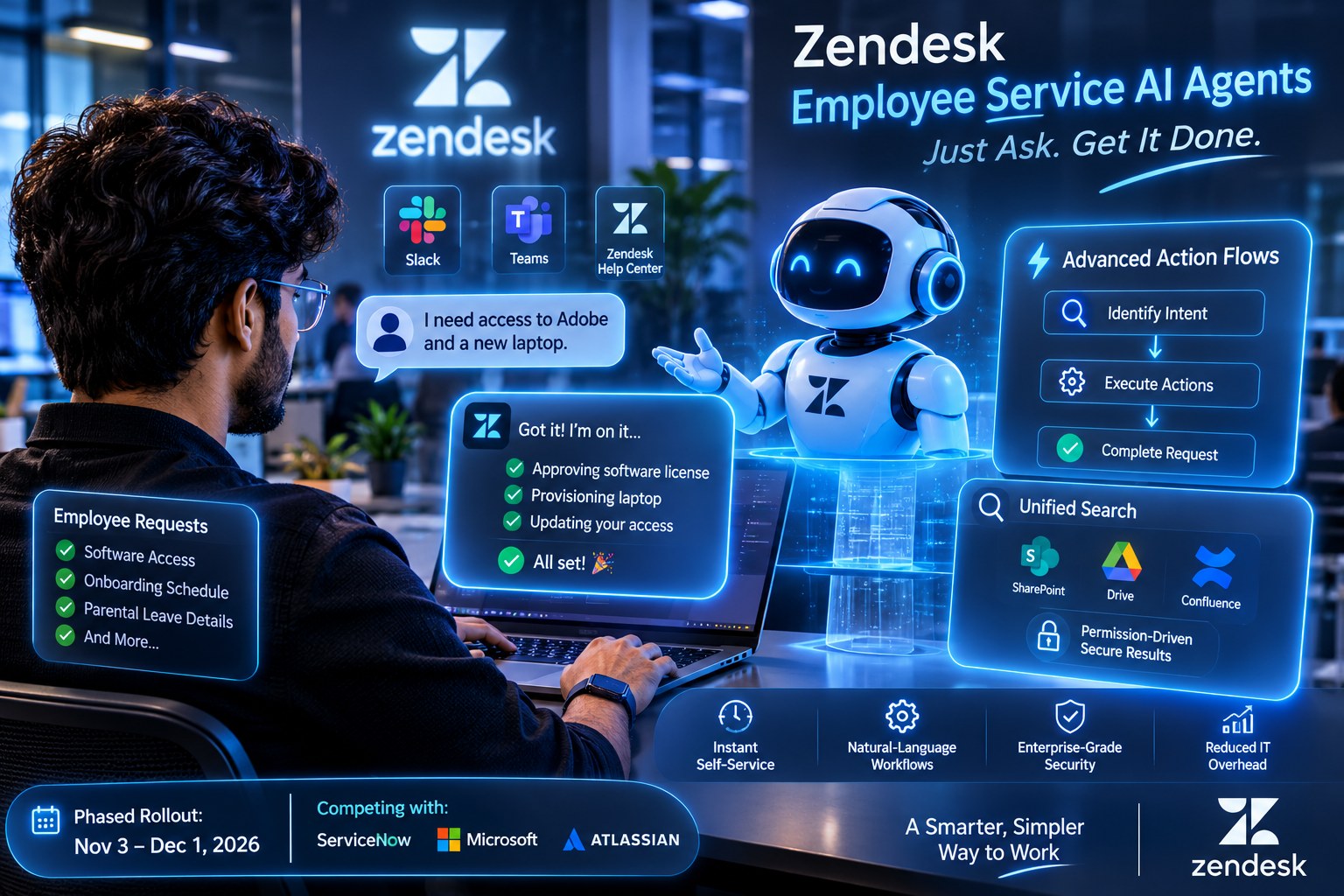
On October 19, 2026, Zendesk announced Employee Service AI Agents and something called Advanced Action Flows. They’ll roll out in phases from November 3 to December 1, 2026, for customers who already have the Employee Service Suite. Zendesk is mostly known for customer support, so this is a pretty bold move. It’s basically going after bigger names like ServiceNow, Microsoft, and Atlassian in the world of internal company workflows.
So how does it work? Instead of making employees log into a separate helpdesk portal, the agent lives in places people already use, like Slack, Microsoft Teams, and the Zendesk Help Center. You just type what you need, and the system handles it in two parts:
- Figuring out what you want: The AI agent reads your message, picks out the important details, and decides the best way to solve it.
- Actually doing the task: It starts Advanced Action Flows, which do multi-step tasks in the background following the company’s rules. That includes approving software licenses, setting up network access, and managing equipment, all without a person having to sort through the request first.
The search part is built on tech from a company called Unleash, which Zendesk bought on December 18, 2025. It can look through stuff like Google Drive and Confluence. Security matters here, so the agent follows source-level permissions:
- In Help Center chats and direct messages, the agent only has the same access you do. If you can’t open a confidential document, the agent won’t show you anything from it.
- In shared Slack and Teams channels, it follows the permissions of the admin who connected it, so answers stay within what that channel is allowed to see.
Zendesk’s big idea is being fast and conversational instead of heavy and complicated. ServiceNow is huge in corporate IT, but setting it up can take months of professional services. With Zendesk, IT teams can build Advanced Action Flows just by typing in plain language instead of writing messy custom scripts, so it’s way easier to get started.
But there are some downsides companies should think about:
- Latency: Figuring out what someone means and calling a bunch of different apps takes time. If hundreds of people send requests at once, like during the morning login rush, things could slow down.
- Cost: There aren’t big setup fees, but the AI pricing is metered. Once you go over your monthly allowance, it costs $1.50 to $2.00 per automated resolution. Analysts say that without strict limits, workflows that run out of control could create surprise bills and mess up an IT budget.
In the end, whether Zendesk wins depends on one question. Will IT leaders be okay skipping the strong data controls of the older platforms just to get quick, chat-style answers? That’s what I’d be watching.