On November 2, 2026, Anthropic introduced FlashProve, a free tool that can show which AI model produced an answer without revealing its secret settings, known as weights.
Why does this matter? Imagine paying for an expensive AI model through another company. How can you know it is using the model it promised? It could send your request to a cheaper one instead. The answer alone may not reveal the difference.
A quick note: Anthropic developed FlashProve and also makes Claude, the AI that helped write this article.
How Does It Work?
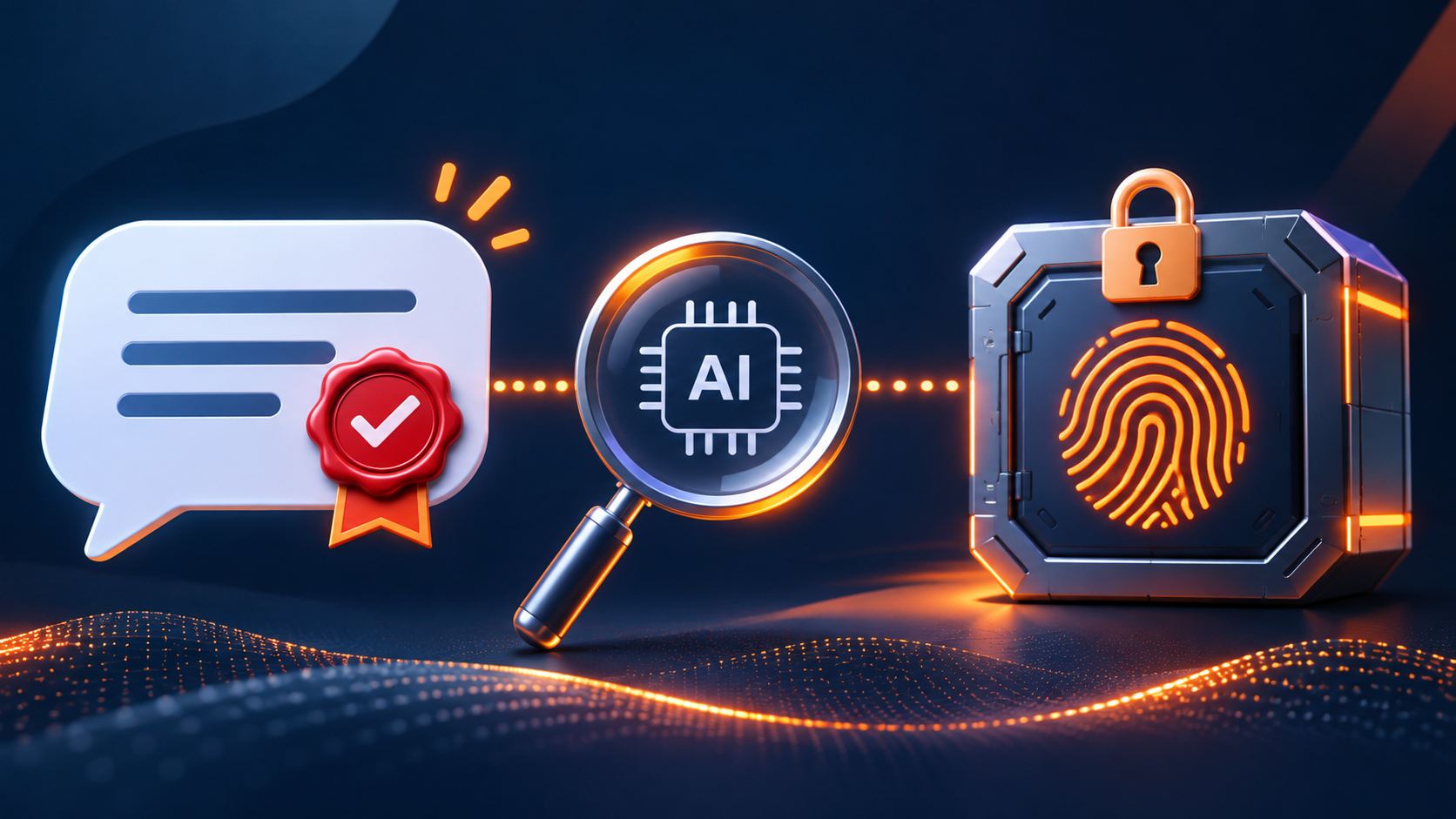
Think of it like a fingerprint. FlashProve creates a digital fingerprint of a model’s weights. The fingerprint can be shared, but the weights stay hidden.
When the model gives an answer, FlashProve creates a proof called a zkSNARK. This lets someone check that the answer came from the model linked to the fingerprint, without seeing its secret settings.
Anyone with the fingerprint, question and answer can check the proof. On a normal computer processor, this takes around 17 to 21 seconds.
What Does It Cost?
Creating proofs takes a lot of computing power.
Anthropic tested FlashProve using Meta’s Llama 4 Maverick, not Claude. On one H100 chip, it handles about 110 tokens per second. A token is a small piece of text that an AI reads or writes.
Each proof is about 19 MB for a request containing 1,024 tokens. Making it takes roughly 70 to 95 times more GPU time than a standard system needs for the same request.
The speed figure needs explaining. The reported 110 tokens per second counts every token in a request, but the proof checks only one. Counting only checked tokens, the rate is about 39 per second. Requests are handled in batches, so one may wait around five minutes for its proof.
What Can It Not Prove?
FlashProve can show which model produced an answer. It cannot show whether that answer is correct or safe.
It works only with a version of the model that always chooses the most likely next word. Answers that use random word choices may not match the proof, Anthropic warns.
There may also be a privacy issue. The checker needs the full question and answer. That could mean sharing a hidden system prompt, which contains extra instructions for the AI. Anthropic’s sources do not explain this, so it remains an open question.
The proof arrives after the answer. It can help detect when the wrong model was used, but cannot stop it. Requests are limited to 1,024 tokens.
Where Could It Be Useful?
At 70 to 95 times the usual computing cost, FlashProve is unlikely to be used for every chat. It may suit spot checks. An auditor could check a sample of a company’s AI replies to see whether it used the model it promised.
There are reasons to be cautious. The performance figures come from Anthropic’s own tests, with no independent test found in the sources reviewed. The project’s code page is reportedly marked “not maintained.” Anthropic also says its technical report was written with AI and has not been fully reviewed. Mathematical checks support the main security claims, but the faster checking code has not been proven to match them.
One question remains: who confirms that the fingerprint belongs to the model the company promised?