Zapped, Hoed or Plucked: Can Robots Really Keep Fields Weed-Free Without Herbicides?
Lasers and mechanical tools can kill most weeds in trials, but detection errors, slow speeds and high prices limit large-scale use.
Yes, robots can remove weeds without herbicides, but not yet everywhere and not perfectly. Precision weeding methods in the research literature include chemical, mechanical and laser or thermal approaches. This article covers the non-chemical ones. In 2026 the evidence shows they can work well in specific crops, while large-scale farming exposes problems of speed and cost.
First, the Robot Has to See the Weed
Everything starts with detection. In a cotton-field laser robot, retraining the vision model with extra images raised detection precision to 91%. In carrots, a laser robot reached an 85% detection rate, and the authors say its overall effectiveness depended strongly on detection performance. Vision can also be cheap. A 2026 low-cost platform runs a lightweight detection model in 118 milliseconds on a Raspberry Pi 5.
Precision Cutting With Lasers
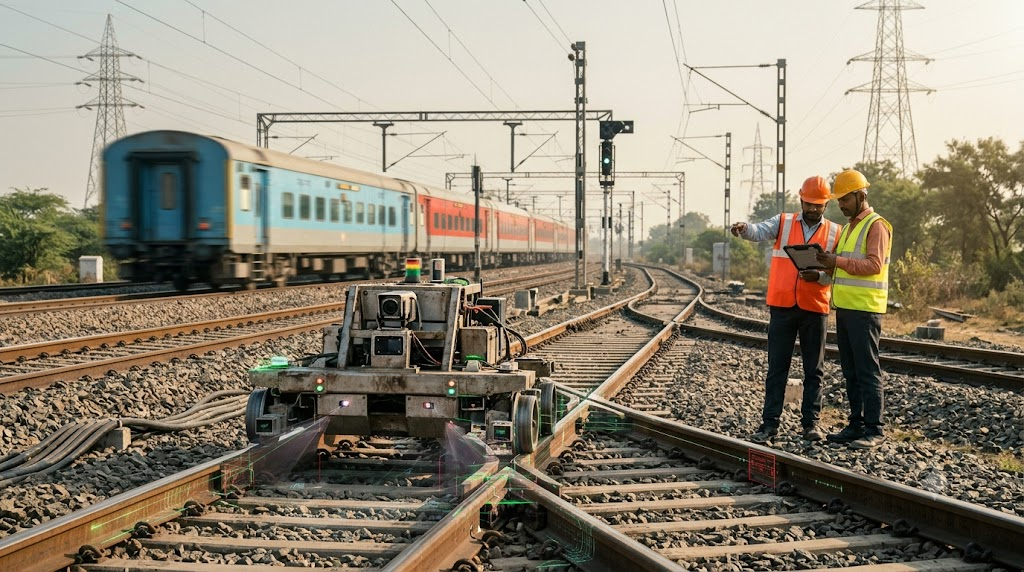
Lasers burn the weed’s growth point instead of spraying it. Results vary widely by system. In a carrot field, a laser robot achieved a 95% weeding success rate in one cycle. The cotton robot killed 47% of weeds in a single pass without tracking, and 72.35% once tracking was added, at about 8 seconds per weed. A 2026 study of LiteWeed, a roughly 500 CAD semi-autonomous platform using a 4 W laser, reported over 96% weed removal in field validation in Canada and Tanzania. Those are small-scale research results, so they don’t show how a machine performs across thousands of acres.
Independent field trials of a commercial laser weeder by Cornell and Rutgers researchers reported weed biomass reductions of 97% or more in beet, spinach and pea crops, according to a secondary summary .
Mechanical Removal: Blades, Fingers and Seed Maps
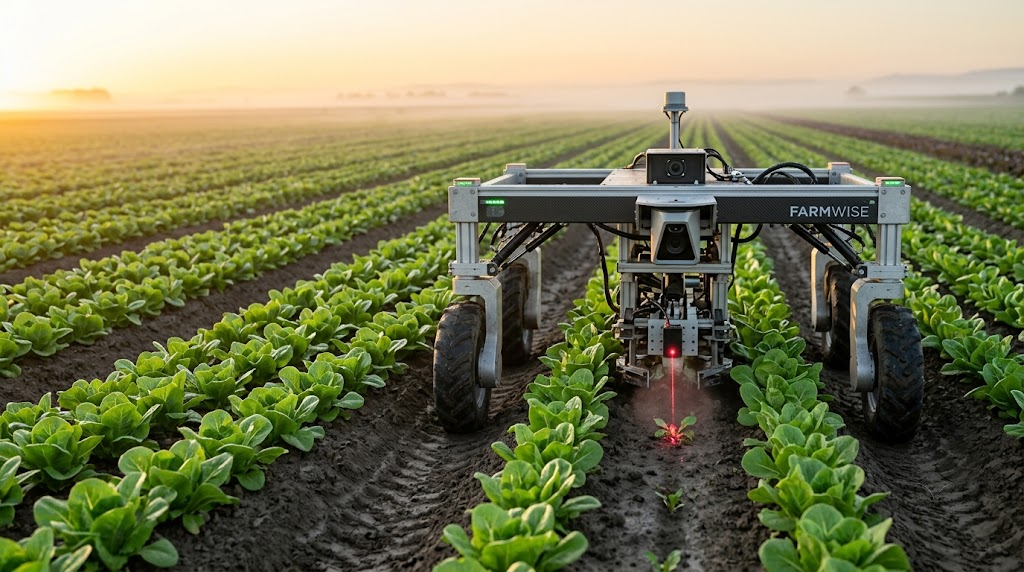
Mechanical robots use tools instead of heat. In UC Davis lettuce trials, Naïo’s Dino with finger weeders controlled more than a third of in-row weeds and cut hand-weeding time by about two hours per acre. FarmWise’s Titan, with paired knife blades, achieved 40 to 50% in-row control, and yields were not significantly affected in either case. Those trials are from 2021, so newer models may perform differently.
FarmDroid takes a different route. It records each seed’s position at planting, then cultivates only where no seed was sown, so it needs no vision system. It covers about 6.5 hectares a day and costs €75,000 to €97,000 plus VAT, with a separate RTK base station.
The Large-Scale Problem
Scale is where the trade-offs show. An analyst reviewing Carbon Robotics’ 60-foot G2 1800 said it works at 5 to 10 acres per hour, much slower than sprayers, so a 1,500-acre farm needs at least 10 days of full-time operation. The analyst concluded that laser weeding may need complementary control methods in large-scale agriculture.
Cost estimates conflict. Cornell and Rutgers researchers estimated a minimum of roughly $500,000 per unit, according to a secondary summary, while another review reports prices from about $1.4 million for the G2 600, plus an annual software fee. Treat both as unconfirmed and ask vendors for current quotes.
Physical limits remain too. An independent review notes that large, woody or mature weeds need more laser energy, and that autonomous mechanical robots often have lower hourly capacity.
What to Watch
“Precision” does not always mean herbicide-free. One company claims its solar-powered precision sprayer cuts herbicide use by 99%, which is a reduction rather than elimination. Buyers should check which method a robot actually uses.