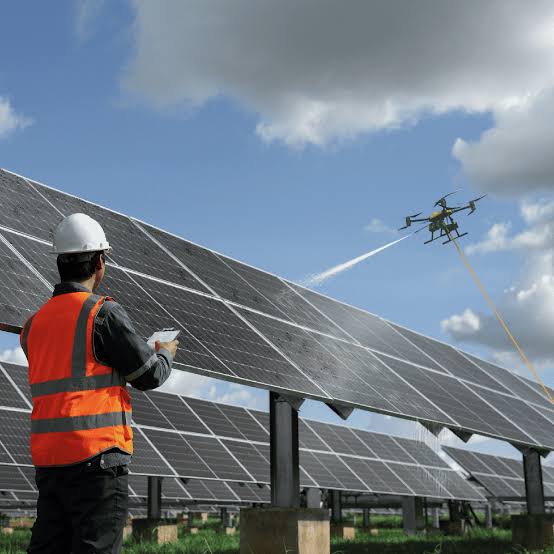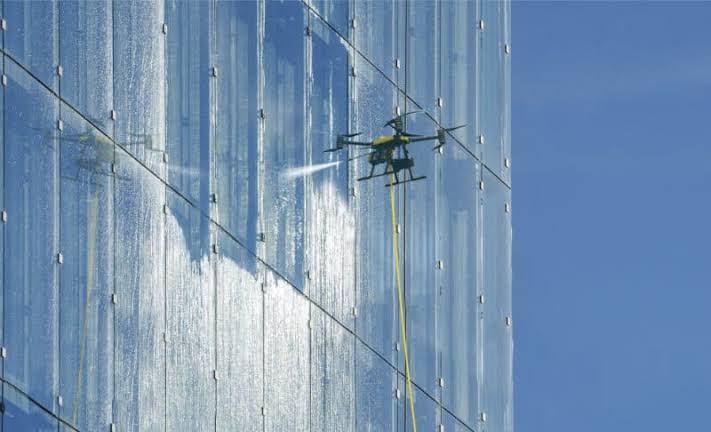
Giant glass skyscrapers look awesome, but keeping thousands of windows clean is a huge headache. For decades, window washers had to hang off high-rise rooftops using ropes and harnesses, or stand on shaky motorized platforms suspended high in the air. These traditional methods are dangerous, take a long time to set up, and cost building owners a lot of money in labor and safety gear. Now, specialized window-cleaning drones are coming out as a futuristic solution. But before swapping human window washers for drones, building managers need to look at how water pressure works, how safe they are near streets, and what kind of windows they can actually clean.
Flight Controllers and Fluid Recoil Mechanisms
Since carrying heavy water tanks inside a drone would make it way too heavy to fly, window-cleaning drones rely on ground pumps connected by a strong water hose. But spraying water high up in the air creates a tough physics problem. When water blasts out of a high-pressure nozzle against a window pane, Newton's third law kicks in and pushes the drone backward. To fix this, high-rise drones use LiDAR distance sensors and smart flight computer software. These sensors constantly measure the distance to the building glass and automatically turn up the drone's motor speed to push back against the water recoil, keeping the drone stable in one spot.
Conventional Trade-Offs and Economic Impact
Comparing drone window washing to traditional rope teams shows some clear technical and economic trade-offs. Window washers working on ropes face dangerous fall risks and need hours to rig up safety lines on rooftops. Drones take away that human fall risk completely because the pilot stays on the ground with a controller. Drones can also easily reach slanted glass roofs or weird architectural overhangs that are super dangerous for human climbers. Even though commercial cleaning drones are expensive to buy at first, building owners can save money over time on labor costs, operational workflows, and workplace safety insurance.
Environmental Limits and Pedestrian Safety
However, drone window washing still runs into real physical and environmental limits. Strong city wind gusts swirling between tall buildings can knock a flying drone around while it tries to hold a heavy water hose. Ground crews also have to rope off wide safety exclusion zones on the sidewalk below so falling dirty water, mist, or equipment problems do not hurt pedestrians. On top of that, drones struggle with windows that sit deep inside stone frames because the spray nozzle cannot get a straight perpendicular angle at the glass.
Surface Constraints and Modern Glass Towers
Window surface conditions matter a lot for deployment success. Drones work great on flat modern float glass using purified deionized water, but older historical buildings with worn-out rubber seals, delicate frame joints, or structural micro-cracks can leak if high fluid pressure parameters are mismanaged. Despite these surface constraints, façade washing drones eliminate human fall risks and streamline maintenance schedules for modern glass towers, offering property managers a much safer, faster, and smarter way to keep high-rises clean.