Can a Drone Understand What It Sees? Early Research Says Yes, With Caveats
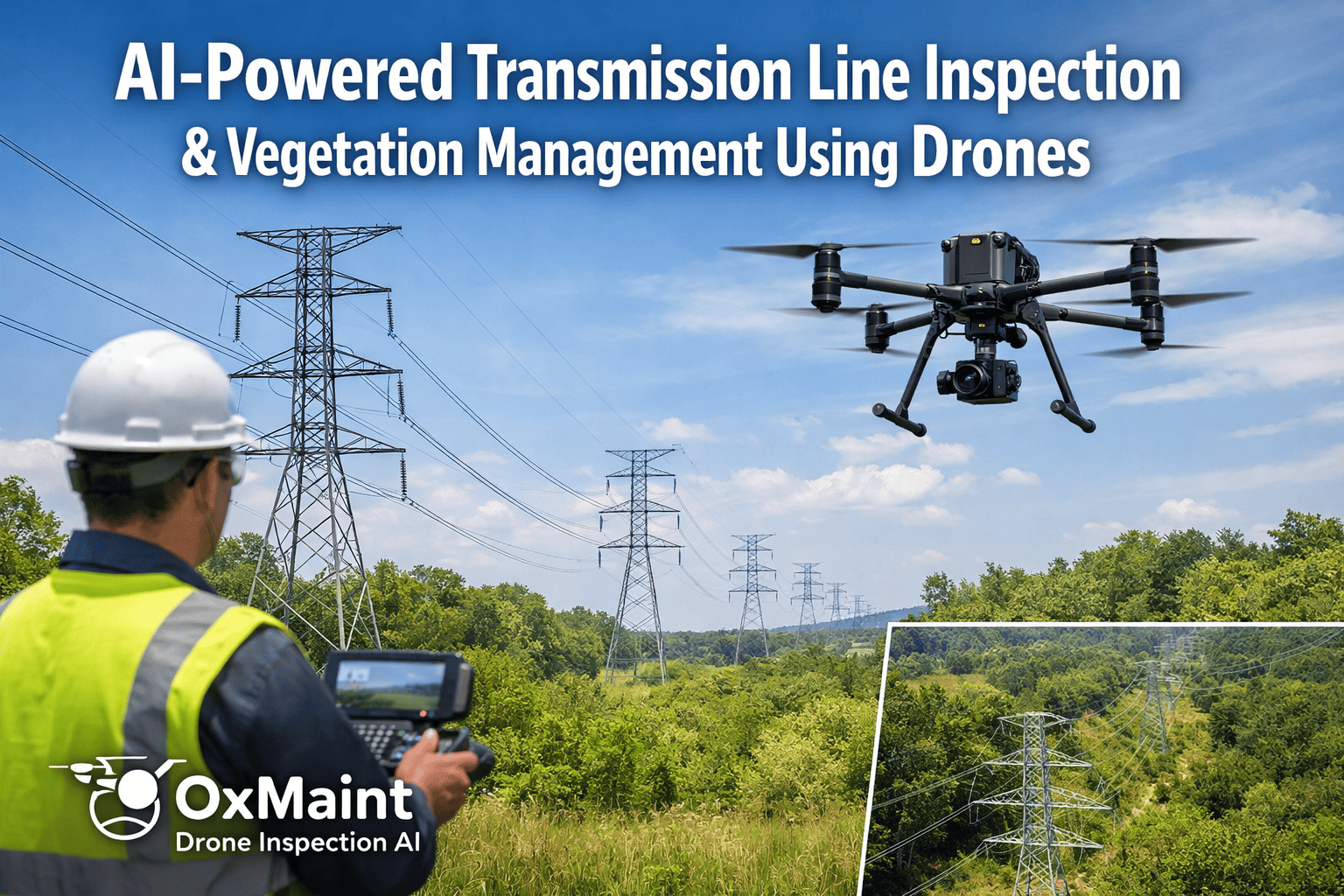
A drone inspecting a power line records hours of video, and nearly all of it shows nothing of interest. Researchers at TU Wien and the University of Klagenfurt in Austria, SINTEF in Norway and the University of Prishtina in Kosovo tested a way to avoid sending it all: let the drone's own computer decide what matters and transmit a short report instead. According to their EVLM paper, accepted at the IEEE EDGE 2026 conference, the system cut transmitted data from 485 kilobytes to 25 kilobytes per four-second video segment, a 94.8 per cent reduction.
From detecting to describing
Most onboard AI on inspection drones today is an object detector trained to flag a fixed list of defects. If the defect is not on the list, it is not flagged. A vision-language model, or VLM, is trained on images paired with text, so it can describe a scene in words and respond to an instruction rather than only drawing boxes.
EVLM works in three steps. An operator gives a high-level intent. A lightweight filter based on image histograms picks out key frames so the model is not overloaded. A VLM running directly on an NVIDIA Jetson, a small embedded computer of the kind used on drones, then reasons about those frames and writes a structured report with a few evidence images. The model was adapted using LoRA, a technique that adjusts a small fraction of a model's settings rather than retraining everything. Over a ten-minute mission, the EVLM authors report 3.75 megabytes sent instead of 72.75 megabytes, with power consumption bounded at 5.6 W.
Reacting, not just reporting
A second line of work asks whether a drone can use language models to steer. A May 2026 preprint from Clark Atlanta University, LiteVLA-H, describes a 256-million-parameter model on a Jetson AGX Orin with two modes: a fast one that outputs short action commands, and a slower one that describes the scene and narrates hazards for the operator. The authors measured about 51 milliseconds for an action and 150 to 165 milliseconds for a sentence. Their main finding is that delay comes mostly from processing the image before the model starts answering, not from the length of the answer. A November 2025 paper ran a compressed model on a mobile robot using only a CPU, which is not a drone but shows how small these models can get.
What has and has not been shown
EVLM ran on Jetson hardware but was evaluated on 20 publicly released power-line video sequences, spanning eight environments and five operational intent categories, not on live flights. The abstract does not say how the sequences were chosen. It reports data volume, processor load, power and how much richer the reports were than those from detector-based baselines; the full paper holds the detailed metrics. LiteVLA-H's authors say their strongest evidence is onboard timing and that broader flight testing is still needed. None of these papers claims certification or field service.
Three limits matter. First, VLMs can state wrong things fluently. A report that says "no damage" when damage exists is worse than a missed alert, because it invites trust. Second, a model that reasons well on a clean test video may struggle in fog, glare or darkness. Third, regulators of BVLOS flights want predictable behaviour, which is easier to verify for a rule-based system than for a language model.
Is it commercially useful yet?
Not as a product. The sources reviewed do not describe a commercial drone that ships with this kind of onboard model. The nearer-term value is practical and modest: sending less data over weak links from remote sites, and giving inspectors a first-pass summary before they review footage. Answering questions about a live scene, and acting on the answers, remains a research direction.
Small VLMs can now run on drone-class hardware, and early papers show benefits in data reduction and scene description. Whether they can be made reliable enough for decisions drones take on their own remains open.