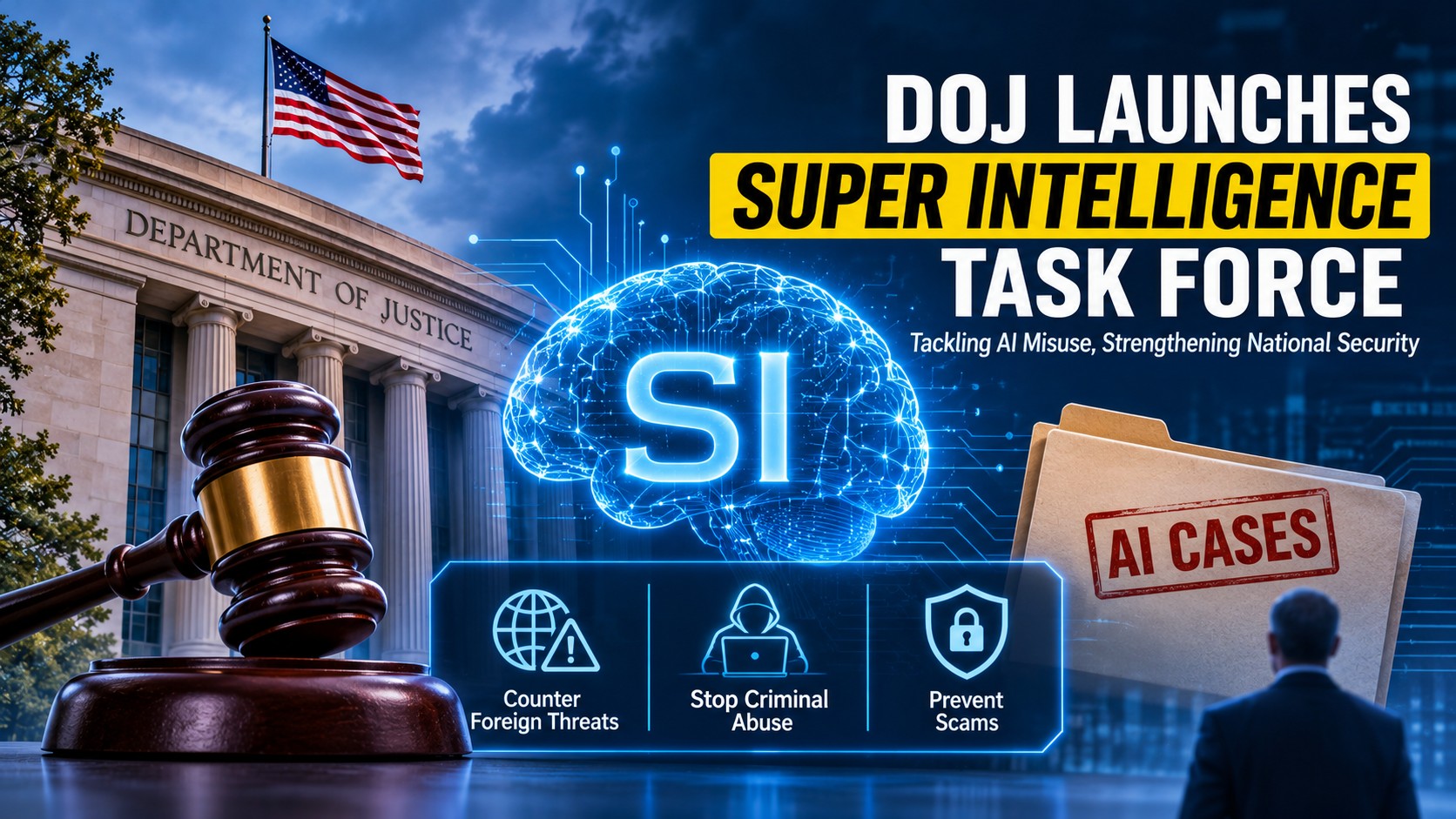
The term “super intelligence” sounds like something from a sci-fi movie, but on November 5, 2026, the US Department of Justice actually used it for something real. They announced a new group called the Super Intelligence Task Force, or DOJ-SITF for short. Attorney General Todd Blanche set it up in a memo dated October 13.
The DOJ now says “super intelligence,” or “SI,” when it means really advanced AI. This matches an executive order President Trump signed on September 29, which made a White House group called the Super Intelligence Force. Jay Clayton, the Director of National Intelligence, is in charge of that group, and the new DOJ task force will be how the Department connects with it.
What the task force is supposed to do
Basically, the goal is to stop foreign governments, criminal groups, and scammers from misusing AI. The task force will pull all of the Department’s criminal and civil AI cases into one place. It’s also going to work on guidelines for prosecuting crimes that involve AI. Blanche said the DOJ will keep going after people who use SI to break the law, like attacking taxpayers or critical infrastructure.
The DOJ also wants to keep better track of these cases. If the task force asks, prosecutors have to let it know when an AI-related investigation begins, and again before any charges or settlements. The memo says this shouldn’t slow cases down, and urgent ones can skip the step.
What’s still unclear
The most confusing part is how this applies to companies. Associate Deputy Attorney General Stephen Weiss said the Department expects companies to “exercise vigorous internal controls so that SI technology behaves as intended.”
That brings up a lot of questions. What happens if an AI model writes a working cyber exploit, or finds a way around its own safety rules? Would that just be a normal compliance mistake, or would the company be in legal trouble? The announcement doesn’t say. The memo does say the task force will make guidance for judging how good a company’s compliance program is, but until that comes out, companies won’t really know how they’ll be judged.
Who’s running it
Blanche, or the people he picks, will co-chair the task force. Those people are Associate Attorney General Stanley Woodward and Weiss. The FBI and a bunch of DOJ divisions will also send representatives, including the Criminal, Civil, National Security, Antitrust, and National Fraud Enforcement divisions.
This task force replaces the AI task force that Pam Bondi, who was Attorney General at the time, announced on January 9. It takes over that group’s open cases and its staff.
The DOJ didn’t give any timeline for when enforcement actions might start. For now, the memo mostly shows that the DOJ is getting its prosecutors organized so they can treat AI misuse as a serious national security problem.