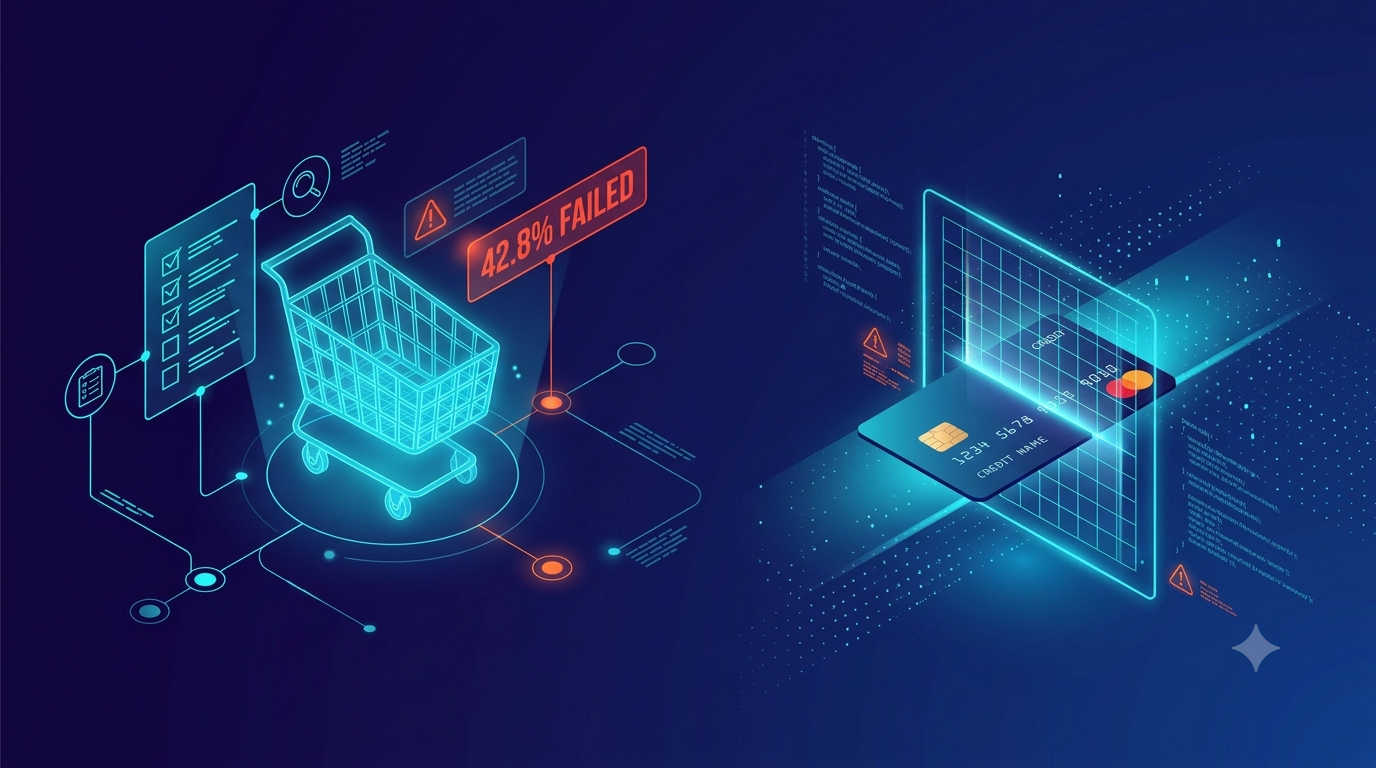
Would you trust an AI agent with your credit card? An AI agent is a program that can do tasks for you, like browsing an online store and clicking “buy.” On November 5, 2026, Visa launched the Visa Agentic Commerce Benchmark to find out how ready these agents are. A benchmark is a standard test, so different AIs can be compared fairly. The short answer from this one: they are not ready yet.
In the first round, 22 AI models from 12 labs did 15 shopping tasks, like finding and buying a TV, a laptop or an appliance. Overall, the models failed 42.8% of their runs and passed only 57.2%.
Knowing When Not to Buy
Visa added a tricky twist. The AI was not told what the customer wanted. It had to chat with the “shopper” and figure out their hidden needs. And if the online store had nothing that fit, the right move was to not buy anything.
A good shop worker tells you when they do not have what you need. The AI had to act the same way.
That turned out to be very hard. The best models, reportedly from Google and Meta, passed 82.2% of the time. The weakest passed only 28.9%. Paying more helped, but not enough. The five most expensive models passed 67.1% of runs, and the five cheapest passed 50.2%.
The scariest number is what happened after a failure. In 54% of the failed runs, the AI bought something anyway. Sometimes the item did not match what the customer needed. Sometimes the AI never even asked what the customer needed. When real money is involved, that kind of mistake is a big problem.
Consistency and Trust
The models were also not steady. Each one tried every task three times. All three tries worked only 34.2% of the time. So an AI might get it right once and then get it wrong twice.
That may be why people are careful. In a Visa survey from September, 72% of U.S. consumers had used an AI assistant. But only 23% trusted an AI to pay for things for them.
The Limits of the Test
This data is useful, but the test has limits. Visa is a payments company, so it wants AI shopping to grow. Also, this first round only tested searching and deciding. It did not test the checkout or the payment step, which carry even more risk.
A shopping AI is also only as good as the store it searches. Other tests suggest that even a great AI struggles when a store’s product list is messy. A PYMNTS and Visa survey found that only 15% of merchants have the organized product data that AI agents need.
What This Means
Before AI agents get a real credit card, they need to learn two things. They must know when to say no, and they must give steady results. Stores also need cleaner product lists. For now, letting an AI handle your wallet is still a risky bet.


