Imagine being awake inside your own body but unable to move, speak or even blink, while everyone around you thinks you are in a coma. Doctors now know this really happens. A new study from Columbia University shows a way that some of these patients may be able to answer back.
Hidden awareness is real
Doctors call this hidden consciousness. In 2019, a Columbia team checked the brain waves of unresponsive patients with brain injuries, and about 15 out of every 100 showed signs of being aware. When doctors asked them to make a fist, their brains tried to follow the command, but the message never reached their muscles. In the team’s studies, these patients were also more likely to get better later.
A beep controlled by the mind
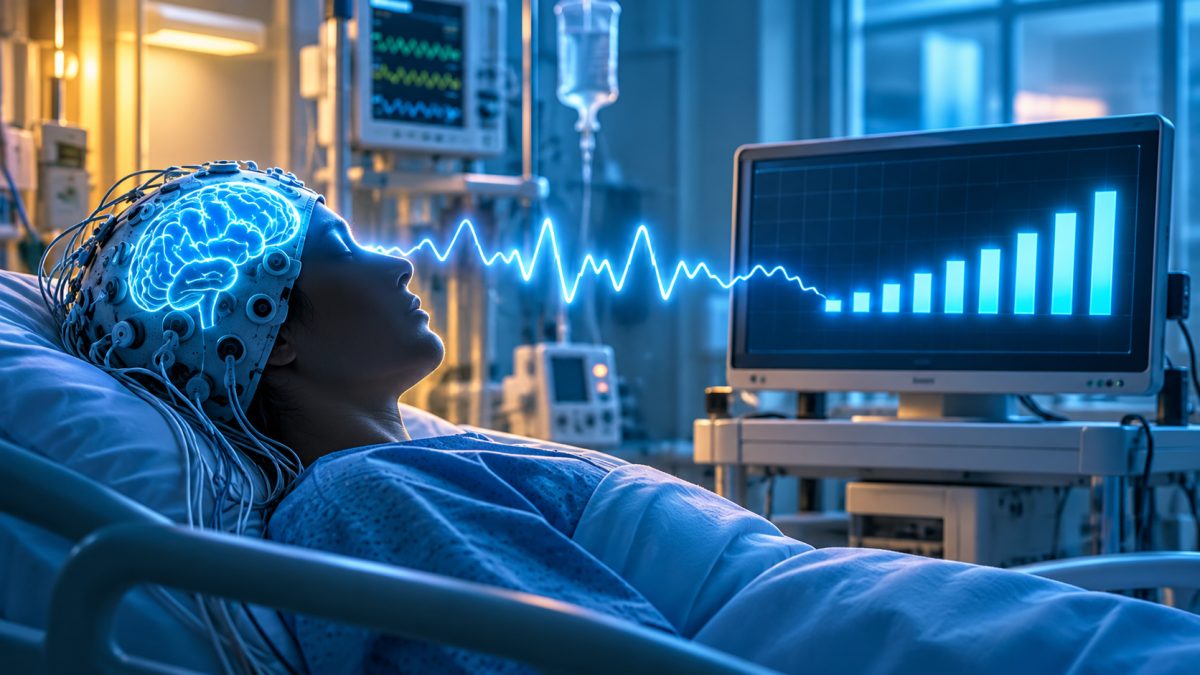
For the new study, the team used a simple tool called EEG. It is a set of sensors on the head that records brain activity, and hospitals already use it every day. The patient wears headphones and hears a beeping sound, then a recorded voice asks them to change how fast the beeps are by trying to open and close their hands.
A computer next to the bed reads their brain signals and looks for the pattern that shows up when someone tries to move. Whenever the beeps change, the voice tells the patient well done. Apart from the software the team wrote, no fancy equipment is needed.
What happened
The team tested 41 patients who were unresponsive a few days after a serious brain injury. After a short training, about one in three could change the beeps, including every patient whose hidden awareness had been found by another EEG test. Nearly half of those who managed it did so in the first week, but they were slow, often taking almost 50 seconds to respond. That means doctors have to be patient.
Let’s not get ahead of the science
This is only a first step, because the study was done at one hospital and the patients changed a beep rather than answering a question. About two in three patients did not control the beeps. That does not mean they were unaware, since the test may simply have missed them. The system is also not ready for regular hospital use.
What comes next
The team hopes patients will one day be able to say simple things, such as that they are in pain or hungry. Families who took part suggested ideas like adding a loved one’s voice to the recordings. Bigger studies still have to show that the system works well. There are tough questions too, such as what we should ask a patient who seems comatose but is actually aware, and how we should use their answers.