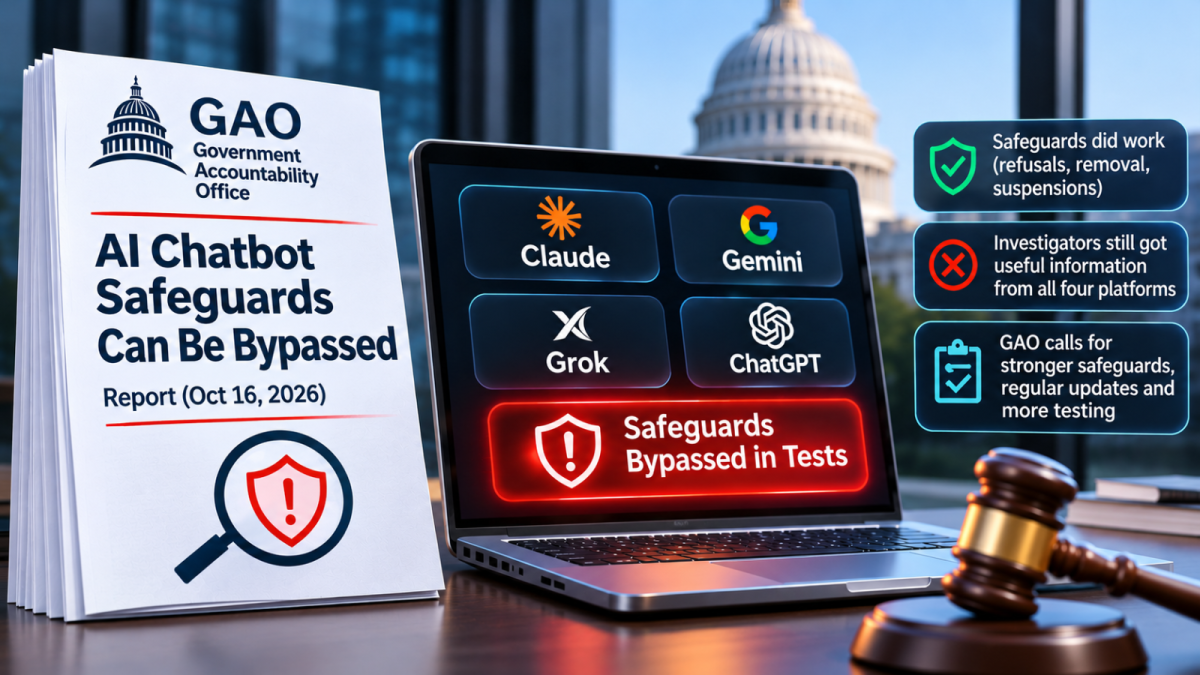
A Government Accountability Office (GAO) report, dated October 16 and released to the public on November 18, 2026, tested the safety rules of four popular AI platforms: Claude, Gemini, Grok and ChatGPT. GAO says its investigators got around those safeguards in secret tests in spring 2026, and every platform gave out information that could help someone carry out an attack. This article leaves out the risky details on purpose, since the findings are about safeguards.
What happened
The tests did set off safeguards on all four platforms, like refusals, removed info and account suspensions. Still, investigators got useful information from each platform in less than 12 hours of testing. According to reports, they acted like normal users and bought upgraded subscriptions on at least three of the platforms. Senator Maggie Hassan asked for the audit, and she says she’s getting ready for Senate hearings.
How the test worked
This was testing by a government watchdog, not a company grading its own AI. The audit ran from December 2025 to October 2026. The report also checked how the companies reacted after suspicious chats. GAO wouldn’t say if its testing ever alerted law enforcement.
What the companies said
Google said the tests used older models and that it keeps improving. OpenAI also said the tests used an older ChatGPT model, and argued that the report didn’t clearly separate what ChatGPT gave from what the investigators and outside research supplied. SpaceXAI, which runs Grok, said it has made its safety measures stronger. Anthropic talked about extra protections it added after the tests and said that determined users can still get around safeguards.
What the report doesn’t show
The tests were done in spring on earlier models, and the models have changed since then. The report proves safeguards can be bypassed. It doesn’t show how easy it is for an average person, how often it works, or whether anyone could really carry out an attack. The word “viable” is GAO’s own judgment, so it’s worth checking how the report explains it.
How the defenses work today
The test shows how chatbot defenses work right now: refusals, removing content, and suspending accounts. Each one worked a little, but together they still didn’t stop the testers. That means safeguards need outside testing and regular updates.
What could come next
Hassan wants stronger safeguards before models are released, regular updates, and reporting of illegal activity to law enforcement. If hearings lead to new rules, outside testing could become a normal step before AI products launch, kind of like safety checks in other industries.
Business side
Companies might spend more on monitoring, red-team testing and abuse detection. That could help firms that do independent safety testing and audits. But it all depends on what Congress and regulators decide.


