Choosing the right game engine dictates how studios build interactive worlds. Three software platforms currently shape global video game development: Unity, Epic Games' Unreal Engine 5, and the open-source Godot Engine. Each platform offers distinct business models and technical capabilities. Here is how their recent shifts change options for creators.
Shift in the Game Engine Market
Unity recently reported its third-quarter financial results. The company posted $622 million in revenue and achieved its first GAAP-profitable quarter since its public stock listing, generating $122 million in net income. This financial stabilization comes after leadership changes and restructured pricing models designed to win back community trust.
Meanwhile, Unreal Engine 5 maintains its stronghold on high-budget games. Features like Nanite geometric rendering and Megalights advance high-end graphics. Concurrently, Godot has surged among independent creators, surpassing 100,000 GitHub stars as a lightweight, license-free alternative.
Technical Approaches and Engine Workflows
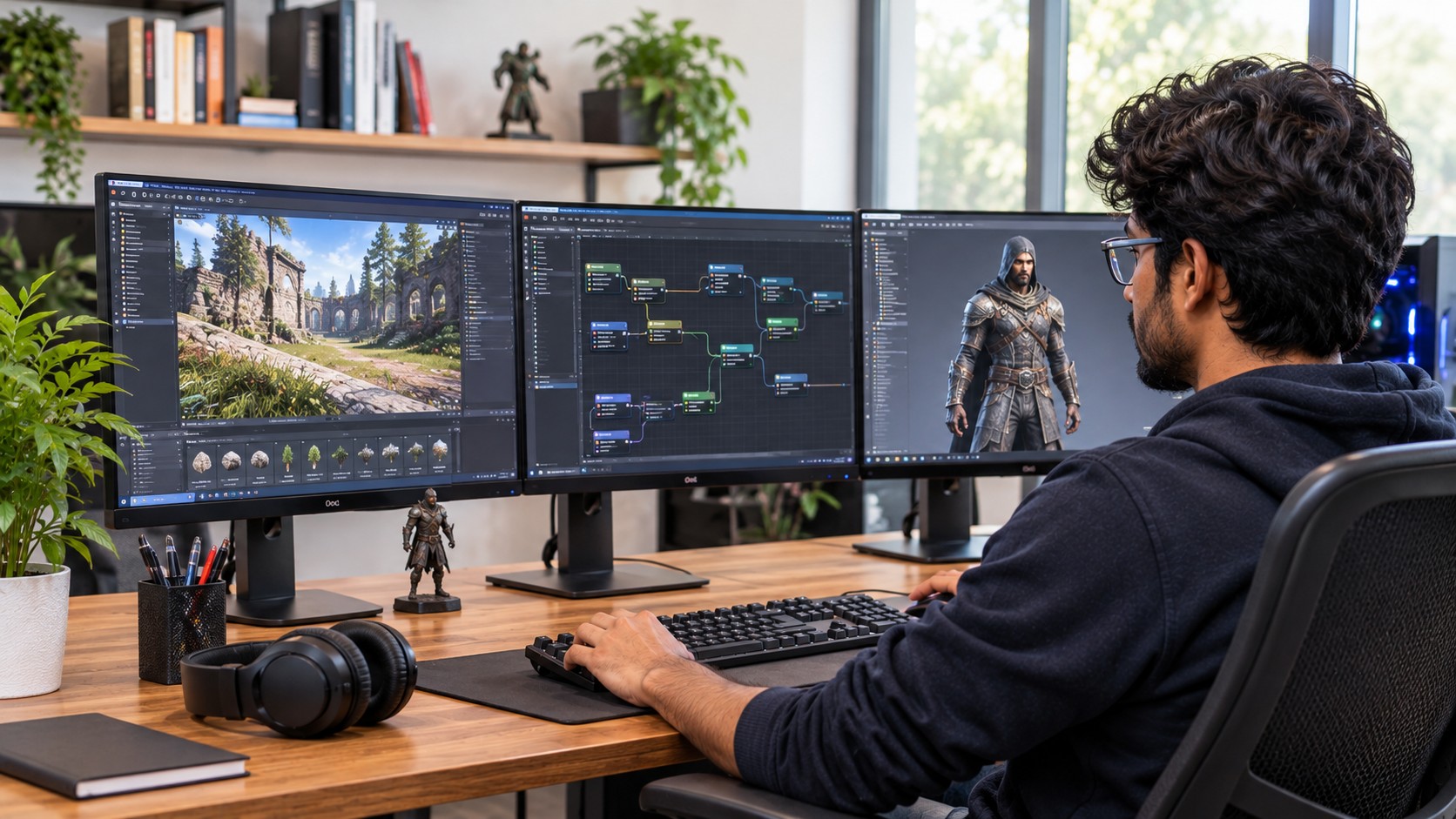
Each engine targets a different development workflow. Unity provides a balanced environment using the C# programming language, ideal for mobile, desktop, and 2D or 3D cross-platform games.
Unreal Engine 5 focuses on ultra-realistic graphics and heavy 3D rendering. It relies on C++ and visual scripting, using features like Lumen ray tracing to compute lighting in real time. Godot uses GDScript, a simple python-like language. Its node-based layout starts instantly, running efficiently on modest hardware without requiring online account checks or royalty tracking.
Why Engine Choice Matters for Studios
Engine choices affect development costs, team scaling, and project risks. Unity's established ad ecosystem and cross-platform tools make it practical for commercial mobile games.
Unreal Engine 5 allows large teams to build vast virtual worlds with pre-built lighting and geometry systems, saving manual design time. Godot gives small studios total code ownership. Because Godot is free and open source, creators avoid future fee changes and retain full earnings.
Trade-offs and Engine Limitations
No single game engine fits every project. Unreal Engine 5 requires high-performance hardware and creates large file sizes, making it less suited for simple mobile games. Unity’s past policy shifts leave some developers cautious about long-term commercial terms, despite its return to financial profitability.
Godot lacks out-of-the-box support for specialized high-end console devkits, requiring extra effort from teams porting games to commercial consoles.
What Lies Ahead for Game Creators
The game engine ecosystem is becoming more specialized. Commercial publishers continue relying on Unreal Engine 5 for blockbuster releases, while Unity refines its ad revenue tools to support mid-size studios. Godot’s growing community ensures open-source tools remain a strong alternative for independent game developers.