A New Sickle Cell Pill Passes a Big Test, With Some Catches
In April, Novo Nordisk said its pill, etavopivat, cut pain crises by 27% in a large trial. This month, the company asked the FDA and Europe’s EMA to approve it. It is not approved yet, and the full data are not public.
How the Pill Works
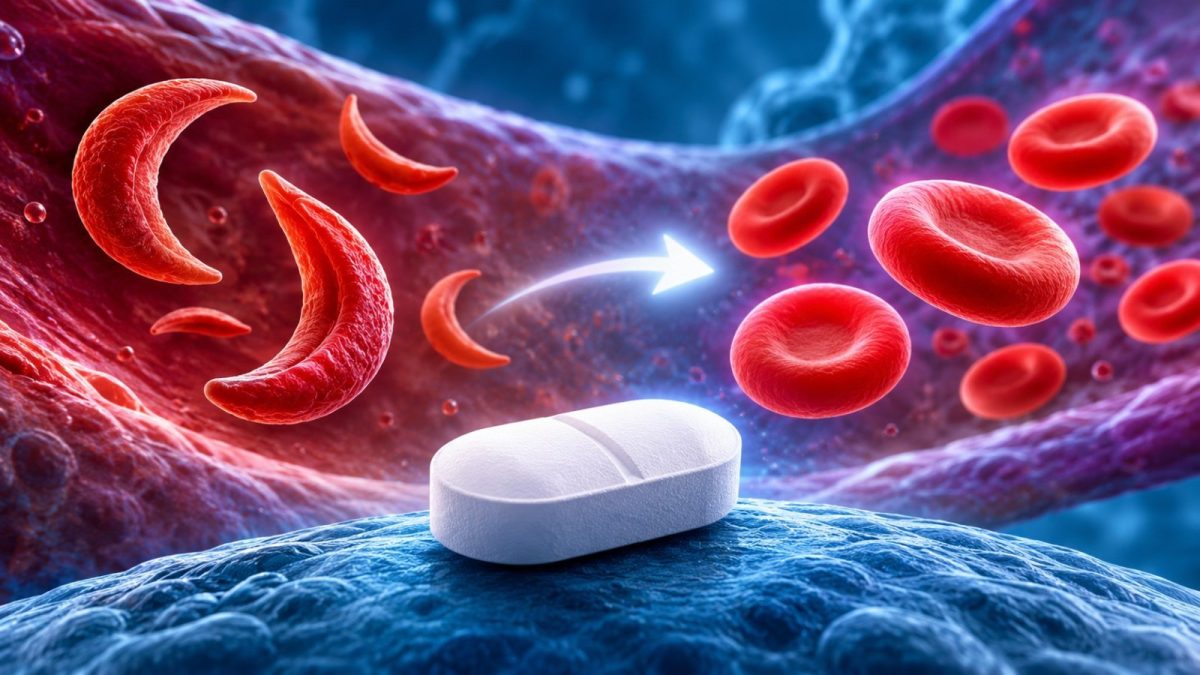
Etavopivat is a small molecule you swallow. It switches on pyruvate kinase, an enzyme inside red blood cells, and this lowers a substance called 2,3-DPG. When 2,3-DPG is lower, haemoglobin holds on to oxygen more tightly. Haemoglobin that is full of oxygen is less likely to clump and bend the cell. That last step is general background, not from the trial reports. The drug is a chemical and not an AI model, so there is no model size or computing need to report.
How the Trial Was Run
The trial is called HIBISCUS. It was randomised and double-blind, so nobody knew who got the real pill. It was open to people aged 12 to 65 who had at least two pain crises in the past year. The first part tested two doses, 200 mg and 400 mg, in 60 patients. The 400 mg dose was then chosen for phase 3.
The phase 3 part had 385 patients. They took the pill or a placebo once a day for 52 weeks, along with their usual care. The two main goals were fewer pain crises over the year and a rise in haemoglobin of more than 1 g/dL at week 24.
What It Found
Pain crises fell by 27%. The first crisis came at 38.4 weeks on the pill, against 20.9 weeks on placebo. And 48.7% of patients had the haemoglobin rise, against 7.2% on placebo.
I could not find a p-value or a confidence interval. These figures come from a company press release, and the detailed data are not published yet.
How It Compares
Hydroxyurea, approved in 1998, is still the main treatment. Pfizer pulled voxelotor off the market in 2024 over concerns about deaths and pain crises. The closest rival is mitapivat, which works in a similar way. In its trial, it raised haemoglobin but did not clearly cut pain crises (2.62 a year against 3.05, p-value 0.12), and it is taken twice a day. The two trials had different patients, so this is only a rough comparison.
What It Means for India
Sickle cell disease is common in parts of India, especially among tribal communities. India has a mission to end it as a public health problem by 2047. Phase 3 safety data are not public, and regulators are expected to decide in 2027. I found nothing on approval, price or launch in India.