For years, thin Windows laptops faced an awkward identity crisis. Place an ultraportable next to Apple’s M-series MacBook Air or newer Snapdragon X Elite machines, and the x86 compromise was obvious: strong burst speed, but loud fans, warm chassis bottoms, and batteries that struggled to survive a full workday. With the Indian launch of the Zenbook S 14 (UX5406), ASUS and Intel are staging an aggressive counteroffensive. Powered by Intel’s Core Ultra Series 2—codenamed Lunar Lake—this machine attempts to beat ARM processors at their own game: extreme power efficiency.
Memory-on-Package vs. Traditional Upgradeability
The biggest engineering gamble inside the Zenbook S 14 is how it handles system memory. Instead of routing signals across motherboard traces to separate RAM slots, Intel mounted two memory stacks directly onto the processor substrate, totaling 32GB of on-package LPDDR5X memory running up to 8533 MT/s as documented in Intel's official technical specifications.
This approach mirrors Apple Silicon, slashing data travel distance and cutting memory communication power by up to 40 percent. In daily use, this bandwidth directly feeds the integrated Arc 140V graphics and local AI tasks. However, this packaging delivers a permanent repairability trade-off. Unlike modular machines like the Framework Laptop, the Zenbook S 14 cannot be upgraded after purchase. Buyers must commit to their chosen memory capacity on day one.
Core Architecture and the Efficiency Battle
Intel also overhauled its compute tile architecture. On the Zenbook S 14’s Core Ultra 7 258V chip, Hyper-Threading remains on the performance cores, while efficiency cores do not support it. Rather than pushing clock speeds to arbitrary limits, Intel restructured workload allocation.
Four energy-sipping Skymont efficiency cores handle routine productivity tasks—such as web browsing, office document editing, and video streaming—without activating the power-hungry silicon blocks. The four Lion Cove performance cores engage only during heavy computing bursts. When compared to previous-generation Meteor Lake chips that relied on sprawling core counts, Lunar Lake prioritizes battery conservation and cooler lap temperatures over raw multi-threaded rendering scores.
Competitive Standoff: Lunar Lake vs. Snapdragon, Apple, and AMD
As validated by Microsoft's official Windows Copilot+ PC documentation for Intel Core Ultra 200V processors, the Zenbook S 14 integrates an updated Neural Processing Unit, or NPU, delivering 47 TOPS for on-device AI tasks. But its true competitive battle lies against rival architectures.
Compared to Qualcomm’s Snapdragon X Elite laptops (such as the Lenovo Yoga Slim 7x), the Zenbook S 14 avoids the emulation hitches and driver incompatibilities that still occasionally plague Windows on ARM when running legacy enterprise tools or specialized peripheral software. Meanwhile, AMD’s competing Ryzen AI 300 series offers higher multi-threaded raw power with up to 12 cores, but Lunar Lake focuses more strictly on low-wattage battery endurance. When measured against Apple’s 15-inch M3 MacBook Air—which retails in India around ₹1,34,900 for an upgraded 16GB tier—the ASUS delivers double the unified memory (32GB) and an immersive 120Hz 3K OLED touchscreen, whereas Apple limits its base ultraportables to 60Hz LCDs.
Indian Pricing, Practical Scenarios, and Thermal Reality
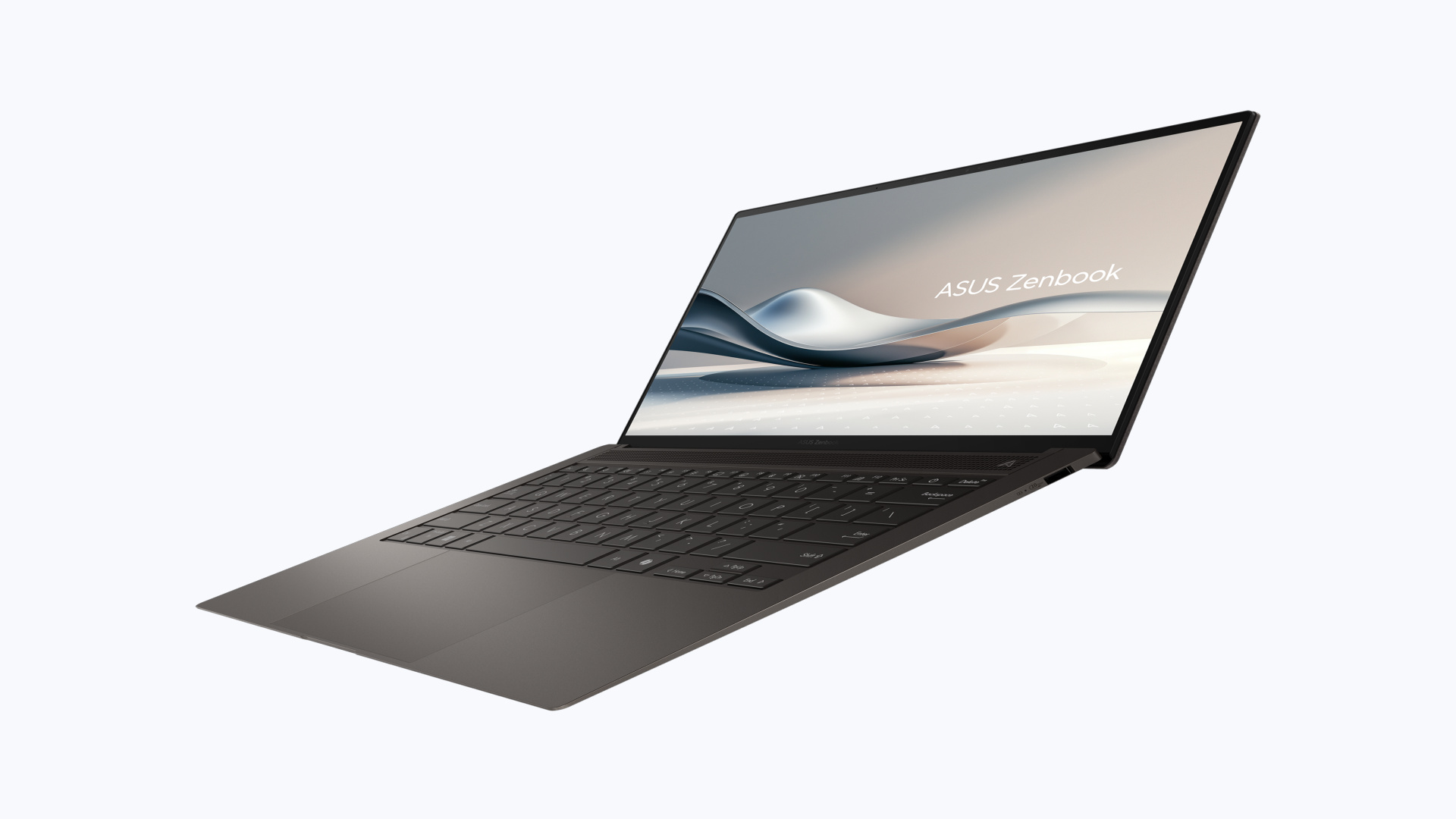
To house this platform, ASUS crafted an outer lid from "Ceraluminum"—a ceramic-aluminum composite produced through plasma electrolytic oxidation that resists smudges and scratches while weighing just 1.2 kilograms.
According to official listings on the ASUS India Store and major retail partners, the ASUS Zenbook S 14 is priced at ₹1,49,990 for a single top-tier specification featuring the Core Ultra 7 258V, 32GB of built-in memory, and a 1TB SSD.
In practical user scenarios, the machine is best suited for corporate consultants, mobile executives, and developers who need complete x86 Windows binary compatibility alongside legitimate all-day battery life. Conversely, video editors exporting 4K timeline projects or gamers seeking high frame rates should look toward thicker laptops with discrete NVIDIA RTX graphics, as the Zenbook's 1.1-centimeter chassis is physically constrained by a 17W to 37W thermal envelope. Intel has finally narrowed the efficiency gap with Apple and ARM, but physics still dictates the limits of ultra-thin computing.