A Brain-Stimulation Therapy for PTSD Reports 68% Remission. Here's What the Number Does and Doesn't Mean
Out of every 100 people who got the real treatment in a PTSD trial, about 68 were counted as being in remission. Remission means the symptoms eased a lot, based on a cut-off set by the trial. The number sounds amazing, and it spread fast in late October in stories about a drug-free brain therapy. But it comes from the company that makes the device.
What Was Approved, and When?
The treatment is called MeRT. It is made by a company called Wave Neuroscience. The US FDA cleared it on 3 June 2026 for adults with PTSD, as an add-on to other care. The news in October came from Texas A&M University, which worked on the trial. So this is not a new approval. It is fresh publicity for something cleared five months ago.
How Does It Work?
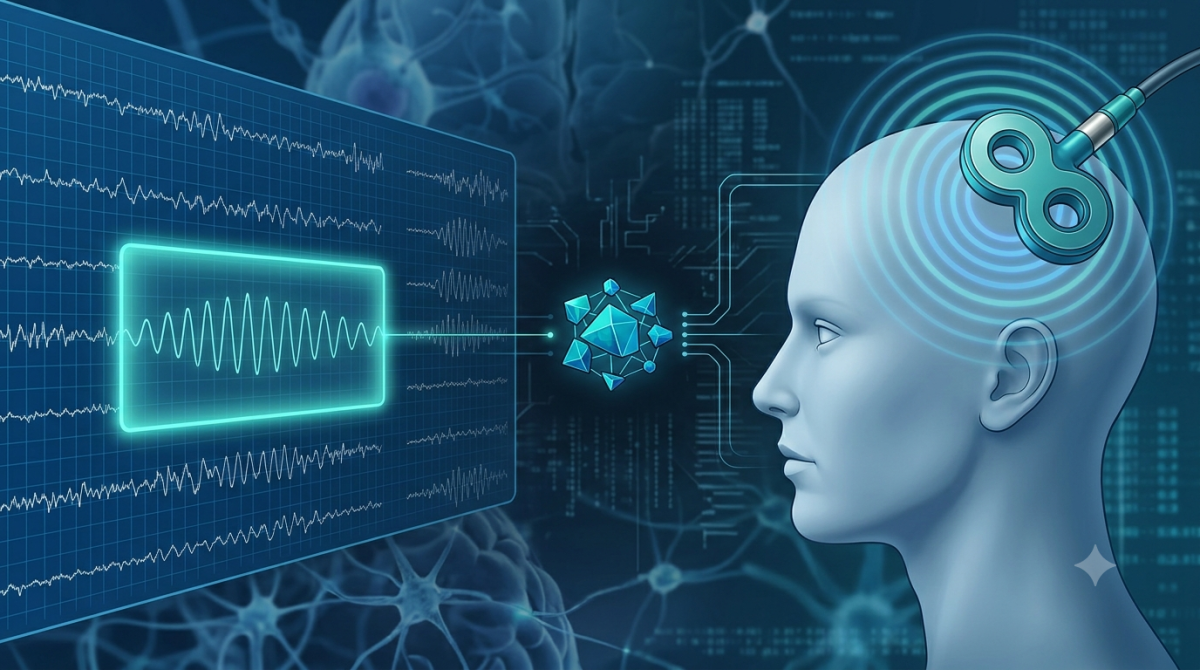
MeRT uses a method called TMS, short for transcranial magnetic stimulation. A coil is held against the head and sends small magnetic pulses into the brain. Doctors already use TMS for depression that does not improve with medicines.
What MeRT adds is a personal touch. First, the person's brain waves are recorded with an EEG. The company's earlier papers also use the resting heart rate. Then a computer program, which the company calls AI-assisted, picks the pulse speed. It is reportedly between 8 and 13 times a second, chosen to match the person's own brain rhythm. In the main trial, people had 20 to 25 sessions.
What the Trial Found
The main trial was well designed. People were put into groups by chance, which is called randomising. It was double-blind, so neither patients nor staff knew who got what. And it used a sham, a fake treatment that feels like the real one but gives no real stimulation.
In all, 158 people were counted: 77 got the real treatment and 81 got the sham. About 84 out of 100 finished the trial.
The main goal was a symptom checklist filled in by patients, called PCL-5. The real treatment beat the sham, but only just. It passed the usual statistical test by a small margin. A second scale, filled in by doctors, showed a clearer gap. People in the real group improved by about 27 points on average, and 68.2 percent of them reached remission at a follow-up visit. The company says there were no serious side effects.
Why 68 Percent Needs Context
That 68 percent is for the real-treatment group only. I could not find the remission rate for the sham group. That is the number we need, because people in sham groups often get better too.
In an earlier trial of 73 veterans, symptoms fell by 24 percent with the fake treatment and by 34 percent with the real one. That is a gap, but a small one, and both groups got better. Remission figures also change depending on how remission is defined and when it is measured.
Be careful with comparisons too. Texas A&M set the trial's 52 percent drop in symptoms next to a 2020 review of PTSD medicines, where remission was at most about 11 percent. But its own release says the results come from different studies, so it is not a fair side-by-side.
Also, the trial tested real versus fake treatment. It did not test a personalised setting against a standard one. So we cannot say that the AI-assisted part is what makes the difference.
What Happens Next?
The full results have not been published in a medical journal yet. The company says a paper is being prepared. The company also sponsored the trial.
Many questions are still open. How long do the benefits last after the two-to-four-month follow-up? Who is most likely to benefit? How much will it cost, and will insurance pay?
Be careful with claims that this is the first or only drug-free option. Other devices, such as GrayMatter Health's Prism and Neurovalens' Modius Spero, have also been reported as cleared for PTSD.
For people whose PTSD has not eased with other treatments, a new option tested against a fake treatment is good news. But the big claims will have to wait for the published data.