Walk into an advanced thermodynamics or algorithms lecture at any leading engineering university today, and you will witness a fascinating technological paradox. Every student has a high-speed laptop, noise-canceling headphones, and access to generative artificial intelligence models capable of transcribing, formatting, and summarizing a two-hour lecture in under five seconds. Yet, strewn across the wooden tiered desks are spiral paper notebooks, fountain pens, mechanical pencils, and multi-colored highlighters.
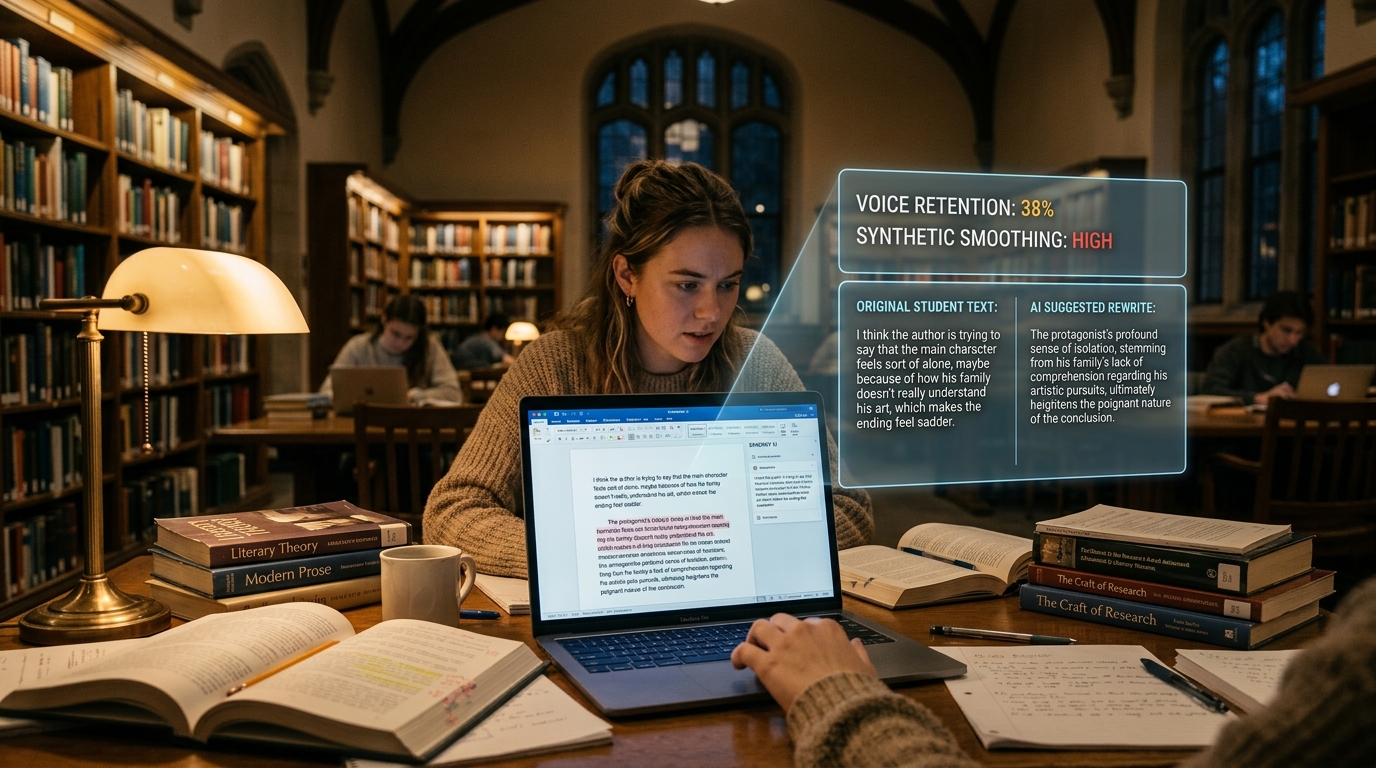
In an age of instantaneous digital summaries, why is paper not extinct? Why do thousands of engineering, medical, and science students—digital natives raised on touchscreens—actively insist on writing things down by hand? The answer does not stem from nostalgia or technophobia. It stems from biological reality: the human brain is an embodied biological organ, not a digital hard drive. Typing on a keyboard or reading an artificial intelligence summary allows information to enter and leave working memory without leaving a lasting neural footprint.
The Desirable Bottleneck: Speed Versus Compression
The core advantage of handwriting lies in its physical slowness. The average college student types at sixty to eighty words per minute, virtually matching the conversational pace of a lecturing professor. As demonstrated in the landmark study by Mueller and Oppenheimer, laptop note-takers fall into a trap of mindless stenography: they transcribe verbatim text without digesting its conceptual meaning (
By contrast, human handwriting operates at a physical speed limit of fifteen to twenty-five words per minute. A student with a pen physically cannot record every word. This constraint creates a desirable cognitive bottleneck: the student's brain is forced to actively filter, evaluate importance, discard irrelevant filler, rephrase ideas in their own words, and organize concepts into diagrams. By the time ink touches the paper page, the concept has already been deeply understood and processed.
Neural Synchrony: What Brain Scans Reveal About the Pen
Recent notable neuroimaging research by Audrey van der Meer and Ruud van der Weel using high-density 256-channel electroencephalograms provides physiological evidence of handwriting's cognitive effects (
-
Alpha and Theta Wave Synchronization: Forming letters by hand activates synchronized brain wave patterns in the parietal lobe and central motor cortex. These oscillating frequencies are the exact neural mechanism required for biological synaptic plasticity and long-term memory encoding.
-
Sensory-Motor Binding: Typing on a keyboard requires pressing identical square plastic keys with uniform downward motions. Handwriting requires complex visual, motor, and tactile coordination, including pen angle, variable downward pressure, delicate spatial curves, and tactile paper resistance. This rich sensory-motor feedback physically binds concepts into episodic memory.
-
Cognitive Idling in Digital Transcription: When students read an artificial intelligence-generated summary or tap keys, electroencephalogram scans show near-zero parietal activation. The brain remains in an idling state, treating the text as external data rather than internalized knowledge.
Cognitive Cartography: The Lost Geometry of the Screen
The human brain evolved over millennia as an evolutionary spatial navigation engine. We do not remember information in the abstract; we remember where things exist in physical space. A physical notebook possesses fixed, immutable physical geometry: a left page, a right page, a top-left margin, a folded corner, an ink smudge, or a hand-drawn red box.
During an exam or high-stakes technical troubleshooting session, students frequently recall exact spatial locations, such as remembering that a specific thermodynamic equation was located on the bottom-right corner of the left page right below a turbine sketch. A portable document format file or artificial intelligence chat window destroys this spatial anchoring. As you scroll vertically, text floats across an endless, undifferentiated digital ribbon where every paragraph occupies identical visual space. Without physical landmarks, the human brain suffers from digital amnesia, unable to build a stable spatial map of the material.
Attention Sanctuaries: Escaping Notification Chaos
Laptops, tablets, and smartphones are fundamentally distraction engines. Even with notifications muted, open browser tabs, chat icons, and the instant urge to check email create continuous attention fragmentation. Research shows that college students using laptops switch tasks every ninety seconds, fracturing deep cognitive flow.
A paper notebook acts as an inviolable cognitive sanctuary. It has zero battery anxiety, zero push notifications, zero latency, and zero algorithmic rabbit holes. It invites deep, uninterrupted focus, allowing students to enter deep states of cognitive flow.
The STEM Dimension: Why Technical Minds Cannot Live on Keyboards
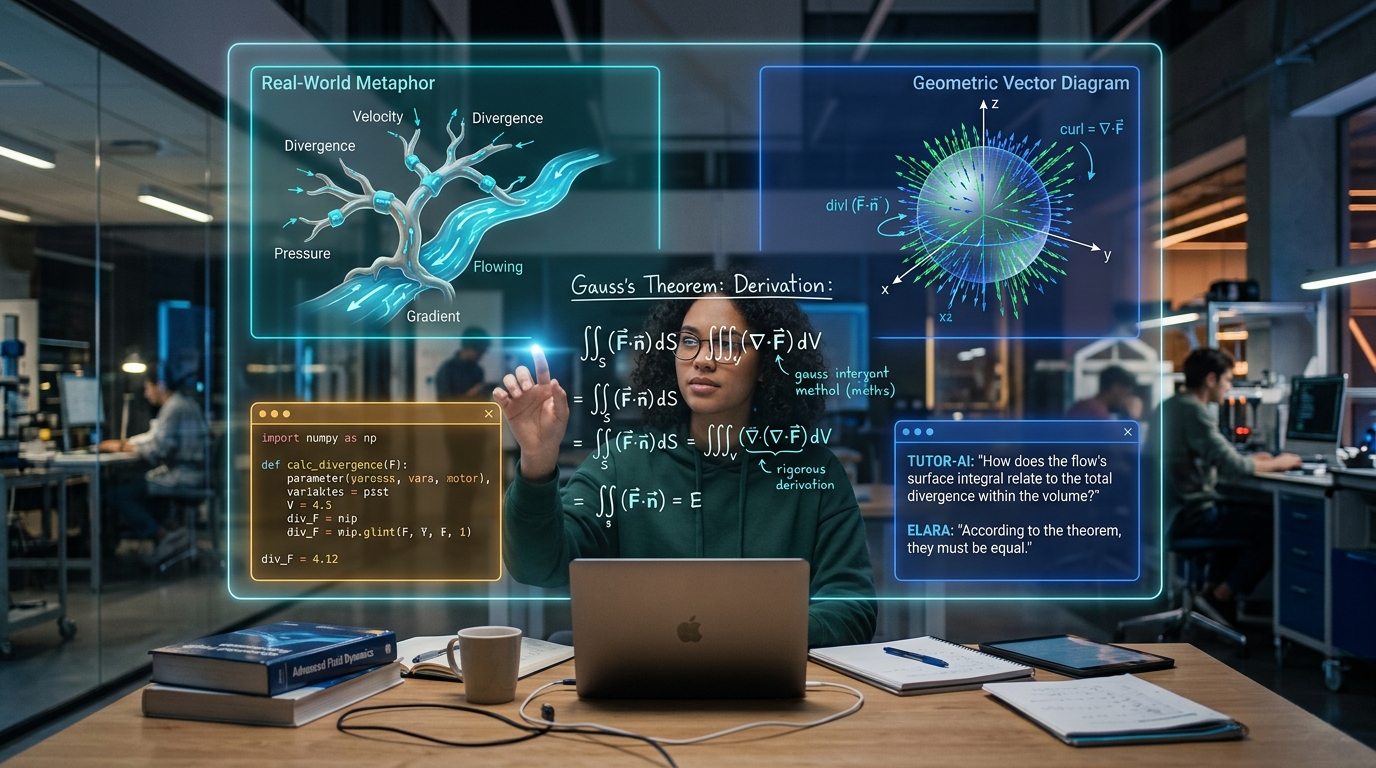
While a humanities student might survive on linear typed text, science, technology, engineering, and mathematics disciplines are fundamentally non-linear, multi-dimensional, and graphical. Consider what an engineering student writes during a single lecture: free-body diagrams and vectors, multi-loop circuit topologies, multi-line calculus derivatives, and dynamic state machines. Trying to type these non-linear structures or prompting an artificial intelligence to generate them breaks the delicate train of thought. A physical pen allows thoughts to flow directly onto paper with zero friction.
The Modern Hybrid Intellectual Stack: Four Engineering Protocols
Rejecting artificial intelligence entirely is just as foolish as relying on it blindly. High-performing students and elite engineering professionals combine analog embodiment and digital intelligence through a dual-core intellectual stack:
-
The Analog First-Draft Rule: Never begin a design, mathematical proof, or architectural blueprint in front of an artificial intelligence prompt window. Sketch the state machine, circuit diagram, or equation set by hand in a notebook first.
-
Socratic Scaffolding Over Solution Prompting: Use generative artificial intelligence to audit and stress-test your handwritten notes rather than generating answers from scratch.
-
The Reverse-Transcription Technique: Take handwritten notes during lectures to maximize active neural encoding, then dictate concepts aloud to an artificial intelligence transcription engine later that evening to identify logical leaps or missing steps.
-
The Bound Engineering Logbook: Maintain an indexed, chronological bound notebook with numbered pages to anchor long-term technical projects and intellectual provenance.