Toyota is starting a new team called Toyota Robotics to develop robots for factory work. The company wants to bring its robotics experts together instead of having them work in separate groups. The main goal is to build robots that can help workers with everyday factory tasks. The new team will officially start on January 1, 2027.
What Did Toyota Announce?
On November 5, 2026, Toyota announced its new robotics team as part of changes within the company.
Takefumi Shiga, Toyota's Chief Production Officer, will lead the team while continuing his current role.
Toyota says it wants to develop robots based on real problems faced by factory workers. The company also wants robots to work alongside people rather than replace them.
However, Toyota has not introduced a new robot or shared any technical details yet.
How Many Robots Does Toyota Need?
According to Toyota's investor presentation, the company sees a possible need for around 400,000 robots.
About 150,000 robots could be used by Toyota and its group companies, while another 250,000 could go to suppliers.
These numbers are only estimates for future planning, not confirmed orders.
Toyota also mentioned spending around 1 trillion yen every year to replace old factory equipment. This money is not meant only for robots.
The company expects its robotics business to grow from 2030 onward.
Why Does Toyota Want Robots in Factories?
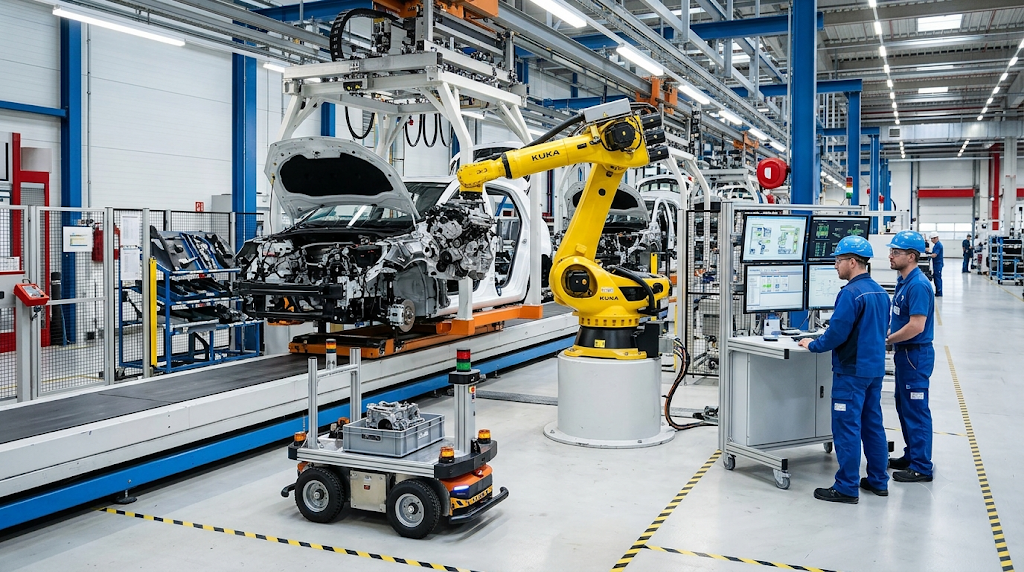
Factories already use robotic arms for repeated tasks like welding and assembling parts.
However, mobile and humanoid robots could handle different jobs and move around factory spaces.
Toyota believes its factory experience will help it develop useful robots.
The company says it has around 18,000 skilled workers across 60 factories. It also wants to use AI to help robots learn from their experience.
But these ideas still need proper testing. Robots must be safe, reliable and affordable before factories can depend on them.
What Are Other Companies Doing?
Toyota is not the only car company interested in robotics.
Hyundai owns Boston Dynamics, a company known for developing advanced robots. BYD has also shown interest in investing in robotics.
Toyota has reportedly worked with Boston Dynamics on humanoid robot development.
This means Toyota will face competition from companies that already have experience building advanced robots.
What Happens Next?
Toyota plans to test and improve robots in its own factories before offering them to other manufacturers.
It also wants to increase robot use at Woven City, its experimental town in Japan.
However, Toyota has not announced which factory tasks the robots will handle first or when new products will be released.
The company still needs to prove that its robots can work safely and reliably.
Toyota Robotics is an important business step, but it is not a new robot invention. Its success will depend on how useful these robots become in real factories.