What Is Happening?
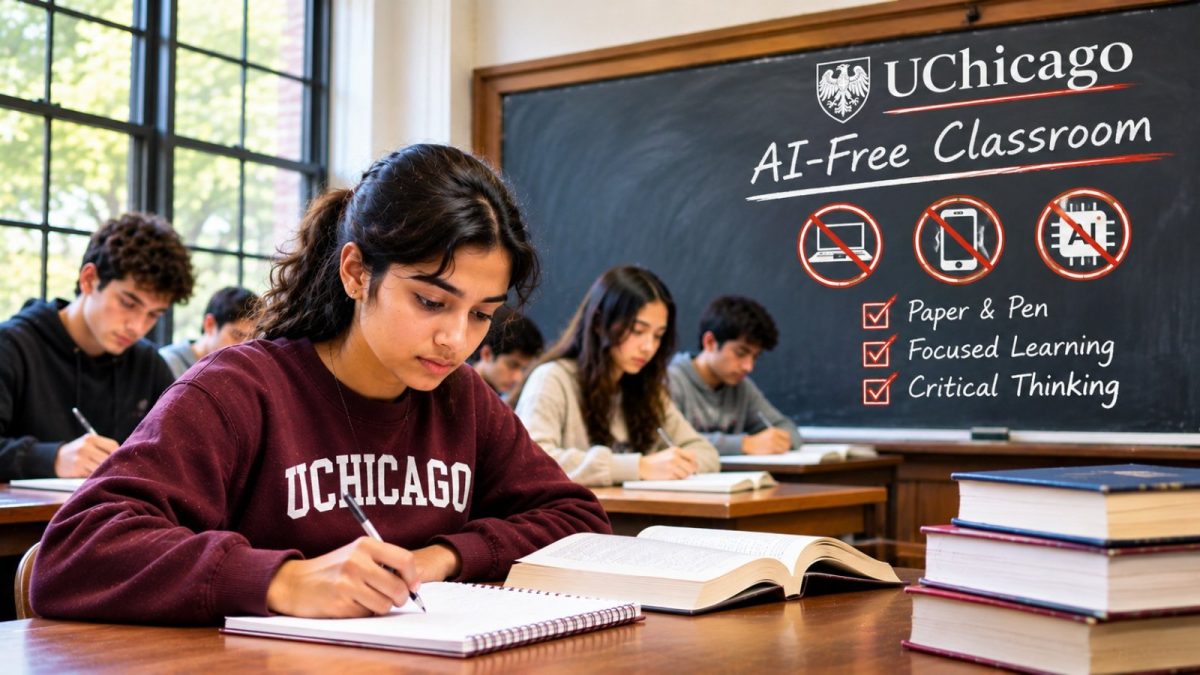
Instead of relying only on software to catch AI cheating, UChicago is changing how classes run from the ground up. Over the summer, the Law School banned first-year students from bringing laptops, tablets, or phones into class, picking student scribes to take shared notes instead.
On August 25, 2026, the Social Sciences division went further. It made required core classes analog by default, using paper readings and no devices. Professors there also cannot use AI to write class plans or handouts, and AI grading is tightly limited, with exceptions for students who need disability support. Then, in early November 2026, reports confirmed that all first-year college students will take a required AI-free writing class starting next fall.
How Does It Work?
Rather than fighting AI tools with detector apps that scan essays and guess if word patterns look machine-made, UChicago changes the classroom routine itself. Modern chatbots predict the next likely word using huge cloud servers and billions of trained parameters, which makes detection apps unreliable and pricey to run across a whole campus.
By removing connected devices during class and supervised labs, teachers block live access to cloud chatbots without needing strict browser locks or scanning tools. In legal writing classes, students must first write drafts on paper or offline without AI before using AI later for research, editing, and oral prep. Meanwhile, a faculty group suggested limited-tech writing labs for take-home essays in October, and a new center on writing in the age of AI will run the upcoming first-year class. Notably, The Chronicle reports that UChicago still gives students and faculty free Claude access under an Anthropic deal, sparking campus debate over how both rules fit together.
Why Is It Important?
While many colleges rush to require AI skills before graduation, UChicago is betting that students must first learn to read, write, and think on their own. One history professor who taught an all-analog class last spring called his reaction to the shift relief and jubilation.
Taking screens out of the room also avoids false alarms and server costs from campus-wide AI checkers, keeping class time focused on live human thinking.
What Are the Challenges?
Even supporters see clear trade-offs with a paper-first plan. Critics point out that banning laptops in class does not stop students from using cloud chatbots at home on take home essays.
Running low-tech writing labs, handling device exceptions smoothly, and printing thousands of paper packets also add real staff time, scheduling work, and printing costs for departments.
What Happens Next?
Starting next fall, every incoming first-year student at UChicago will begin college with the required AI free writing class. Other schools watching closely will see if this paper first routine builds stronger writers and whether offline basics can work alongside preparing students for an AI heavy workplace.