What Happened at the SMARTs Portal
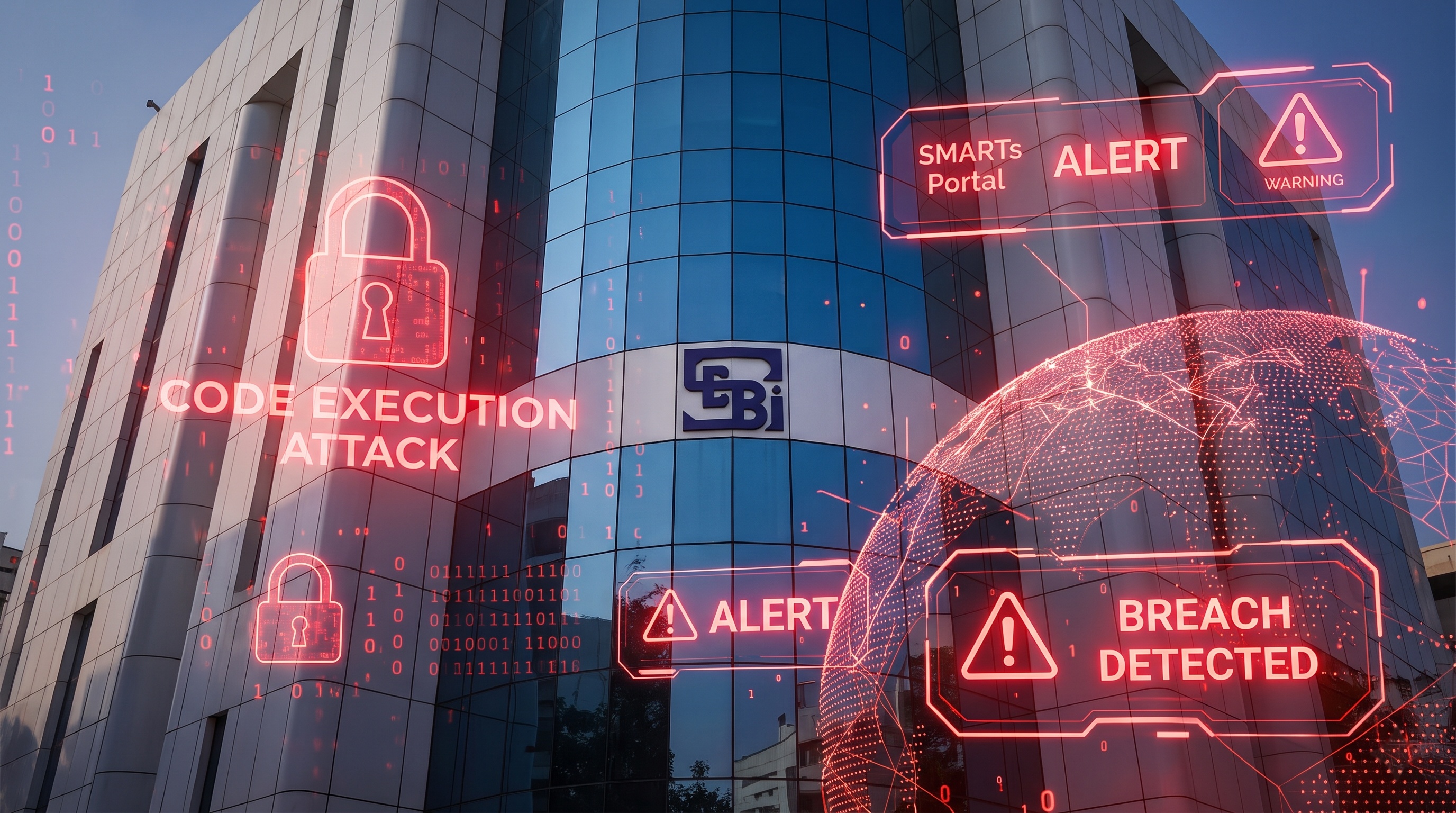
The Securities and Exchange Board of India (SEBI), the country’s market regulator, says its Securities Market Trainers (SMARTs) portal faced a code execution attack on 26 October 2026. Business Standard reported the news on 31 October after asking SEBI about it. The paper described this as the latest of several recent attempts to breach SEBI’s systems. In a written reply, SEBI said its cybersecurity system detected the attack and that fixes were made. SEBI also said it informed CERT-In, the Indian Computer Emergency Response Team, as per protocol.
What the SMARTs Portal Does
SMARTs is a SEBI website where people and organisations apply to become approved trainers for investor awareness programmes. These programmes teach the public about the securities market. The portal has a registration form for applicants and a login page where users enter a user name, a password and a captcha code. Business Standard describes it as a platform for eligible trainers to join SEBI’s list. Nothing on its public pages points to any kind of share trading.
What Is a Code Execution Attack
In a code execution attack, a hacker finds a weakness in a system and uses it to run their own commands or harmful code there. Business Standard notes this can be done from far away, often without a password or physical access. Think of a thief who finds an unlocked back door and walks in without needing a key. Once the code runs, the attacker may get access to the system. The statement SEBI gave does not say which weakness was used, how far the code ran, or how many parts of the system were affected.
What SEBI Says About Data and Safety
SEBI said there were no signs of personally identifiable information (PII) being taken from the system. It named trainer names, bank details, Aadhaar, Permanent Account Number (PAN) and professional certificates as data that was not breached. SEBI has put its cybersecurity team on red alert and run sanity checks on all its other portals. It also said it saw a very large amount of cyber reconnaissance, meaning attackers probing for weak spots, in recent days. According to SEBI, its security operations centre (SOC) stopped this activity through SOAR (security, orchestration, automation and response) settings.
Our Analysis
This is our own reading, based only on what SEBI has said and on the portal’s public pages. First, an attack is not the same as a breach. SEBI says it found no signs of a data leak, but it has not said whether the harmful code actually ran. Second, SMARTs looks like a sign-up site for trainers, so we see no sign that trading was touched, though SEBI has not spoken on this either way. Third, the talk of heavy probing suggests this was one of many tries, not a one-off. Fourth, Business Standard notes that SEBI planned a market SOC to help smaller firms it regulates, so this episode tests the regulator’s own defences.