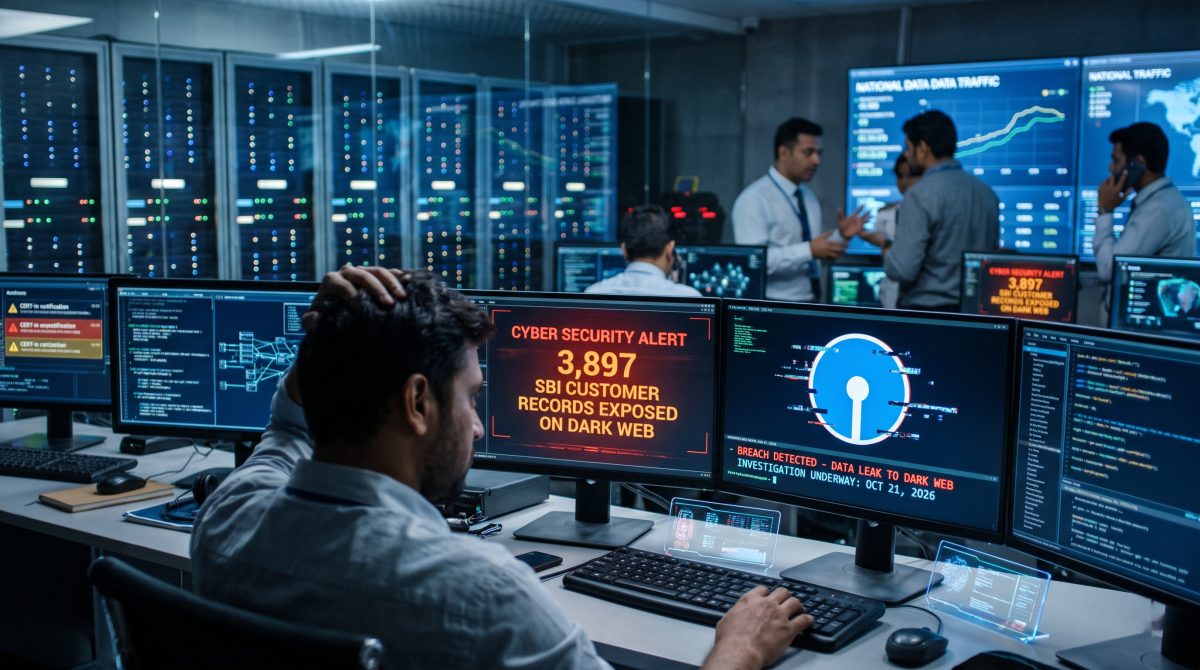
State Bank of India (SBI), the country’s largest lender, told the stock exchanges on 21 October 2026 that 3,897 customer records containing personally identifiable information (PII) have been found on the dark web. The bank made the disclosure in a regulatory filing and has started an investigation. SBI also said the leak is not expected to have a material impact on its core operations, financial performance or business continuity, according to Reuters.
What SBI told the stock exchanges
SBI filed the disclosure under Regulation 30 of the listing rules of the Securities and Exchange Board of India (SEBI). The filing is headed “Incident involving Data Loss”. The bank said that on 16 October it received communications from its threat intelligence service provider, the Defence Cyber Agency and the Indian Computer Emergency Response Team (CERT-In). They concerned suspected exposure of its customer data on the dark web. In a preliminary analysis of about 375,000 records available there, SBI identified 3,897 customer records with PII. It said it promptly activated its cyber incident response and containment protocols.
What data was exposed
According to the filing, the exposed records included registered mobile numbers, dates of birth, names, gender, email addresses and residential addresses. They also included branch and customer information file (CIF) identifiers, lead IDs, and metadata linked to loan or lead records and other related files. Reuters summarised this as customer identifiers and loan records. The fields SBI listed do not include passwords, personal identification numbers (PINs) or one-time passwords (OTPs).
What SBI says about the impact
Reuters reported that SBI has engaged an independent cybersecurity agency to carry out a comprehensive assessment of the nature and extent of the leak. The bank said the incident is not expected to materially affect its core business operations, financial performance or business continuity. Reuters added that India’s banking regulator has pushed lenders in recent years to strengthen their cybersecurity frameworks, as threats against financial institutions have grown.
What is still open
The filing says the investigation will determine the potential source and extent of the exposure and assess the risks to customers and the bank. That means the cause is not yet public, and neither is the question of who put the data online. The reports we reviewed also do not say what the other records in the dataset contain. SBI examined about 375,000 records and found personal information in 3,897 of them.
Our own analysis
The count looks small next to SBI’s size, but the type of data matters more. A name, a date of birth, a phone number and a loan-linked record together give a fraudster a convincing script for a fake bank call. Personal information was found in roughly 1 per cent of the records SBI examined, so the final number may change once the outside agency finishes its work.
The timeline is also worth noting. SBI’s own threat intelligence provider was one of three sources that flagged the data on 16 October, so its monitoring worked in part. Five days passed before the public disclosure on 21 October. The agency’s findings will decide how serious this is. Until then, the safest reading is real but limited, and not yet explained. Anyone who gets a call quoting their loan details should hang up and phone the bank on its official number.